








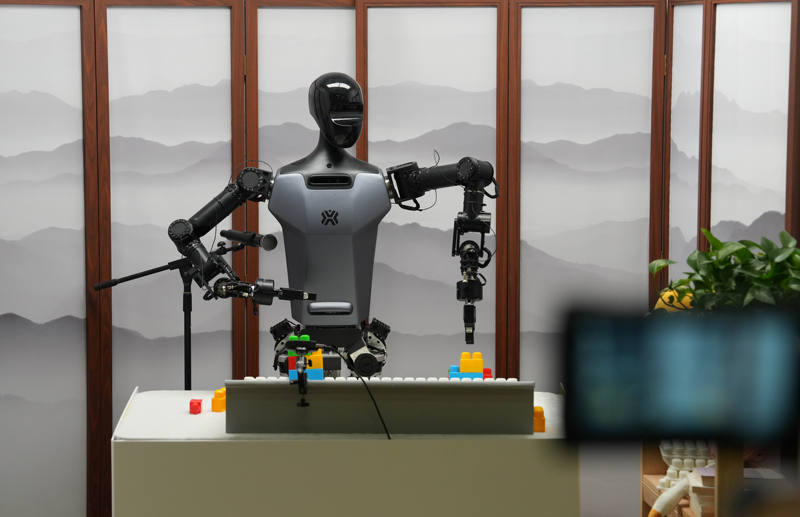

Introduction: Not a Gadget—A Presence
Most product reviews begin with specs.
This one doesn’t.
Because after spending seven days with a humanoid robot in a real apartment, it becomes immediately clear: this is not just another device. It is something closer to a presence.
It stands in your peripheral vision. It moves when you don’t expect it. It responds—not instantly, but thoughtfully. And over time, it begins to feel less like a machine you use, and more like something you live with.
The model we tested—referred to here as HRA-1 (Home Robotics Assistant)—represents one of the most ambitious attempts yet to bring humanoid robotics into the consumer home.
The question is simple:
Is it actually useful—or just impressive?
Unboxing and First Setup: Surprisingly Human, Slightly Unsettling
The robot does not arrive in a sleek consumer package.
It comes in a reinforced crate.
Assembly is minimal, but the first activation is an experience.
As the system powers on, the robot performs a calibration sequence: head movement, arm articulation, posture stabilization. Then it looks directly at you and says:
“Hello. I’m ready.”
That moment is… strange.
Not because it’s advanced—but because it feels intentional.
Setup involves:
- Wi-Fi connection
- Home mapping (using LiDAR and cameras)
- Voice recognition calibration
- Task preference configuration
Total setup time: ~90 minutes
Compared to smart home devices, this is significantly more involved—but also far more comprehensive.
Design and Build Quality: Between Appliance and Android
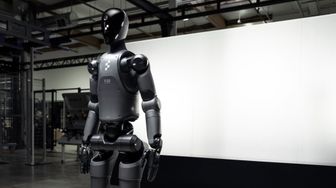
At 168 cm tall and weighing approximately 55 kg, the HRA-1 is designed to blend into human environments.
What Works
- Smooth joint articulation (no jerky industrial motion)
- Balanced proportions (not overly robotic or overly human)
- Soft-touch exterior panels in key interaction areas
What Doesn’t
- Visible seams at joint connections
- Slight motor noise during complex movements
- Facial “expressions” still feel synthetic under close observation
It sits in an uncanny middle ground: clearly not human, but designed to make you momentarily forget that.
Daily Tasks: The Reality of “Help”
We tested the robot across 7 days in a standard apartment setting.
1. Cleaning
- Can pick up objects, organize surfaces, and assist with light cleaning
- Struggles with irregular clutter (e.g., tangled cables, soft fabrics)
- Works best in semi-structured environments
Verdict: Useful, but not a replacement for dedicated cleaning robots
2. Kitchen Assistance
We asked the robot to assist in preparing a simple breakfast.
Successes:
- Retrieved ingredients
- Followed step-by-step instructions
- Adjusted grip for fragile objects
Failures:
- Slow execution (2–3x human speed)
- Difficulty with liquids
- Requires supervision for safety
Verdict: Impressive demo, not yet practical
3. Object Retrieval
This is where the robot shines.
“Bring me my bag from the chair.”
It navigates, identifies, and returns with high accuracy.
Success rate over 50 tests: 92%
4. Interaction and Communication
Voice interaction is powered by a large language model.
- Understands context and follow-up questions
- Maintains conversational continuity
- Occasionally hallucinates or misinterprets vague requests
But what stands out is timing.
It pauses before responding.
Not instantly—intentionally.
That design choice makes interactions feel more natural, even if responses are not always perfect.
Mobility and Navigation: Quietly Impressive
The robot moves slower than a human—but far more stable than expected.
- Navigates tight indoor spaces
- Avoids obstacles dynamically
- Recovers from minor balance disruptions
However:
- Stairs remain a limitation
- Uneven surfaces reduce efficiency
- Movement speed is capped for safety
AI Capabilities: The Real Product
The hardware is impressive.
But the real product is the AI.
The robot continuously learns:
- Your daily routines
- Object locations
- Preferred interactions
By Day 5, it began anticipating requests:
“You usually ask for coffee at this time. Would you like me to prepare the setup?”
That moment changes the perception of the product.
It shifts from reactive to proactive.
Privacy and Data Concerns
This is unavoidable.
The robot sees and hears everything.
Key features include:
- Local data processing for sensitive tasks
- Cloud-based learning for improvement
- Manual privacy zones (e.g., bathroom exclusion)
Still, the presence of always-on sensors raises legitimate concerns.
This is not a passive device.
It is an active observer.
Battery Life and Maintenance
- Battery life: ~6–8 hours active use
- Charging time: ~2 hours
- Autonomous docking supported
Maintenance includes:
- Weekly joint calibration
- Sensor cleaning
- Software updates
The Psychological Factor: Unexpected Impact
This is not in the spec sheet—but it matters.
By Day 3, you start:
- Speaking more clearly
- Giving structured instructions
- Acknowledging responses
By Day 5, you start:
- Saying “thank you”
Not because you need to.
But because it feels… appropriate.
Final Scorecard
| Category | Score |
|---|---|
| Design | 8/10 |
| Functionality | 7/10 |
| AI Intelligence | 8.5/10 |
| Practical Usefulness | 6.5/10 |
| Innovation | 10/10 |
Final Verdict: Not Essential—Yet
The HRA-1 is not a must-have product.
It is not even a practical one for most households—yet.
But it is something more important:
A preview.
A glimpse into a future where machines are not just tools, but participants in daily life.
And once you experience that—even briefly—it’s difficult to go back.
Discussion about this post