









A Week That Changed the Narrative
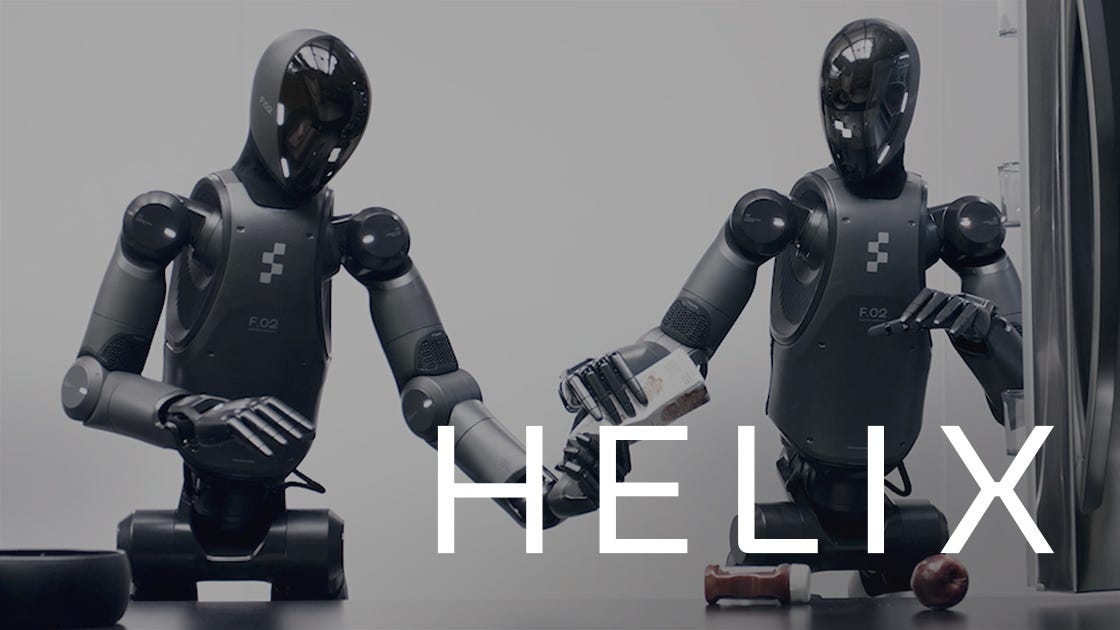
In what industry analysts are calling one of the most consequential weeks in the history of robotics, multiple leading technology companies announced significant advances in humanoid robot development, signaling an acceleration of what had previously been considered a slow-moving sector. While no single announcement would have been enough to redefine the landscape, the convergence of breakthroughs—spanning artificial intelligence, hardware engineering, and large-scale deployment strategies—has forced investors, policymakers, and competitors to reassess both the timeline and the stakes of the humanoid robotics race.
The announcements, made across North America, Asia, and Europe within a matter of days, revealed a coordinated shift in priorities among major players. Rather than focusing on isolated demonstrations or incremental upgrades, companies are now positioning humanoid robots as core components of future economic infrastructure. Executives who once spoke cautiously about long-term possibilities are now openly discussing deployment targets, production scaling, and integration into existing industries. The tone has shifted from speculative to strategic, and the implications are reverberating across the global technology ecosystem.
The Announcements: From Capability to Commitment
At the center of the week’s developments were a series of announcements that, taken together, suggest a transition from experimentation to execution. Several companies unveiled new humanoid robot prototypes designed not for demonstration, but for real-world deployment in logistics, manufacturing, and service environments. These systems emphasized reliability, modular design, and compatibility with existing workflows, marking a departure from earlier generations that prioritized novelty and performance benchmarks.
Perhaps more significant than the hardware itself was the emphasis on software integration. Multiple firms highlighted the role of large-scale AI models in enabling robots to interpret complex instructions, adapt to changing environments, and perform a broader range of tasks without extensive reprogramming. This shift toward general-purpose intelligence represents a fundamental change in how robots are designed and deployed. Instead of building machines for specific functions, companies are increasingly developing platforms that can be trained and updated over time, much like software systems.
In parallel, several organizations announced partnerships with major industrial players, including logistics companies, automotive manufacturers, and retail chains. These partnerships are not limited to pilot programs; they involve commitments to deploy robots in operational settings, collect performance data, and iterate rapidly. For the first time, humanoid robots are being treated not as experimental technologies, but as products with defined roadmaps and commercial objectives.
Industry Reaction: A Mix of Urgency and Skepticism
The response from the broader industry has been immediate and multifaceted. Investors have reacted with renewed enthusiasm, viewing humanoid robotics as a potential growth sector comparable to artificial intelligence and electric vehicles. Venture capital firms are reportedly increasing their allocations to robotics startups, while public markets have responded to announcements with noticeable fluctuations in the valuations of companies involved in the space.
At the same time, skepticism remains. Some experts caution that the gap between demonstration and deployment is still significant, and that many of the challenges that have historically limited humanoid robotics—such as reliability, safety, and cost—have not been fully resolved. They argue that while recent announcements are encouraging, they do not yet constitute proof that humanoid robots can operate at scale in complex, real-world environments.
This tension between optimism and caution is reflected in the statements of industry leaders. While executives emphasize progress and potential, they also acknowledge the technical and operational hurdles that remain. The result is a narrative that is both ambitious and measured, reflecting the high stakes and inherent uncertainties of the field.
The Competitive Landscape: A New Kind of Arms Race
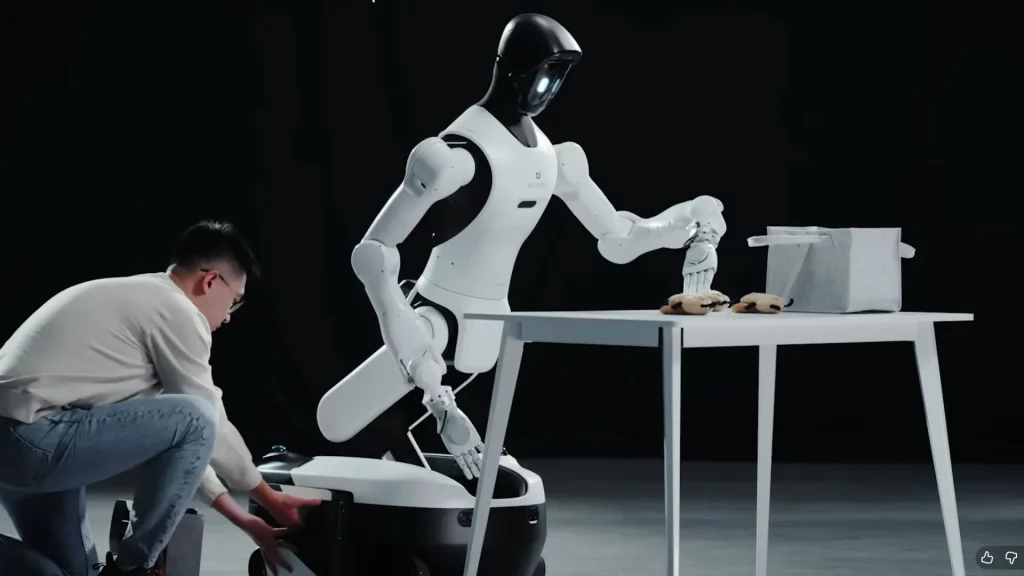
What distinguishes the current wave of activity from previous periods of interest in robotics is the intensity of competition among major players. Unlike earlier phases, which were dominated by research institutions and specialized robotics firms, the current landscape includes some of the largest technology companies in the world. These organizations bring not only financial resources, but also expertise in artificial intelligence, data infrastructure, and large-scale product deployment.
The competition is not limited to hardware performance; it extends to software ecosystems, data acquisition, and integration capabilities. Companies are racing to develop proprietary AI models that can power their robots, while also building platforms that allow for continuous improvement through data collection and analysis. In this sense, the humanoid robot is becoming a node in a larger network, connected to cloud systems and benefiting from shared learning across deployments.
Geopolitical factors are also playing a role. Governments are increasingly recognizing the strategic importance of robotics, both for economic competitiveness and for addressing demographic challenges such as aging populations. This has led to increased funding, policy support, and, in some cases, direct involvement in the development and deployment of robotic systems. The result is a global race that is as much about national priorities as it is about corporate strategy.
The Technology Inflection Point: Why Now?
To understand why humanoid robotics is gaining momentum at this particular moment, it is necessary to examine the underlying technological trends. The most important of these is the rapid advancement of artificial intelligence, particularly in the form of large-scale models capable of processing language, vision, and other forms of data. These models provide a foundation for general-purpose intelligence, enabling robots to interpret instructions and adapt to new situations in ways that were previously impossible.
At the same time, improvements in hardware have made it feasible to build robots that are both capable and cost-effective. Advances in materials science, actuator design, and battery technology have resulted in systems that are lighter, more efficient, and more durable than their predecessors. These improvements, while incremental in isolation, have collectively reached a point where they can support real-world deployment.
Another critical factor is the availability of data. As robots are deployed in operational environments, they generate vast amounts of information about how tasks are performed, how environments change, and how systems respond to different conditions. This data can be used to train and refine AI models, creating a feedback loop that accelerates improvement. In this sense, the current wave of deployment is not just about immediate functionality, but about building the data infrastructure needed for future advances.
Labor and Society: Early Signals of Change
While the current focus is on industrial applications, the broader implications of humanoid robotics are already becoming a topic of discussion. Labor organizations, policymakers, and social scientists are beginning to consider how widespread deployment of robots might affect employment, wages, and working conditions. Although it is still too early to draw definitive conclusions, the initial signals suggest a complex and evolving landscape.
In the short term, robots are being used to address labor shortages and to perform tasks that are difficult or undesirable for human workers. This has the potential to improve working conditions and increase productivity. However, as the technology matures, it may also lead to changes in the structure of the labor market, with some roles becoming less necessary and others emerging in their place.
The challenge for policymakers will be to manage this transition in a way that balances economic efficiency with social stability. This may involve new approaches to education, training, and social support, as well as regulatory frameworks that ensure the safe and ethical use of robotic systems.
What Comes Next: From Announcements to Reality
The events of the past week have clearly shifted the narrative around humanoid robotics, but the real test lies ahead. Announcements, no matter how significant, must be followed by successful deployment, consistent performance, and demonstrable economic value. The companies that can deliver on these criteria will define the next phase of the industry, while those that cannot may struggle to maintain momentum.
In the coming months and years, attention will likely shift from what robots can do in controlled settings to how they perform in the unpredictable conditions of the real world. Metrics such as uptime, error rates, and cost efficiency will become increasingly important, as will the ability to integrate robots into existing systems and workflows. These are the factors that will determine whether humanoid robotics remains a promising technology or becomes a transformative one.
Conclusion: A Turning Point with Uncertain Outcomes
The recent wave of announcements marks a turning point in the development of humanoid robots, bringing the technology closer to practical reality than ever before. At the same time, it highlights the challenges and uncertainties that remain. The path from innovation to impact is rarely straightforward, and the stakes in this case are particularly high.
What is clear, however, is that humanoid robotics is no longer a peripheral field. It has moved to the center of the technological landscape, attracting the attention of major companies, governments, and investors. Whether this momentum will translate into lasting change depends on what happens next—on the factory floors, in the warehouses, and eventually, in the spaces where humans and robots interact most directly.
For now, the world is watching closely, aware that the decisions made today may shape the future of work, industry, and society itself.
Discussion about this post