








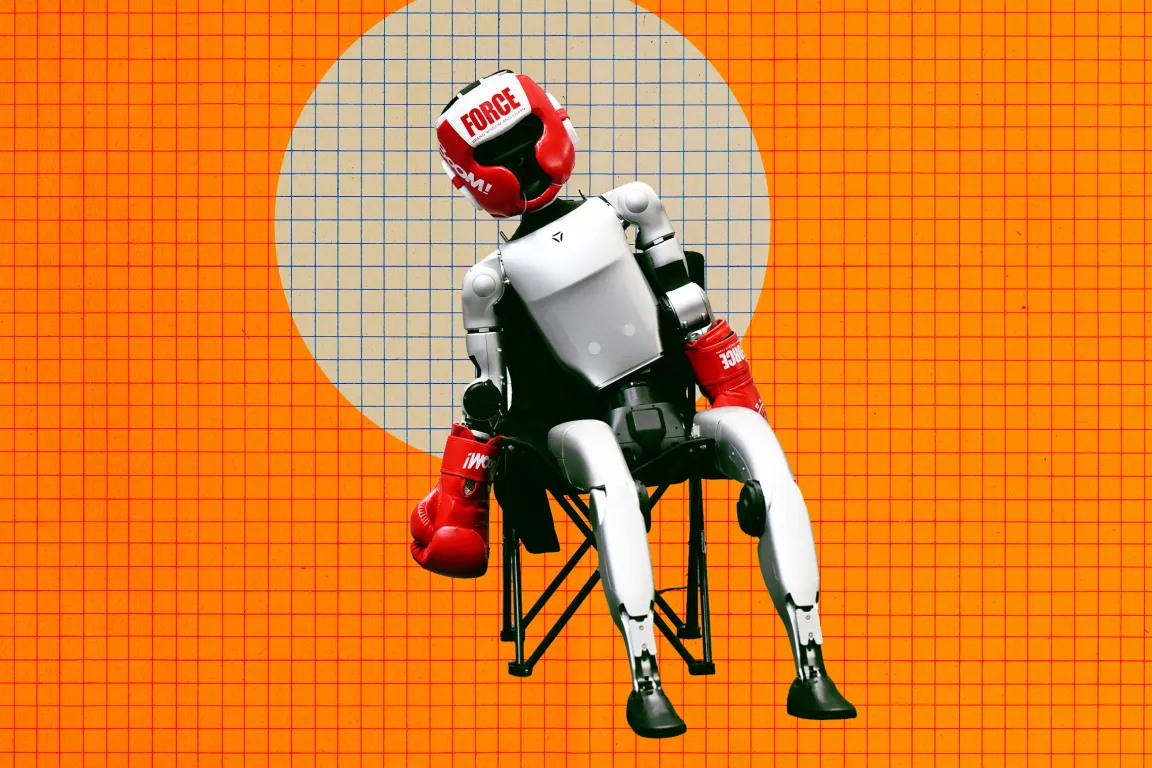

A Quiet Deployment That Signals a Loud Shift
In early 2026, a series of seemingly low-profile deployments across logistics centers and manufacturing plants has begun to reshape how industry insiders understand the future of labor. Unlike the high-profile demonstrations that once defined humanoid robotics—robots dancing on stage, performing backflips, or showcasing carefully scripted interactions—these new deployments are almost deliberately understated. There are no grand unveilings, no dramatic keynote speeches, and no viral videos designed to capture public imagination. Instead, humanoid robots are quietly taking positions on factory floors, integrating into workflows, and performing tasks that, until recently, were considered too variable, too complex, or too human to automate.
What makes this moment significant is not the sophistication of any single robot, but the convergence of several technological and economic factors that have made deployment viable at scale. For the first time, companies are not experimenting with humanoid robots as a novelty or a research initiative; they are deploying them as operational assets. This shift—from spectacle to infrastructure—marks the true beginning of the humanoid robotics era.
From Prototype to Production: What Changed in 2025–2026
Over the past decade, the primary barrier to humanoid robot adoption has not been capability in isolation, but the lack of reliability and economic justification. Early systems could perform impressive feats under controlled conditions, but they struggled with consistency, adaptability, and cost efficiency in real-world environments. A robot that can successfully complete a task once in a laboratory setting is fundamentally different from a system that can perform that same task thousands of times per day without failure. The industrial world does not reward novelty; it rewards predictability.
The turning point came with the integration of large-scale AI models into robotic control systems, enabling a level of generalization that had previously been unattainable. Instead of programming robots for specific tasks, engineers began training systems that could interpret goals and adapt their actions accordingly. This shift dramatically reduced the engineering overhead required to deploy robots in new environments. At the same time, advances in hardware—particularly in actuators, sensors, and battery efficiency—made it possible to build robots that could operate for longer periods with greater precision and lower maintenance requirements.
Equally important was the economic context. Labor shortages in logistics and manufacturing sectors, particularly in regions experiencing demographic decline, created a strong incentive for automation. Rising wages and increasing operational complexity further accelerated the search for scalable solutions. In this environment, humanoid robots began to make sense not as a futuristic investment, but as a practical response to immediate business challenges.
Inside the Modern Warehouse: A New Kind of Workforce
To understand the real impact of humanoid robots, one must look inside the environments where they are now being deployed. In a modern logistics center, operations are characterized by constant motion: goods arriving, being sorted, stored, retrieved, and shipped. Traditional automation systems—conveyor belts, robotic arms, and sorting machines—are highly efficient but also highly specialized. They excel at repetitive tasks in fixed configurations but struggle when variability is introduced.
Humanoid robots, by contrast, are designed to operate in these variable environments. Equipped with advanced vision systems and AI-driven planning capabilities, they can navigate complex layouts, identify objects in cluttered spaces, and perform a range of tasks that would previously require human intervention. A single robot might spend part of its shift picking items from shelves, another part loading packages onto pallets, and another assisting with inventory checks. This flexibility is what sets humanoid robots apart from traditional automation.
Workers in these facilities describe a gradual but noticeable shift. Rather than replacing human workers outright, robots are being integrated as collaborators, taking on physically demanding or repetitive tasks while humans focus on supervision, coordination, and exception handling. This hybrid model allows companies to increase productivity without fully restructuring their operations, making adoption less disruptive and more incremental.
The Economics of Deployment: When Robots Start to Make Sense
Behind every technological deployment lies a simple question: does it make financial sense? For humanoid robots, the answer is becoming increasingly clear. While the upfront cost of a humanoid robot remains significant, the total cost of ownership is beginning to approach a level that can be justified by productivity gains and labor cost savings. Companies are no longer evaluating robots based solely on purchase price; they are considering factors such as uptime, versatility, and the ability to operate continuously without fatigue.
One of the most important developments has been the shift toward multi-task capability. A robot that can perform only one function must compete directly with specialized machines or human workers who can be reassigned as needed. A robot that can perform multiple functions, however, becomes a more valuable asset, capable of adapting to changing operational needs. This flexibility improves utilization rates and shortens the time required to achieve a return on investment.
At the same time, advances in software have enabled remote monitoring and continuous improvement. Robots deployed in one facility can benefit from updates and optimizations developed elsewhere, creating a network effect that accelerates performance improvements. Over time, this could lead to a situation where the cost of robotic labor decreases not just because of hardware improvements, but because of cumulative learning across deployments.
Worker Perspectives: Adaptation, Concern, and Opportunity
The introduction of humanoid robots into the workplace inevitably raises questions about the future of human labor. Interviews with workers and managers reveal a complex mix of reactions, ranging from cautious optimism to underlying concern. On one hand, many workers appreciate the reduction in physically demanding tasks, particularly in industries where injuries and fatigue are common. On the other hand, there is an awareness that the long-term implications of automation are uncertain.
Managers often emphasize that robots are being deployed to address labor shortages rather than replace existing workers. In practice, however, the distinction is not always clear. As robots become more capable, the range of tasks they can perform expands, potentially reducing the need for human labor over time. This creates a tension between short-term benefits and long-term uncertainty.
At the same time, new roles are emerging. Technicians are needed to maintain and troubleshoot robotic systems, operators are required to supervise and coordinate robot activities, and engineers are tasked with optimizing workflows that integrate human and robotic labor. These roles require different skills, often blending technical knowledge with operational expertise, and they highlight the ways in which automation can reshape rather than simply eliminate work.
A Broader Industry Shift: Beyond Warehouses and Factories
While logistics and manufacturing are the initial focus, the implications of humanoid robot deployment extend far beyond these sectors. Industry analysts note that once the technology proves viable in controlled environments, it is likely to expand into more complex and human-centric settings. Retail, healthcare, hospitality, and construction are all being closely watched as potential next frontiers.
The key challenge in these environments is not just technical capability, but social acceptance. A robot operating in a warehouse can function largely independently of human interaction, but a robot in a retail store or hospital must engage with people in a way that is intuitive and trustworthy. This requires not only advances in AI and perception, but also careful design of behavior and interaction patterns.
Nevertheless, the trajectory is clear. As costs decrease and capabilities improve, the range of applications will continue to expand, bringing humanoid robots into closer contact with everyday life.
The Beginning of a Long Transition
What is happening now is not a sudden revolution, but the early stages of a long transition. Humanoid robots are not yet ubiquitous, nor are they capable of performing every task required of them. But they are no longer hypothetical. They are being deployed, evaluated, and improved in real-world conditions, creating a feedback loop that will drive further development.
History suggests that technological transitions of this scale unfold over decades rather than years. The early stages are often characterized by limited adoption and incremental improvements, followed by periods of rapid acceleration once key thresholds are reached. Humanoid robotics appears to be entering that initial phase, where the foundations are being laid for broader transformation.
Conclusion: A Shift Hidden in Plain Sight
The most significant technological changes are often the least visible. While public attention may focus on dramatic demonstrations or speculative भविष्य scenarios, the real story of humanoid robots is unfolding quietly, in warehouses and factories where efficiency matters more than spectacle. These environments are serving as proving grounds, not just for the technology itself, but for the economic and organizational models that will determine its future.
If current trends continue, the deployment of humanoid robots in industry will be remembered not as a single breakthrough moment, but as a gradual shift that, over time, redefined the nature of work. The robots now operating on factory floors may not look revolutionary, but they represent something far more important: the point at which humanoid robotics moved from possibility to reality.
Discussion about this post