









A Protest Outside a Warehouse
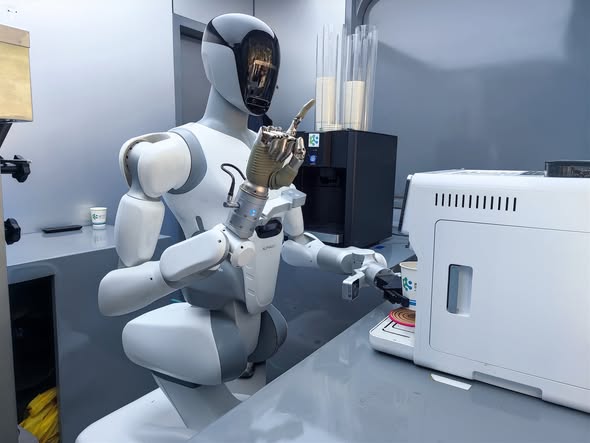
On a humid morning in early 2026, a small group of workers gathered outside a logistics facility on the outskirts of a major metropolitan area, holding signs that read “Humans First” and “Automation Without Protection Is Displacement.” The protest was not large, nor was it particularly disruptive, but it carried a symbolic weight that quickly drew the attention of local media and, soon after, national outlets. Inside the facility, a pilot program involving humanoid robots had been quietly expanding for months, gradually increasing the number of machines operating alongside human workers. For the company, the robots represented efficiency, scalability, and a response to persistent labor shortages. For some workers, however, they represented something more uncertain—a shift whose long-term consequences were difficult to predict and even harder to control.
This moment, modest as it seemed, marked one of the first visible instances of social friction directly tied to the deployment of humanoid robots in a real-world setting. Unlike earlier waves of automation, which often unfolded gradually and invisibly, the presence of humanoid robots—machines that move, act, and occupy space in ways that resemble humans—makes the transition more tangible and, in some cases, more unsettling. The protest was not just about jobs; it was about visibility, identity, and the feeling that a line had been crossed, even if no one could quite articulate where that line lay.
The Policy Vacuum: Technology Moving Faster Than Regulation
One of the most striking aspects of the current wave of humanoid robot deployment is the relative absence of comprehensive regulatory frameworks. While governments around the world have begun to develop policies related to artificial intelligence, data privacy, and automation, humanoid robots occupy a gray area that spans multiple domains. They are physical machines, but they are also AI systems; they operate in industrial settings, but increasingly interact with the public; they are tools, but their behavior can appear autonomous.
This complexity has made it difficult for regulators to keep pace. Existing labor laws were not designed with robotic workers in mind, and safety regulations often focus on traditional industrial machines rather than mobile, adaptive systems that share space with humans. As a result, companies deploying humanoid robots are often operating in a landscape defined more by general principles than by specific rules, interpreting existing regulations in ways that allow innovation to proceed while attempting to manage risk.
Policymakers, for their part, face a difficult balancing act. On one hand, there is a desire to support technological advancement and maintain competitiveness in a rapidly evolving global economy. On the other hand, there is a need to protect workers, ensure safety, and address broader social implications. The absence of clear guidelines creates uncertainty for all parties involved, increasing the likelihood of conflict as different stakeholders pursue their own interpretations of what is acceptable.
Inside the Workplace: Tension Beneath the Surface
Interviews with workers, managers, and engineers involved in early deployments reveal a workplace dynamic that is more complex than simple narratives of replacement or resistance. In many cases, humanoid robots are introduced gradually, taking on specific tasks while humans continue to perform others. Officially, the goal is often framed as augmentation rather than substitution, with robots handling physically demanding or repetitive work while humans focus on higher-level activities.
In practice, however, the boundaries are not always clear. Workers may find that tasks they once performed are now handled by robots, even if their overall role remains intact. Managers may emphasize efficiency gains and operational benefits, while employees focus on the uncertainty of future changes. Engineers, meanwhile, are often caught between these perspectives, tasked with improving systems that have both technical and social implications.
What emerges is a form of latent tension—a sense that the workplace is in transition, even if the immediate impact is limited. This tension is not always expressed openly, but it influences how people interact with the technology and with each other. Some workers adapt quickly, learning how to collaborate with robots and even finding ways to improve efficiency. Others remain cautious, observing developments and waiting to see how the situation evolves. The result is a dynamic environment in which acceptance and resistance coexist, shaped by individual experiences and expectations.
Legal Questions: Who Is Responsible?
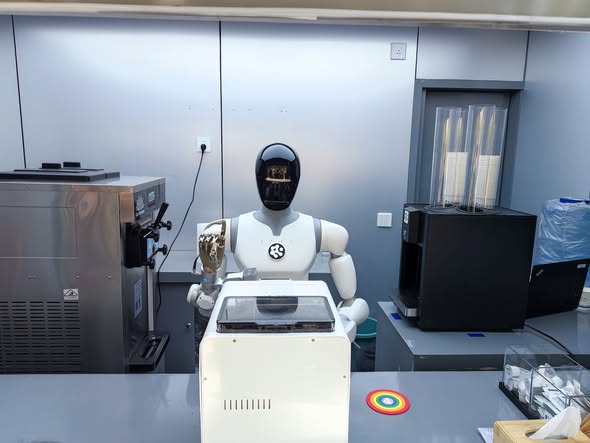
As humanoid robots become more autonomous and more integrated into daily operations, questions of responsibility and accountability are becoming increasingly urgent. In traditional industrial settings, the lines of responsibility are relatively clear: machines are tools, and their operation is governed by human oversight. With humanoid robots, however, the situation is more ambiguous, particularly when systems are capable of making decisions based on complex inputs and adaptive algorithms.
Consider a scenario in which a robot misidentifies an object, leading to an error that disrupts operations or causes damage. Determining responsibility in such cases is not straightforward. Is it the manufacturer, who designed the hardware? The software developer, who created the algorithms? The company deploying the robot, which integrated it into its workflow? Or the operator, who may have had limited control over the system’s behavior?
These questions are not merely theoretical. As deployments increase, incidents—both minor and significant—are likely to occur, bringing issues of liability to the forefront. Legal systems will need to adapt, developing frameworks that can accommodate the unique characteristics of humanoid robots while providing clarity and fairness for all parties involved. Until such frameworks are established, uncertainty will remain, potentially slowing adoption and increasing the risk of conflict.
Public Perception: Between Fascination and Unease
Beyond the workplace, humanoid robots are beginning to influence public perception in ways that are both subtle and profound. Media coverage often oscillates between excitement about technological progress and concern about its implications, reflecting a broader ambivalence within society. On one hand, there is a fascination with machines that can move and act like humans, a sense of wonder at what technology has achieved. On the other hand, there is an undercurrent of unease, driven by questions about control, autonomy, and the potential for displacement.
This ambivalence is amplified by the human-like form of these robots. Unlike industrial machines that operate in the background, humanoid robots are visible and, in some cases, interactive. They occupy the same physical and social spaces as humans, making their presence more immediate and their impact more personal. This visibility can accelerate acceptance, as people become accustomed to interacting with robots, but it can also intensify concerns, particularly when the technology is perceived as advancing too quickly or without sufficient oversight.
Public perception, in turn, influences policy and corporate behavior. Companies are increasingly aware that the success of humanoid robots depends not only on technical performance, but also on social acceptance. Efforts to improve transparency, design more intuitive interactions, and communicate the benefits of the technology are becoming integral to deployment strategies. At the same time, governments are paying closer attention to public sentiment, recognizing that widespread adoption will require not just regulatory approval, but also societal trust.
The First Wave of Policy Responses
In response to growing interest and concern, several governments have begun to explore policy measures specifically aimed at humanoid robots. These efforts are still in their early stages, but they provide a glimpse of how regulation might evolve. Some proposals focus on safety standards, requiring robots to meet specific criteria for operation in shared spaces. Others address data and privacy, setting limits on how information collected by robots can be used and stored.
There are also discussions around labor policy, including the possibility of requiring companies to provide additional training or support for workers affected by automation. In some cases, policymakers are considering broader measures, such as taxation of robotic labor or incentives for human employment, although these ideas remain controversial and are far from being implemented.
What is clear is that policy development is beginning to catch up with technological progress, even if it has not yet reached a point of maturity. The challenge will be to create frameworks that are flexible enough to accommodate rapid innovation while providing sufficient clarity and protection to address social concerns.
A Turning Point in the Relationship Between Technology and Society
The emergence of social conflict around humanoid robots marks an important moment in the evolution of the technology. It signals that robots are no longer confined to the realm of experimentation or niche applications, but are becoming part of the broader social and economic fabric. With this integration comes a new set of challenges, as the interests of different stakeholders—companies, workers, governments, and the public—begin to intersect and, in some cases, collide.
This is not a new phenomenon in the history of technology. Previous waves of innovation, from industrial machinery to digital platforms, have also generated periods of tension and adjustment. What distinguishes the current moment is the nature of the technology itself. Humanoid robots blur the boundaries between tool and agent, between machine and worker, creating a level of ambiguity that complicates traditional frameworks of understanding and regulation.
Conclusion: The Beginning of a Larger Conversation
The protest outside the warehouse may have been small, but it represents the beginning of a much larger conversation—one that will unfold over the coming years as humanoid robots become more capable and more widespread. This conversation will not be limited to technical questions about performance and efficiency; it will encompass issues of fairness, responsibility, identity, and the kind of society we want to build.
As companies continue to deploy humanoid robots and governments work to establish appropriate policies, the interaction between technology and society will become increasingly complex. There will be successes and setbacks, moments of progress and moments of conflict. What matters is not whether these challenges arise, but how they are addressed.
In the end, the story of humanoid robots will not be written solely by engineers or executives, but by the collective decisions of all those affected by the technology. The early signs of conflict are not a sign of failure; they are a sign that the technology is real, and that its impact is beginning to be felt. How we respond to these signals will shape the trajectory of humanoid robotics—and, in many ways, the future of work and society itself.
Discussion about this post