








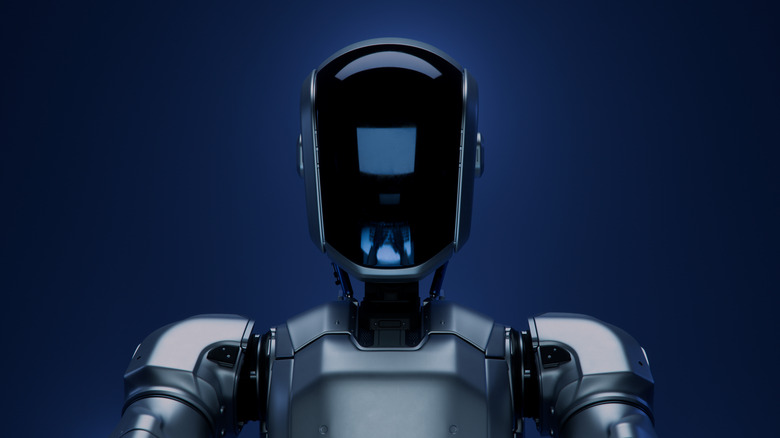

Introduction: Beyond Mechanical Intelligence
For decades, robots have been defined by their ability to execute repetitive tasks with precision. Industrial robotic arms revolutionized manufacturing, but they remained confined to predictable environments, executing pre-programmed instructions without true understanding. Today, humanoid robots are undergoing a profound transformation—one that moves them from mechanical executors to cognitive systems capable of reasoning, adapting, and interacting.
This shift is not merely incremental. It represents a paradigm change comparable to the evolution from early computers to modern artificial intelligence systems. The integration of large language models, multimodal perception, and embodied learning is redefining what humanoid robots are capable of.
This article explores the technological, economic, and philosophical implications of this transition.
1. The Architecture of Cognitive Humanoid Robots
1.1 From Rule-Based Systems to Neural Architectures
Traditional robots operated on deterministic logic: if X happens, do Y. This framework breaks down in complex, unstructured environments like homes, hospitals, or public spaces.
Modern humanoid robots, however, rely on neural architectures that resemble the human cognitive process:
- Perception Layer: Computer vision, audio recognition, tactile sensing
- Reasoning Layer: Large language models and decision-making systems
- Action Layer: Motion planning, motor control, manipulation
This layered architecture allows robots to interpret context rather than simply react to stimuli.
1.2 Embodied AI: Intelligence Through Physical Interaction
One of the most important breakthroughs is the concept of embodied AI—the idea that intelligence emerges not just from computation but from interaction with the physical world.
A humanoid robot learns:
- How objects behave when manipulated
- How humans respond to gestures and speech
- How environments change dynamically
This creates a feedback loop between cognition and action, enabling robots to refine their understanding over time.
2. Multimodal Intelligence: Seeing, Hearing, and Understanding
2.1 Vision as the Primary Interface
Humanoid robots now use advanced vision systems capable of:
- Object recognition in cluttered environments
- Depth perception and spatial mapping
- Human pose estimation
Unlike earlier systems, these robots can understand scenes holistically. For example, instead of recognizing a “cup,” they understand “a cup on a table next to a person who is reaching for it.”
2.2 Language as a Cognitive Bridge
Natural language processing has become the central interface between humans and robots.
Modern humanoid robots can:
- Interpret ambiguous instructions
- Ask clarifying questions
- Explain their actions
This transforms interaction from command-based to conversational.
2.3 Sensor Fusion and Context Awareness
By combining vision, audio, and tactile data, robots achieve context awareness:
- Recognizing emotional tone in speech
- Adjusting grip strength based on object texture
- Navigating crowded environments safely
This integration is crucial for operating in human-centric spaces.
3. Learning Paradigms: From Programming to Experience
3.1 Imitation Learning
Humanoid robots can learn by observing humans:
- Watching demonstrations
- Replicating movements
- Refining actions through feedback
This reduces the need for manual programming and accelerates deployment.
3.2 Reinforcement Learning in the Real World
Reinforcement learning allows robots to improve through trial and error. However, applying it in the physical world introduces challenges:
- Safety risks
- Hardware wear and tear
- Slow iteration cycles
To address this, hybrid approaches combine simulation with real-world fine-tuning.
3.3 Continuous Learning Systems
Unlike traditional robots, cognitive humanoids can update their knowledge continuously:
- Learning new tasks without forgetting old ones
- Adapting to individual user preferences
- Improving performance over time
This makes them more like evolving systems than static machines.
4. Hardware Evolution: The Body That Enables the Mind
4.1 Actuation and Mobility
Advances in actuators and control systems have enabled:
- Smooth, human-like movement
- Dynamic balance and locomotion
- Energy-efficient operation
Bipedal walking, once a major challenge, is becoming increasingly reliable.
4.2 Dexterous Manipulation
Hands are critical for humanoid robots. Recent developments include:
- Multi-fingered grippers with tactile sensors
- Precision control for delicate tasks
- Adaptive grasping techniques
This allows robots to perform tasks such as cooking, cleaning, and assembling components.
4.3 Power and Energy Constraints
Battery technology remains a limiting factor. Key challenges include:
- Limited operational time
- Weight vs. capacity trade-offs
- Heat management
Future breakthroughs in energy storage will significantly impact robot capabilities.
5. Software Ecosystems and AI Integration
5.1 Foundation Models for Robotics
Large-scale AI models are being adapted for robotics:
- Vision-language-action models
- General-purpose task planners
- Cross-domain knowledge integration
These models enable robots to generalize across tasks rather than being task-specific.
5.2 Cloud Robotics vs. Edge Intelligence
Two competing paradigms are emerging:
Cloud Robotics:
- Access to vast computational resources
- Continuous updates and learning
- Dependency on connectivity
Edge Intelligence:
- Real-time responsiveness
- Greater privacy and security
- Limited computational power
The future likely lies in hybrid architectures.
6. Economic Implications: Redefining Labor
6.1 The Expansion of Automatable Tasks
Humanoid robots extend automation into sectors previously considered safe:
- Healthcare support
- Hospitality services
- Retail operations
This significantly expands the scope of automation.
6.2 Cost Curves and Scalability
As production scales, costs are expected to decrease:
- Hardware standardization
- Mass manufacturing
- Software reuse
This could make humanoid robots economically viable for small businesses and households.
6.3 Workforce Transformation
Rather than simple job replacement, we are seeing:
- Job redefinition
- Human-robot collaboration
- Emergence of new roles (robot trainers, supervisors)
The transition will require significant reskilling.
7. Social and Ethical Dimensions
7.1 Trust and Human Acceptance
For humanoid robots to succeed, they must be trusted:
- Transparent decision-making
- Predictable behavior
- Ethical alignment
Design plays a crucial role in shaping perception.
7.2 Privacy Concerns
Humanoid robots collect vast amounts of data:
- Visual recordings
- Audio interactions
- Behavioral patterns
Ensuring data security and user consent is critical.
7.3 Moral Agency and Responsibility
As robots become more autonomous, questions arise:
- Who is responsible for their actions?
- Can robots make ethical decisions?
- Should they have rights?
These issues will shape regulatory frameworks.
8. Industry Applications: Where Cognitive Robots Matter Most
8.1 Healthcare
Humanoid robots can:
- Assist elderly patients
- Monitor health conditions
- Provide companionship
Their ability to interact naturally makes them ideal for care environments.
8.2 Logistics and Warehousing
Robots are moving beyond fixed automation:
- Handling diverse objects
- Navigating dynamic spaces
- Collaborating with human workers
8.3 Domestic Environments
The ultimate goal is the home robot:
- Cleaning and maintenance
- Cooking assistance
- Personal organization
This remains one of the most challenging applications.
9. Challenges and Bottlenecks
9.1 Generalization vs. Specialization
Achieving true general intelligence in robots is still difficult:
- Task variability
- Environmental unpredictability
- Limited training data
9.2 Safety and Reliability
Robots must operate safely in human environments:
- Avoiding collisions
- Handling unexpected situations
- Ensuring fail-safe mechanisms
9.3 Regulatory and Legal Barriers
Governments are still catching up:
- Safety standards
- Liability frameworks
- Certification processes
10. The Road Ahead: Toward General-Purpose Humanoid Robots
10.1 Convergence of Technologies
The future of humanoid robotics lies in convergence:
- AI models
- Advanced hardware
- Real-time data systems
This integration will unlock new capabilities.
10.2 Human-Robot Symbiosis
Rather than replacing humans, robots will augment them:
- Enhancing productivity
- Extending physical capabilities
- Supporting cognitive tasks
10.3 Timeline and Expectations
While rapid progress is being made, widespread adoption will take time:
- Short term (0–5 years): Industrial and commercial use
- Medium term (5–10 years): Broader service sector adoption
- Long term (10+ years): Household integration
Conclusion: A New Definition of Intelligence
Humanoid robots are no longer just machines—they are becoming systems that perceive, reason, and act in ways that resemble human intelligence. This transformation challenges our understanding of technology, labor, and even what it means to be intelligent.
As cognitive capabilities continue to evolve, humanoid robots will move from the periphery of society to its center, reshaping industries and redefining human potential.
Discussion about this post