








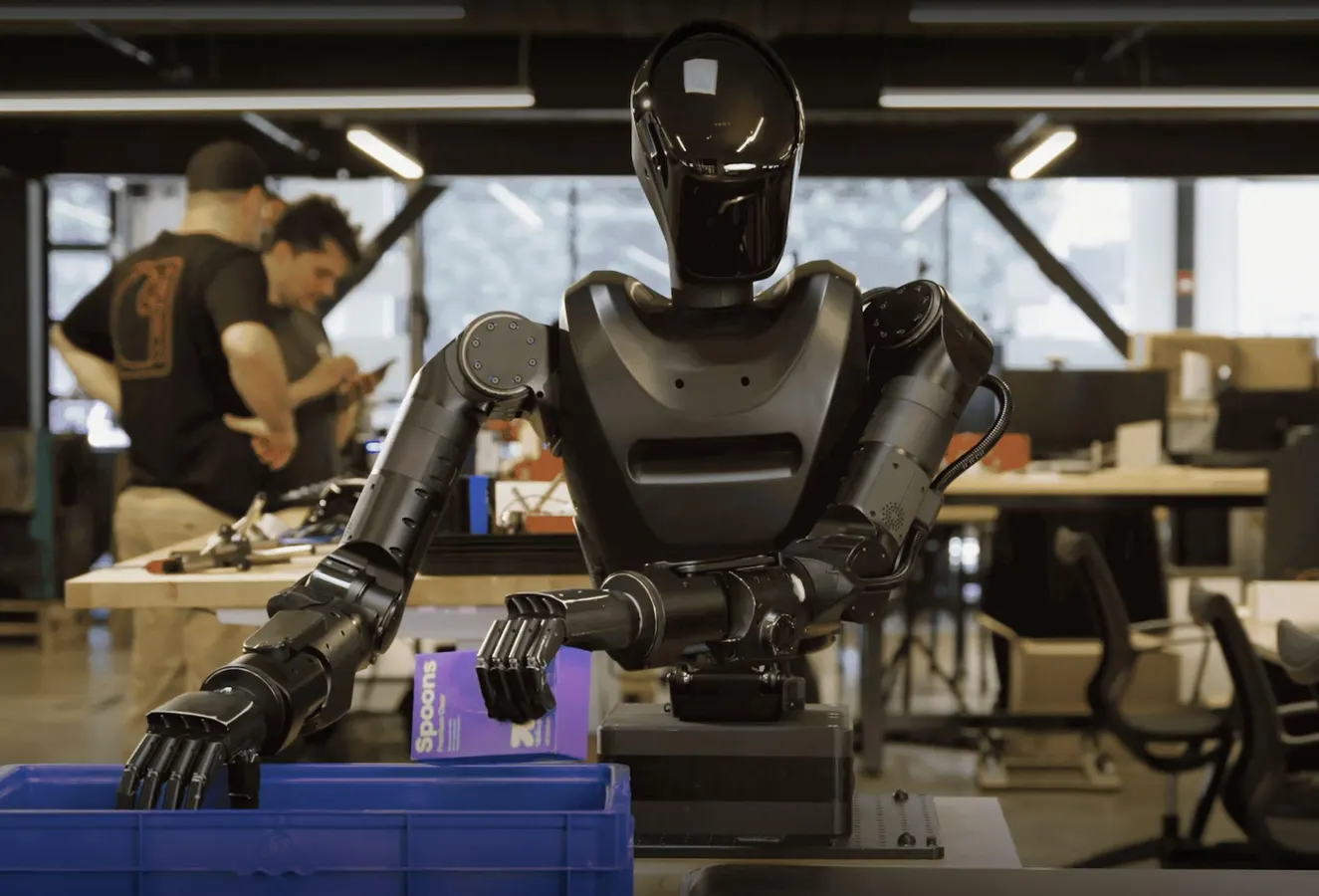

In 2035, a typical morning might look something like this:
A humanoid robot prepares breakfast in a compact urban apartment. Another assists an elderly neighbor with mobility exercises. In a nearby logistics hub, fleets of robots coordinate seamlessly, moving goods with minimal human oversight. Schools deploy robotic teaching assistants, while hospitals rely on them for routine care and monitoring.
For some, this vision represents progress.
For others, it signals something more unsettling: a world where the boundary between human and machine has fundamentally shifted.
While such scenarios may still seem speculative, the foundations are already being laid today. The rapid development of humanoid robots—combined with advances in artificial intelligence—suggests that the coming decades could bring one of the most profound transformations in modern history.
The question is no longer whether this future will arrive.
It is how quickly—and on whose terms.
From Tools to Co-Workers to Co-Existence
Historically, machines have served as tools—extensions of human capability.
The industrial revolution mechanized physical labor. The digital revolution augmented cognitive work. Now, humanoid robots represent a convergence of both.
They are not just tools.
They are becoming agents.
In the near term, humanoid robots will primarily function as co-workers, assisting humans in structured environments such as factories, warehouses, and hospitals.
But over time, their role may expand.
“They will move from being tools we use, to entities we work alongside, to systems we depend on,” said a futurist specializing in human-machine interaction.
This progression—from tool to collaborator to infrastructure—could redefine how societies function.
The End of Traditional Labor?
One of the most debated implications of humanoid robots is their impact on work.
If robots can perform both physical and cognitive tasks, what roles remain for humans?
Some economists argue that new jobs will emerge, as they have in previous technological revolutions. Others warn that this time may be different.
“This is the first time we are automating not just labor, but adaptability,” said an economic analyst. “That changes the equation.”
Several scenarios are being discussed:
1. Augmented Workforce
Humans and robots collaborate, with productivity gains leading to economic growth and new job creation.
2. Job Polarization
High-skill roles expand, while middle- and low-skill jobs decline, increasing inequality.
3. Post-Work Economy
In more radical projections, widespread automation could reduce the need for human labor altogether, leading to new economic models such as universal basic income.
No single outcome is guaranteed.
What is clear is that the transition will not be smooth.
Economic Power and the New Industrial Order
Humanoid robots could also reshape global economic power.
Countries and companies that lead in robotics and AI may gain significant advantages in productivity, manufacturing, and innovation.
This could accelerate existing trends toward technological concentration.
“Control over intelligent machines could become the defining factor of economic power in the 21st century,” said a policy strategist.
At the same time, the widespread deployment of robots could reduce reliance on low-cost human labor, potentially reshaping global supply chains.
Manufacturing may shift closer to end markets. Labor arbitrage—long a driver of globalization—could decline.
The result could be a new industrial order, defined less by geography and more by technological capability.
Daily Life in a Robotic World
Beyond economics, humanoid robots could transform everyday life.
In households, they may take over routine chores, freeing up time for leisure, creativity, or other pursuits.
In healthcare, they could provide continuous monitoring and support, improving outcomes and reducing costs.
In education, they might offer personalized instruction tailored to individual needs.
But these benefits come with trade-offs.
“Convenience is powerful,” said a sociologist. “But it can also reshape behavior in ways we don’t fully anticipate.”
If robots handle more tasks, humans may become less engaged in certain activities—raising questions about skill retention, independence, and purpose.
Redefining Human Relationships
Perhaps the most profound changes may occur in how humans relate to one another.
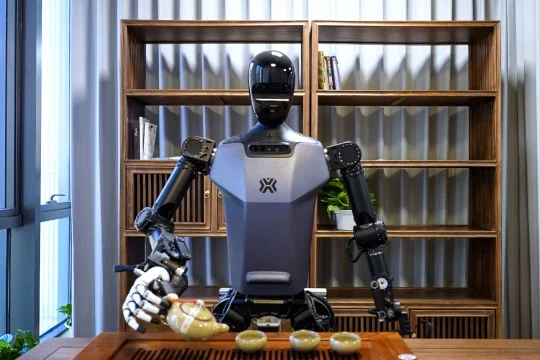
If humanoid robots can simulate empathy, companionship, and understanding, they may begin to occupy roles traditionally filled by humans.
This could have both positive and negative effects.
For individuals experiencing loneliness or isolation, robots may provide meaningful support.
But there is also a risk of substitution.
“If people start choosing machines over humans for certain interactions, that could fundamentally alter social dynamics,” said a behavioral scientist.
The long-term implications are difficult to predict.
What is certain is that the definition of “relationship” may evolve.
Ethics at Scale
As humanoid robots become more capable and widespread, ethical questions will become more urgent—and more complex.
Issues that are currently theoretical may become everyday realities:
- Should robots have rights?
- Who is responsible for their actions?
- How should they make moral decisions?
- What limits should be placed on their use?
These questions do not have easy answers.
And they cannot be addressed by technology alone.
“This is a societal conversation,” said an ethicist. “Not just an engineering problem.”
The Risk of Overdependence
Another concern is dependence.
As societies integrate humanoid robots into critical systems—healthcare, logistics, infrastructure—the consequences of failure increase.
A malfunction, cyberattack, or systemic error could have widespread effects.
“Resilience becomes a key issue,” said a cybersecurity expert. “The more we rely on these systems, the more vulnerable we may become.”
This raises the need for robust safeguards, redundancy, and oversight.
A Cultural Shift
Technology does not exist in a vacuum.
The adoption of humanoid robots will be shaped by cultural attitudes, values, and norms.
In some societies, robots may be readily accepted—even embraced.
In others, resistance may persist.
These differences could influence how quickly and extensively the technology is adopted.
“Culture will play a huge role,” said a global analyst. “It always does.”
The Timeline: Faster Than Expected?
One of the most striking aspects of the humanoid robot revolution is its pace.
What once seemed decades away is now unfolding in real time.
Advances in AI, combined with improvements in hardware and manufacturing, are accelerating progress.
Many experts believe that significant adoption could occur within the next 10 to 20 years.
Some argue it could happen even sooner.
“We tend to underestimate exponential change,” said a futurist. “Until it’s too late.”
A Fork in the Road
Ultimately, the rise of humanoid robots presents a choice.
The technology itself is not inherently good or bad.
Its impact will depend on how it is developed, deployed, and governed.
Societies will need to decide:
- How to balance efficiency with human dignity
- How to distribute the benefits of automation
- How to preserve meaningful human roles
- How to ensure accountability and safety
These decisions will shape not just the future of work, but the structure of society itself.
Conclusion
The age of humanoid robots is approaching—not as a distant possibility, but as an emerging reality.
Over the next two decades, these machines could transform industries, economies, and daily life in ways that are difficult to fully comprehend today.
They may free humans from certain forms of labor.
They may create new opportunities.
They may also introduce new risks, challenges, and questions.
In the end, the story of humanoid robots is not just about machines.
It is about us.
Our choices.
Our values.
And our vision for the future.
Because as we build machines that increasingly resemble ourselves, we are forced to confront a deeper question:
What kind of world do we want to build—and what kind of humans do we want to be within it?
Discussion about this post