









In a quiet industrial park on the outskirts of Shenzhen, a humanoid robot bends down, picks up a scattered set of components, and assembles them with near-human precision. Just a few years ago, such a scene would have belonged to science fiction. Today, it is becoming an everyday reality.
Across the globe, humanoid robots—machines designed to resemble and mimic human form and behavior—are rapidly transitioning from research prototypes into practical tools deployed in factories, warehouses, hospitals, and even homes. Backed by breakthroughs in artificial intelligence, mechanical engineering, and sensor technologies, this new generation of robots is poised to redefine the relationship between humans and machines.
But as the technology accelerates, so do questions about labor, ethics, safety, and the future of society itself.
From Concept to Commercialization
The idea of humanoid robots has long fascinated engineers and futurists. Early efforts focused primarily on mobility—teaching robots how to walk, balance, and interact physically with the world. While these challenges were formidable, recent advances in AI have shifted the focus toward cognition and adaptability.
Modern humanoid robots are no longer just programmable machines executing fixed instructions. Instead, they are increasingly powered by large-scale AI models capable of perception, reasoning, and decision-making.
Companies in the United States, China, Japan, and Europe are racing to bring these systems to market. Several firms have announced pilot programs in logistics and manufacturing, where humanoid robots perform repetitive or physically demanding tasks such as sorting packages, loading goods, and assembling products.
Unlike traditional industrial robots—which are often fixed in place and designed for a single function—humanoid robots offer versatility. Their human-like form allows them to operate in environments built for humans, using existing tools and infrastructure without extensive modification.
“This is the key inflection point,” said one robotics engineer involved in a major deployment project. “We are no longer designing environments for robots. We are designing robots for human environments.”
The AI Breakthrough Driving the Shift
At the core of this transformation lies a convergence between robotics and artificial intelligence.
Large multimodal AI systems now enable robots to interpret visual data, understand spoken language, and execute complex sequences of actions. Instead of manually coding each behavior, developers train robots using vast datasets and simulation environments.
For example, a humanoid robot can learn how to make coffee not by following a rigid script, but by observing demonstrations and generalizing from them. It can adapt to different machines, cups, and environments—something that would have been nearly impossible with earlier generations of robotics.
Cloud connectivity further enhances these capabilities. Robots can share experiences, learn collectively, and receive updates in real time, creating what some researchers describe as a “distributed intelligence network.”
This shift dramatically reduces the cost and time required to deploy robots in new scenarios, accelerating their adoption across industries.
Transforming the Workforce
One of the most immediate impacts of humanoid robots is being felt in the labor market.
In manufacturing hubs, companies facing labor shortages are increasingly turning to automation. Aging populations in countries such as Japan and Germany have intensified the need for robotic assistance, particularly in physically demanding roles.
Humanoid robots are seen as a solution because they can perform tasks traditionally done by humans without requiring major changes to existing workflows.
However, this raises concerns about job displacement.
Economists remain divided on the long-term effects. Some argue that robots will replace low-skilled labor, leading to unemployment and social inequality. Others believe that new categories of jobs—such as robot maintenance, programming, and supervision—will emerge, offsetting losses.
“What we are seeing is not a simple replacement of humans,” said a labor analyst. “It is a restructuring of work itself.”
In many cases, companies are adopting a hybrid approach, where humans and robots collaborate. Workers handle complex decision-making and supervision, while robots take on repetitive or hazardous tasks.
This model, often referred to as “cobotics,” is gaining traction as a way to balance efficiency with human employment.
Beyond Industry: Entering Daily Life
While industrial applications dominate current deployments, humanoid robots are increasingly moving into consumer-facing roles.
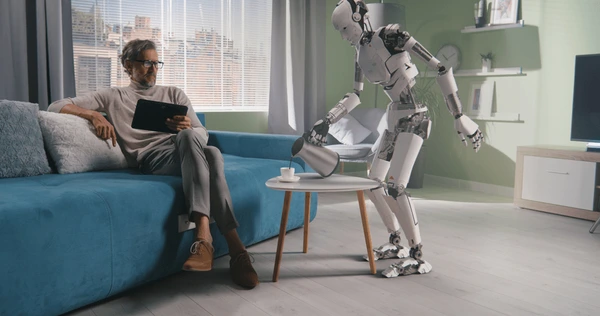
In healthcare, they are being tested as assistants for elderly care, helping patients with mobility, medication reminders, and companionship. In hospitality, robots greet guests, provide information, and even deliver room service.
The most ambitious vision, however, lies in domestic use.
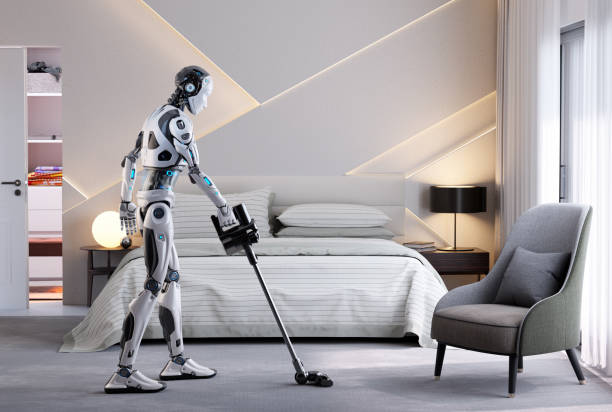
Several companies are developing home-oriented humanoid robots capable of performing household chores such as cleaning, cooking, and organizing. These systems aim to function as general-purpose assistants, much like the digital assistants found in smartphones—but embodied in physical form.
Despite the promise, significant challenges remain. Reliability, safety, and cost are major barriers to widespread adoption. Current prototypes are expensive and require careful supervision, limiting their accessibility to early adopters and pilot programs.
Safety and Ethical Considerations
As humanoid robots become more integrated into daily life, concerns about safety and ethics are intensifying.
Unlike traditional machines, humanoid robots operate in close proximity to humans, often in unpredictable environments. Ensuring that they can respond appropriately to unexpected situations is critical.
Engineers are working on advanced safety systems, including real-time monitoring, fail-safe mechanisms, and ethical decision-making frameworks. However, the complexity of human environments makes it difficult to anticipate every possible scenario.
Privacy is another major concern. Robots equipped with cameras, microphones, and sensors collect vast amounts of data, raising questions about how this information is stored, used, and protected.
There are also deeper philosophical questions about human-robot interaction.
As robots become more lifelike, people may form emotional attachments to them. This could have implications for mental health, social behavior, and even legal definitions of responsibility.
“If a robot makes a mistake, who is accountable?” asked one ethicist. “The manufacturer? The programmer? The user? These are questions we have not fully answered.”
Global Competition and Strategic Importance
The race to develop humanoid robots is not just a technological contest—it is also a geopolitical one.
Governments around the world are investing heavily in robotics as part of broader strategies to maintain economic competitiveness and technological leadership.
China has identified robotics as a key industry in its national development plans, aiming to become a global leader in advanced manufacturing. The United States, meanwhile, is leveraging its strengths in AI and software to drive innovation. Japan continues to play a significant role, drawing on decades of experience in robotics and automation.
This competition is fueling rapid progress but also raising concerns about standards, regulation, and international cooperation.
Experts warn that without clear guidelines, the proliferation of humanoid robots could lead to fragmented systems and uneven safety practices.
The Road Ahead
Despite the challenges, the trajectory of humanoid robotics appears clear: continued growth, increasing capability, and expanding applications.
Analysts predict that the next decade will see significant reductions in cost, making these systems more accessible to businesses and consumers alike. Advances in battery technology, materials, and AI will further enhance performance and reliability.
At the same time, the societal implications will become more pronounced.
Education systems may need to adapt to prepare workers for a more automated world. Legal frameworks will need to address issues of liability and rights. Cultural attitudes toward machines may evolve as robots become more integrated into everyday life.
Conclusion
Humanoid robots are no longer a distant vision—they are a rapidly emerging reality.
From factory floors to family homes, these machines are beginning to reshape how we live and work. While the benefits are significant, the challenges are equally profound.
The question is no longer whether humanoid robots will become part of our world, but how we will choose to integrate them—and what kind of future we want to build alongside them.
Discussion about this post