








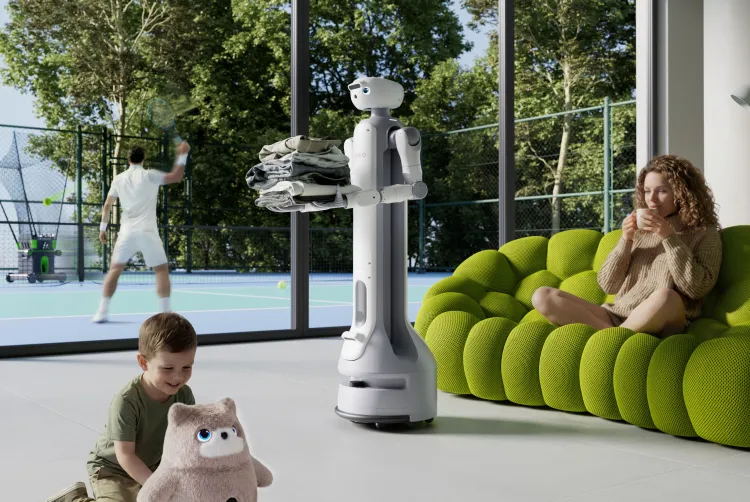

08:30 AM — A Different Kind of Classroom
The classroom looks familiar at first.
Rows of desks. A whiteboard. A teacher preparing the day’s lesson.
But at the back of the room, standing quietly, is something new.
A humanoid robot.
It doesn’t replace the teacher.
It doesn’t lead the class.
But throughout the day, it becomes impossible to ignore.
The First Role: Assistant, Not Instructor
When the lesson begins, the robot does not speak immediately.
Instead, it observes.
It tracks:
- Student attention levels
- Participation patterns
- Response times
When a student hesitates on a math problem, the robot approaches.
“Would you like a hint?”
The interaction is quiet. Personalized. Immediate.
This is the first major shift:
From one-to-many teaching
to one-to-one assistance—at scale.
Personalized Learning, Finally Real?
For decades, education systems have struggled with a core limitation:
One teacher.
Many students.
Different learning speeds.
Different needs.
What Humanoid Robots Enable
- Real-time feedback for each student
- Adaptive difficulty levels
- Continuous monitoring of progress
Instead of teaching to the average, systems can respond to the individual.
A Simple Example
In a traditional class:
- A fast learner waits
- A struggling student falls behind
With robotic assistance:
- The fast learner gets advanced tasks
- The struggling student gets targeted help
All at the same time.
The Second Role: Behavioral Support
Learning is not just cognitive.
It’s behavioral.
What Robots Track
- Attention span
- Engagement levels
- Distraction patterns
What They Do
- Gently redirect focus
- Provide reminders
- Adjust interaction style
Unlike human teachers, robots can monitor every student simultaneously.
The Trade-Off
This level of monitoring raises a critical question:
Where does support end—and surveillance begin?
The Third Role: Emotional Buffer
In many classrooms, students hesitate to ask questions.
Fear of judgment.
Fear of embarrassment.
Why Robots Change This
Students often feel more comfortable interacting with a machine.
- No social pressure
- No perceived judgment
- No “wrong answer anxiety”
Observed Behavior
Early pilot programs show:
- Increased question frequency
- Higher engagement from introverted students
- More consistent participation
But There’s a Catch
If students prefer robots over humans for interaction—
what happens to social development?
At Home: The Learning Extends Beyond School
The impact of humanoid robots is not limited to classrooms.
It extends into the home.
After School, Same System
A child continues learning with the same robotic assistant:
- Homework guidance
- Concept reinforcement
- Skill practice
The boundary between school and home begins to blur.
Always Available Learning
Education becomes:
- Continuous
- Personalized
- On-demand
The Parenting Shift
For parents, humanoid robots introduce a new dynamic.
What They Gain
- Academic support for children
- Reduced need for tutoring
- Real-time progress insights
What They Risk
- Reduced direct involvement
- Over-reliance on automated systems
- Delegation of developmental roles
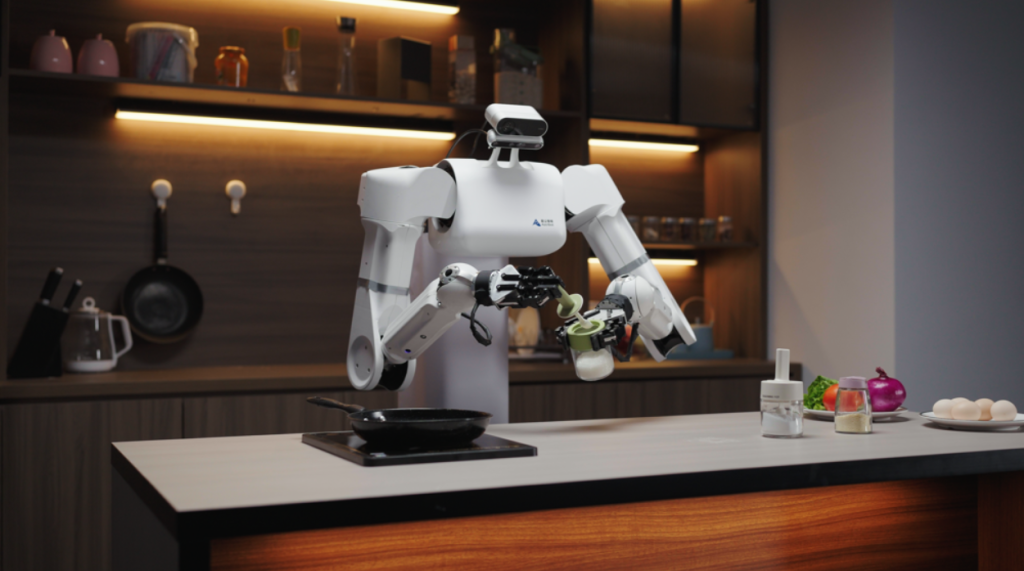
A Subtle Question Emerges
If a robot teaches your child daily—
who is shaping their thinking?
The Teacher’s Role: Not Replaced, but Redefined
Despite concerns, teachers are not being removed from classrooms.
But their role is changing.
From Instructor to Orchestrator
Teachers increasingly:
- Guide overall learning direction
- Manage classroom dynamics
- Handle complex explanations
While Robots Handle
- Repetition
- Individual assistance
- Data tracking
The Result
Teaching becomes less about delivery—
and more about design.
The Data Layer: Learning Becomes Quantified
Humanoid robots generate detailed learning data:
- Response times
- Error patterns
- Progress curves
What This Enables
- Early detection of learning difficulties
- Personalized curriculum adjustments
- Predictive performance analysis
What This Risks
- Over-optimization of learning
- Reduced creativity
- Pressure from constant measurement
The Social Question
Perhaps the biggest unknown is not academic.
It’s social.
Growing Up With Robots
Children interacting daily with humanoid robots may:
- Expect instant feedback
- Prefer predictable interactions
- Develop different communication patterns
Human Relationships Are Messy
- Delayed responses
- Misunderstandings
- Emotional complexity
Robots remove that friction.
But friction is part of development.
Equity and Access
Like many emerging technologies, humanoid robots raise questions of access.
Who Gets Them?
- Well-funded schools
- Higher-income households
Who Doesn’t?
- Under-resourced communities
- Public systems with limited budgets
Potential Outcome
A widening gap in educational quality.
The Classroom of the Future: A Hybrid Model
The most likely scenario is not robot-led education—
but hybrid systems.
Human + Robot Collaboration
- Teachers provide context and meaning
- Robots provide scale and personalization
Learning Becomes Layered
- Group instruction
- Individual support
- Continuous feedback
Back to the Classroom
At the end of the day, the students leave.
The teacher packs up.
The robot remains.
It uploads data. Syncs progress. Prepares for tomorrow.
Conclusion
Humanoid robots in education are not just tools for learning.
They are tools that shape how learning happens.
They offer:
- Personalization
- Consistency
- Accessibility
But they also introduce new challenges:
- Social development
- Data ethics
- Dependency
The future classroom will not be defined by whether robots are present.
It will be defined by how they are used.
And more importantly—
by what we choose not to give them.
Because education is not just about information.
It is about becoming human.
And that is something no machine—no matter how advanced—fully understands.
Discussion about this post