








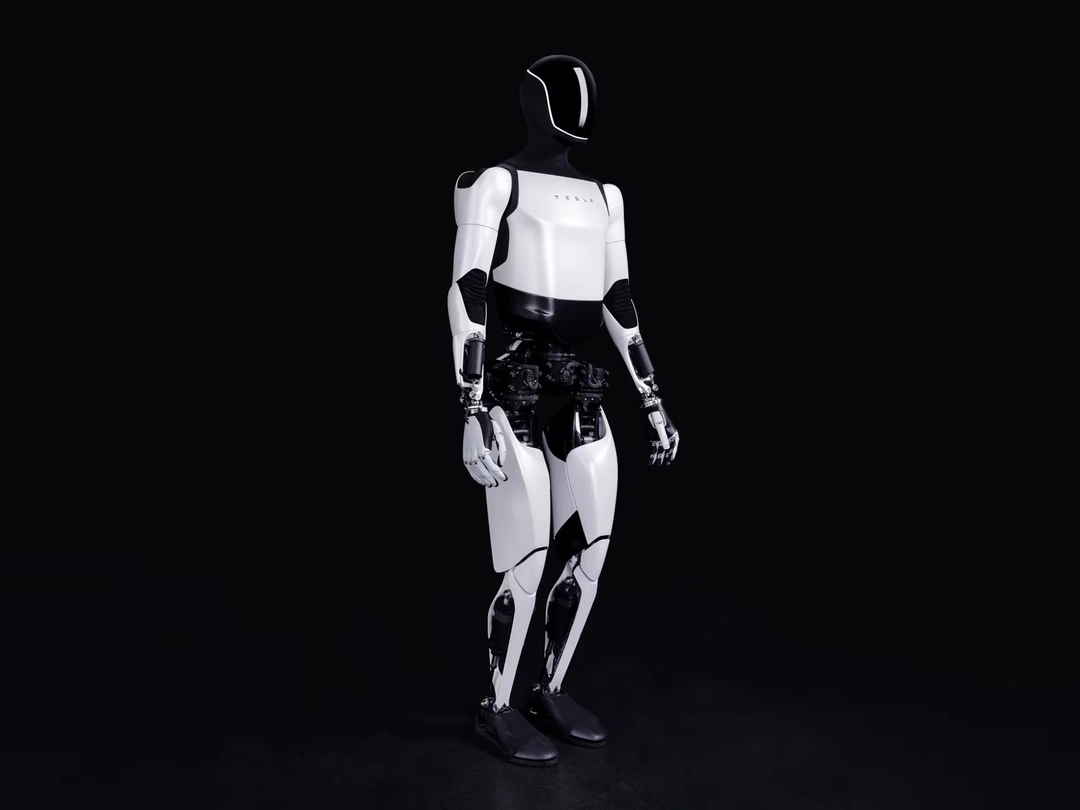

Introduction: A New Industrial Revolution in Motion
The manufacturing industry has always been at the forefront of automation. From the first assembly lines to today’s highly automated factories, each technological wave has reshaped how goods are produced.
In 2026, a new phase of this evolution is underway—one defined by the rise of humanoid robots.
Unlike traditional industrial robots, which are typically fixed in place and designed for specific tasks, humanoid robots bring a new level of flexibility. They are designed to move, adapt, and operate in environments originally built for humans.
This capability is transforming manufacturing, enabling a shift toward more dynamic, intelligent, and scalable production systems.
Why Manufacturing Is the First Major Battlefield
Labor Shortages and Rising Costs
Manufacturers worldwide are facing increasing pressure from:
- Labor shortages
- Rising wages
- High turnover rates
These challenges are especially pronounced in roles that are physically demanding, repetitive, or hazardous.
Humanoid robots offer a compelling solution by providing a consistent, scalable workforce.
The Need for Flexibility
Traditional automation works best in stable, predictable environments. However, modern manufacturing is becoming more dynamic due to:
- Customization demands
- Shorter product life cycles
- Supply chain disruptions
Humanoid robots can adapt to changing tasks without requiring major infrastructure changes, making them ideal for flexible production.
Key Applications on the Factory Floor
Assembly Line Support
Humanoid robots are being introduced to assist with assembly processes.
They can:
- Handle components
- Perform repetitive assembly tasks
- Assist human workers
Companies like Tesla are actively testing humanoid robots such as Optimus in factory environments.
These robots are designed to integrate seamlessly into existing workflows.
Material Handling and Logistics
Moving materials within factories is a time-consuming task.
Humanoid robots can:
- Transport parts between stations
- Load and unload equipment
- Manage inventory movement
Unlike traditional automated systems, they can operate in human-designed spaces without modification.
Quality Inspection
With advanced vision systems, humanoid robots can perform quality checks by:
- Detecting defects
- Comparing products against standards
- Identifying inconsistencies
This improves accuracy and reduces waste.
Smart Factories and Integrated Systems
The Rise of Industry 4.0
Humanoid robots are becoming part of the broader Industry 4.0 ecosystem, which includes:
- IoT devices
- AI-driven analytics
- Connected production systems
In China, companies like UBTECH Robotics are integrating humanoid robots into smart factories.
Data-Driven Optimization
Robots generate large amounts of data, which can be used to:
- Optimize workflows
- Predict maintenance needs
- Improve efficiency
This creates a feedback loop that continuously enhances performance.
Advantages Over Traditional Automation
Adaptability
Humanoid robots can perform multiple tasks, unlike specialized machines.
Space Efficiency
They can operate in existing facilities without requiring major redesigns.
Human Collaboration
They are designed to work alongside humans, enabling collaborative workflows.
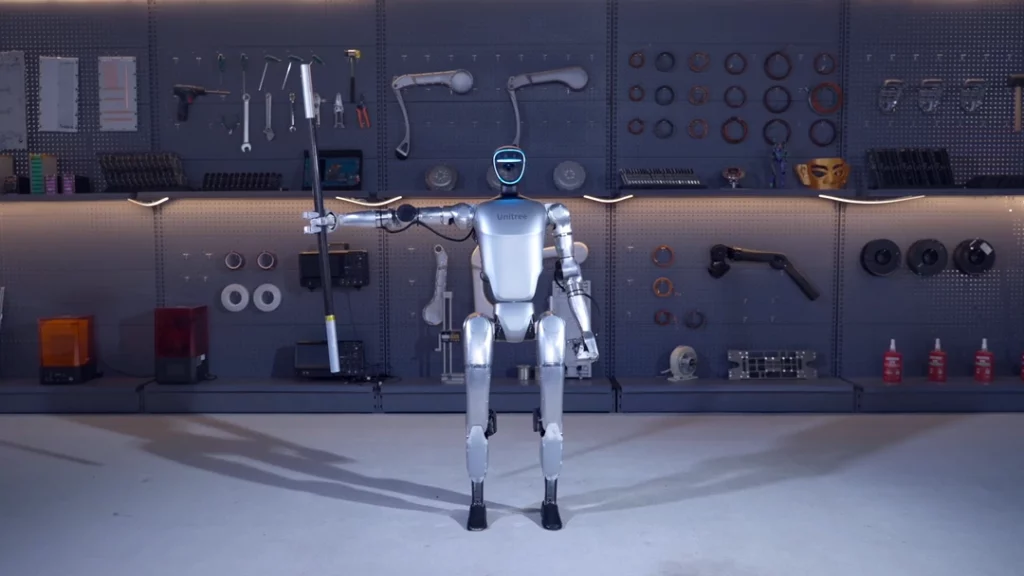
Human-Robot Collaboration on the Factory Floor
Augmenting Workers, Not Replacing Them
In most cases, humanoid robots are used to support human workers rather than replace them.
They take on:
- Physically demanding tasks
- Repetitive operations
- Dangerous activities
This allows humans to focus on more complex and creative work.
New Roles for Workers
The introduction of robots is creating new job categories, including:
- Robot supervisors
- Maintenance technicians
- AI system operators
This shift requires reskilling and training.
Safety Considerations
Working Alongside Humans
Safety is critical when robots operate near people.
Modern humanoid robots are equipped with:
- Collision detection systems
- Force sensors
- Real-time decision-making capabilities
These features help prevent accidents.
Regulatory Standards
Governments and industry organizations are developing safety standards to ensure safe deployment in industrial environments.
Economic Impact on Manufacturing
Productivity Gains
Humanoid robots can work continuously, increasing output and efficiency.
Cost Reduction
Over time, robots can reduce labor costs and improve consistency.
Competitive Advantage
Companies that adopt robotics early may gain a significant edge in global markets.
Challenges to Adoption
High Initial Costs
Humanoid robots are still expensive, limiting widespread adoption.
Technical Limitations
Challenges remain in:
- Precision handling
- Long-term reliability
- Complex task execution
Integration Complexity
Incorporating robots into existing systems can be difficult.
Case Studies and Early Deployments
Manufacturers around the world are experimenting with humanoid robots.
- Automotive factories testing assembly assistance
- Electronics manufacturers exploring precision tasks
- Logistics hubs integrating robots into workflows
These early deployments are shaping best practices.
The Future of Industrial Robotics
Toward Fully Autonomous Factories
While fully autonomous factories are still a long-term goal, humanoid robots are a key step in that direction.
Continuous Learning Systems
Future robots will improve over time through machine learning.
Global Standardization
Standardized platforms and components will accelerate adoption.
Conclusion: A Flexible Future for Manufacturing
Humanoid robots are redefining what is possible in manufacturing.
By combining flexibility, intelligence, and human-like adaptability, they are enabling a new generation of production systems that are more responsive, efficient, and resilient.
While challenges remain, the direction is clear: humanoid robots will play a central role in the factories of the future.
Discussion about this post