









Introduction: The Challenge of Human-Like Movement
Among all the technical challenges in humanoid robotics, achieving stable and natural movement remains one of the most difficult. Walking, standing, turning, and maintaining balance are tasks that humans perform effortlessly, yet they require immense computational and mechanical sophistication for robots.
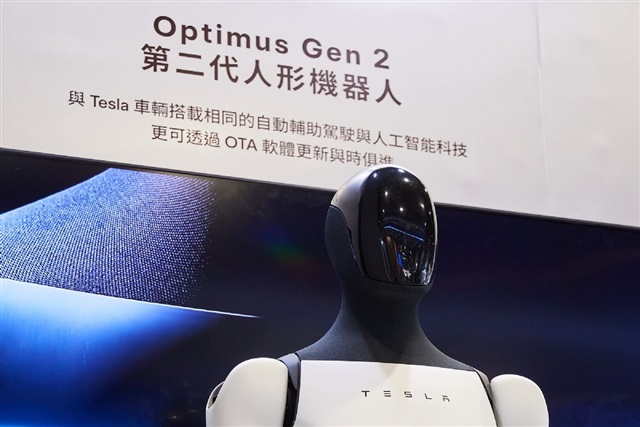
In 2026, companies like Boston Dynamics and Tesla are pushing the boundaries of humanoid mobility. However, behind every impressive demo lies an enormous amount of data testing focused on motion and balance.
Motion and balance testing is not just about making robots walk—it is about ensuring they can operate safely, efficiently, and reliably in unpredictable real-world environments.
Understanding Humanoid Motion Systems
Degrees of Freedom and Complexity
Humanoid robots typically have dozens of joints, each representing a degree of freedom. Coordinating these joints requires precise control and continuous feedback.
Key components include:
- Hip and leg joints for locomotion
- Arm joints for balance and manipulation
- Torso stabilization systems
Testing must ensure that all these components work together seamlessly.
Dynamic vs. Static Stability
Robotic stability can be divided into two categories:
- Static stability: maintaining balance while stationary
- Dynamic stability: maintaining balance while moving
Humanoid robots rely heavily on dynamic stability, especially during walking and running.
Data Sources for Motion Testing
Inertial Measurement Units (IMUs)
IMUs provide data on:
- Acceleration
- Orientation
- Angular velocity
This data is critical for real-time balance control.
Force and Pressure Sensors
Located in the robot’s feet, these sensors measure:
- Ground contact forces
- Weight distribution
- Center of pressure
Vision-Based Feedback
Cameras help robots understand terrain and obstacles, enabling adaptive movement.
Joint and Actuator Data
Sensors within joints provide feedback on:
- Position
- Velocity
- Torque
Core Testing Scenarios
Walking on Flat Surfaces
The most basic test involves stable walking on even ground.
Metrics include:
- Step consistency
- Energy efficiency
- Balance recovery
Uneven Terrain Navigation
Real-world environments are rarely flat. Robots must handle:
- Slopes
- Stairs
- Irregular surfaces
Testing focuses on adaptability and robustness.
Obstacle Avoidance
Robots must detect and navigate around obstacles while maintaining balance.
External Disturbances
Robots are tested against disturbances such as:
- Pushes
- Sudden impacts
- Load changes
These tests evaluate recovery capabilities.
Simulation in Motion Testing
Physics Engines
Simulation platforms use physics engines to model:
- Gravity
- Friction
- Collision dynamics
This allows large-scale testing without physical risk.
Reinforcement Learning
Robots can learn movement strategies through trial and error in simulation environments.
Domain Randomization
To reduce the simulation-to-reality gap, variables such as friction and mass are randomized during training.
Real-World Testing Protocols
Controlled Lab Testing
Initial tests are conducted in controlled environments to ensure safety.
Field Testing
Robots are then tested in real-world environments, including:
- Outdoor terrains
- Industrial settings
- Public spaces
Long-Duration Testing
Robots are tested over extended periods to evaluate:
- Durability
- Consistency
- System fatigue
Metrics for Evaluating Motion Performance
Stability Metrics
- Center of mass deviation
- Recovery time after disturbance
Efficiency Metrics
- Energy consumption per step
- Battery usage
Accuracy Metrics
- Step placement precision
- Path tracking
Reliability Metrics
- Failure rate
- Mean time between failures
Failure Modes in Motion Systems
سقوط and Loss of Balance
Falls are one of the most critical failure modes.
Joint Failure
Mechanical or control issues can lead to joint malfunction.
Sensor Errors
Incorrect sensor data can disrupt balance control.
Safety Mechanisms
Fall Detection and Mitigation
Robots are designed to:
- Detect imminent falls
- Minimize damage during impact
Redundant Systems
Backup systems ensure continued operation in case of failure.
Emergency Shutdown
Robots can shut down safely in critical situations.
Challenges in Motion Testing
Real-World Variability
Environmental unpredictability makes testing difficult.
Hardware Limitations
Actuators and batteries limit performance.
Computational Complexity
Real-time control requires significant processing power.
Industry Approaches
Data-Driven Control Systems
Companies like Boston Dynamics use data-driven approaches to refine motion algorithms.
Continuous Learning
Robots improve over time through data collection and model updates.
Integration with AI Models
Motion control is increasingly integrated with higher-level AI systems.
The Future of Motion Testing
Self-Learning Robots
Future robots may optimize their own movement through continuous learning.
Improved Hardware
Advances in actuators and materials will enhance performance.
Standardized Benchmarks
Industry standards will enable consistent evaluation of motion capabilities.
Conclusion: Stability as the Foundation of Functionality
Motion and balance are fundamental to humanoid robotics. Without reliable movement, even the most advanced AI systems cannot function effectively in the real world.
Through rigorous data testing, engineers are building robots that can navigate complex environments, interact safely with humans, and perform meaningful tasks.
As technology advances, the line between human and robotic movement will continue to blur—bringing us closer to a future where humanoid robots operate seamlessly in our world.