








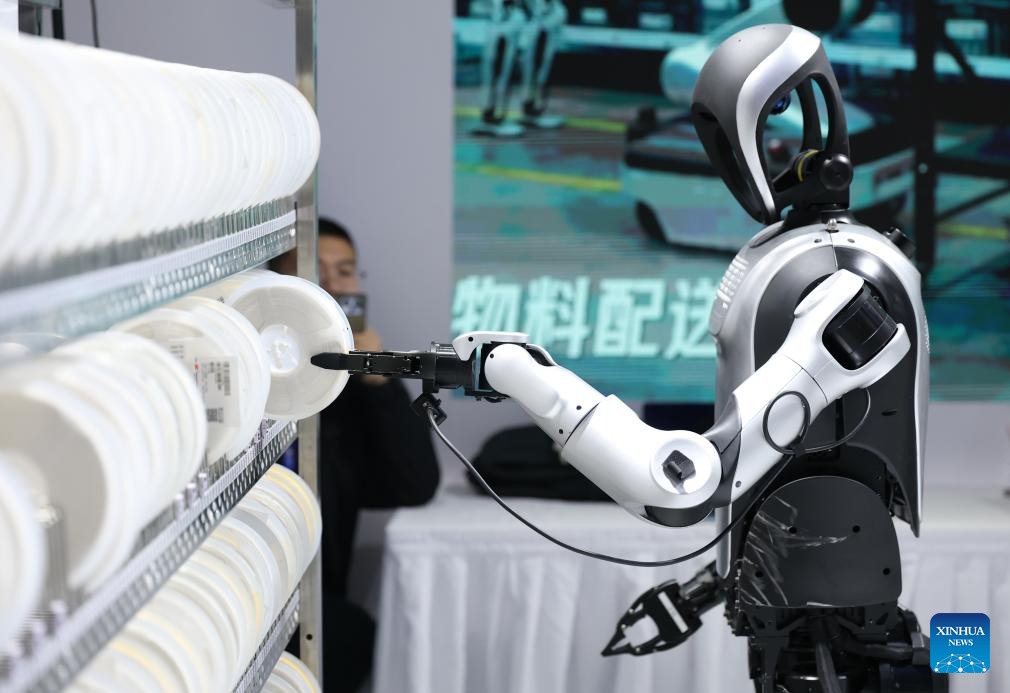

Introduction: Seeing Is Not Just Observing—It Is Understanding
For humanoid robots, vision is far more than the ability to “see.” It is the foundation of understanding the world.
A robot must not only detect objects but also interpret context, predict outcomes, and make decisions in real time. Whether navigating a crowded room, picking up a fragile object, or interacting with a human, perception systems guide nearly every action.
In 2026, breakthroughs in computer vision and AI have significantly advanced humanoid perception capabilities. Companies like Tesla and Google are leveraging large-scale data and neural networks to push the boundaries of machine perception.
However, building these systems is only half the challenge. Ensuring they work reliably requires rigorous vision and perception testing.
What Is Perception in Humanoid Robots?
Multi-Modal Understanding
Perception in humanoid robots is not limited to visual input. It combines multiple data sources:
- Vision (cameras)
- Depth sensing (LiDAR or stereo cameras)
- Audio signals
- Tactile feedback
These inputs are fused to create a comprehensive understanding of the environment.
From Pixels to Decisions
The perception pipeline typically includes:
- Data acquisition
- Object detection
- Scene understanding
- Decision-making support
Testing must validate each stage of this pipeline.
Types of Vision Data
RGB Camera Data
Standard cameras capture color images used for:
- Object recognition
- Scene analysis
- Human detection
Depth Data
Depth sensors provide 3D information about the environment.
Testing ensures accurate distance measurement and spatial awareness.
Semantic Segmentation Data
This involves labeling each pixel in an image to identify objects and surfaces.
Motion and Temporal Data
Understanding movement over time is critical for predicting behavior.
Core Testing Tasks
Object Detection and Recognition
Robots must identify objects accurately under various conditions.
Testing includes:
- Different lighting conditions
- Occlusion scenarios
- Object variations
Scene Understanding
Beyond objects, robots must understand context:
- Is a room crowded?
- Is a path blocked?
- What actions are possible?
Human Detection and Tracking
Humanoid robots must recognize and track humans to interact safely.
Gesture and Emotion Recognition
Advanced systems attempt to interpret:
- Gestures
- Facial expressions
- Body language
Environmental Testing Conditions
Lighting Variations
Robots must function in:
- Bright light
- Low light
- Mixed lighting conditions
Weather and Outdoor Conditions
For outdoor robots, testing includes:
- Rain
- Dust
- Fog
Dynamic Environments
Crowded and fast-changing environments are particularly challenging.
Simulation for Vision Testing
Synthetic Data Generation
Artificial datasets are created to train and test models.
Scenario Simulation
Virtual environments allow testing of rare or dangerous scenarios.
Advantages and Limitations
While simulation enables scale, it cannot fully replicate real-world complexity.
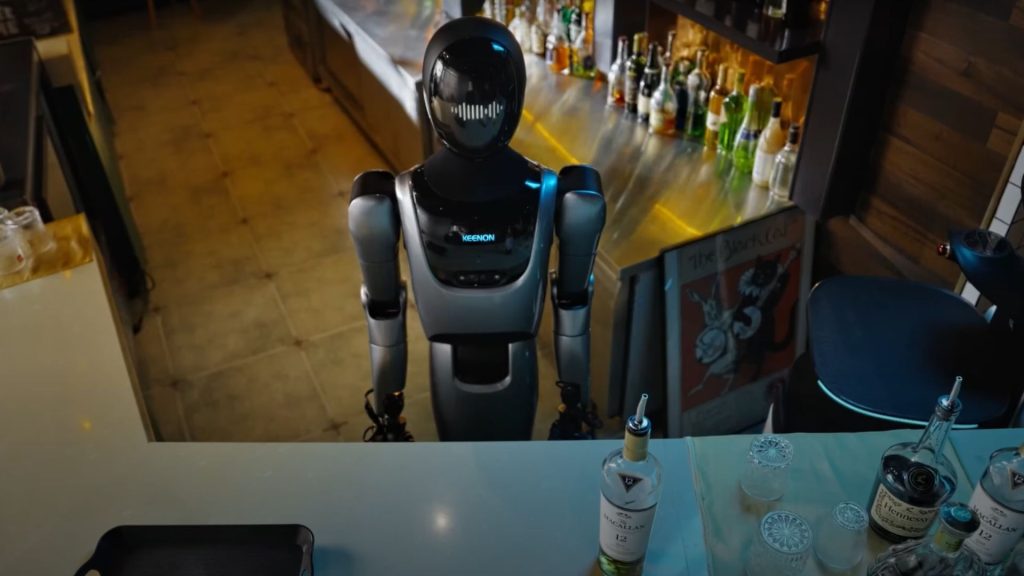
Real-World Data Testing
Data Collection at Scale
Companies like Tesla collect massive datasets from real-world environments.
Annotation and Labeling
Data must be labeled accurately for training and testing.
Continuous Feedback Loops
Real-world performance feeds back into model improvement.
Metrics for Evaluation
Accuracy
- Object detection precision
- Classification accuracy
Latency
- Time taken to process visual data
Robustness
- Performance under challenging conditions
Generalization
- Ability to handle unseen scenarios
Failure Modes in Perception Systems
Misclassification
Incorrect identification of objects.
Missed Detection
Failure to detect important elements.
False Positives
Detecting objects that are not present.
Context Errors
Misinterpreting the environment or situation.
Safety Implications
Collision Avoidance
Perception failures can lead to accidents.
Human Interaction Risks
Misreading human behavior can cause unsafe interactions.
Redundancy and Cross-Validation
Multiple sensors are used to reduce risk.
Challenges in Vision Testing
Data Diversity
Robots must handle a vast range of environments.
Edge Cases
Rare scenarios are difficult to capture and test.
Computational Constraints
Real-time processing requires efficient algorithms.
Industry Trends
Large-Scale Vision Models
AI models are becoming larger and more capable.
Multimodal AI Systems
Combining vision, language, and action.
Continuous Learning Systems
Robots improve perception through ongoing data collection.
The Future of Perception Testing
Self-Supervised Learning
Reducing reliance on labeled data.
Improved Simulation
More realistic virtual environments.
Standardized Benchmarks
Industry-wide evaluation frameworks.
Conclusion: Teaching Machines to Understand
Vision and perception are at the heart of humanoid robotics.
Through rigorous data testing, engineers are teaching machines not just to see, but to understand the world in a meaningful way.
As these systems improve, humanoid robots will become more capable, safer, and more integrated into everyday life.
The journey from perception to true understanding is still ongoing—but the progress made so far is already transforming what robots can achieve.
Discussion about this post