









Executive Overview: Crossing the Chasm
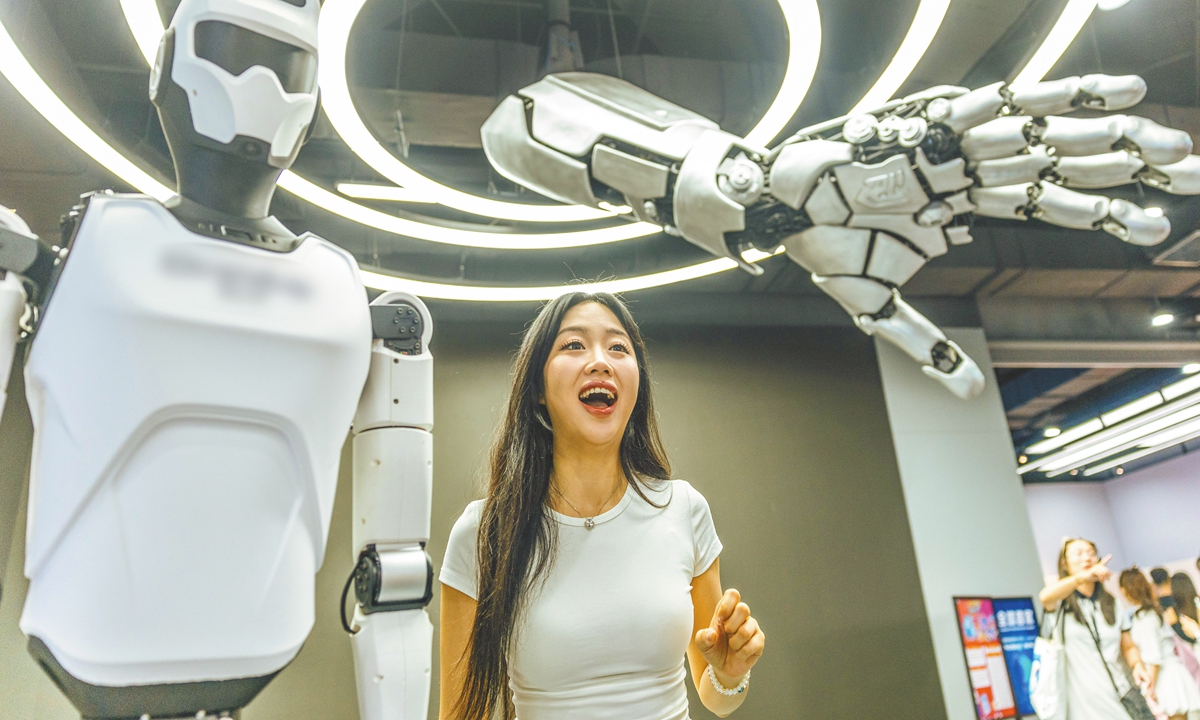
For years, humanoid robots existed primarily as research projects and media spectacles—impressive demonstrations that rarely translated into real-world deployment. However, the past three years have marked a decisive shift: humanoid robotics is entering its industrialization phase.
This transition is defined by three forces:
- Standardization of hardware platforms
- Breakthroughs in general-purpose AI models
- Clear commercial use cases with measurable ROI
The question is no longer “Can humanoid robots work?” but rather “Where do they scale first—and why?”
1. From Showcase to Deployment: What Changed?
1.1 The End of the “Demo Era”
Earlier humanoid robots were designed to impress:
- Walking on stage
- Performing choreographed tasks
- Demonstrating balance and agility
But these systems lacked:
- Reliability
- Cost efficiency
- Task generalization
Today’s systems are designed for repeatable, measurable work.
1.2 The Rise of Minimum Viable Robots (MVR)
A critical shift has been the emergence of the Minimum Viable Robot concept:
Instead of building perfect humanoids, companies now:
- Focus on specific task clusters
- Accept limited capabilities
- Optimize for deployment speed
This mirrors the evolution of software startups—launch early, iterate fast.
2. The First Real Markets for Humanoid Robots
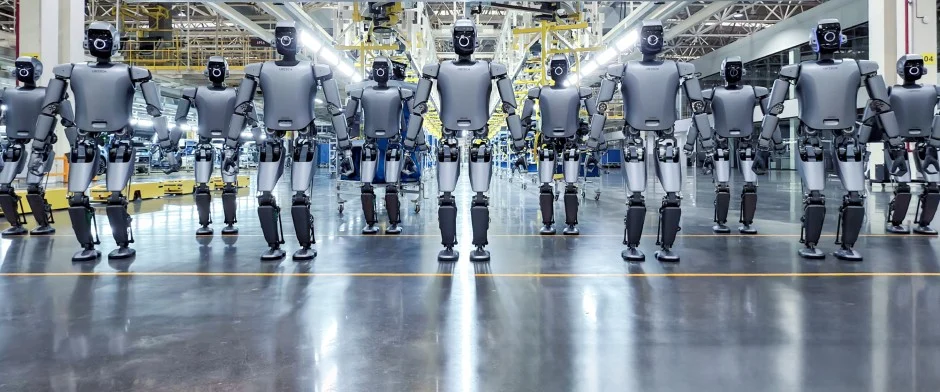
2.1 Logistics and Warehousing: The Beachhead Market
Warehouses are becoming the first large-scale deployment environment.
Why?
- Structured but flexible environments
- High labor turnover
- Clear ROI metrics
Humanoid robots in warehouses perform:
- Picking and placing items
- Sorting packages
- Loading and unloading
Unlike traditional automation, they can adapt to changing inventory layouts.
2.2 Manufacturing: Beyond Robotic Arms
Traditional industrial robots are fixed and specialized. Humanoid robots introduce:
- Mobility across production lines
- Ability to handle diverse tasks
- Human-like interaction with tools
This allows factories to become more reconfigurable, reducing downtime.
2.3 Retail and Frontline Services
Retail environments are inherently unpredictable:
- Changing layouts
- Human interaction
- Diverse product handling
Humanoid robots are beginning to:
- Restock shelves
- Assist customers
- Manage inventory
This is where human-like form factors provide a clear advantage.
3. Case Studies: The New Wave of Robotics Companies
3.1 General-Purpose Robot Platforms
Several companies are pursuing general-purpose humanoid robots:
- Building unified hardware platforms
- Training AI models across multiple tasks
- Targeting cross-industry deployment
Their strategy resembles operating systems for physical labor.
3.2 Vertical Integration vs. Platform Ecosystems
Two competing models are emerging:
Vertical Integration:
- Control hardware, software, and AI
- Faster optimization
- Higher capital requirements
Platform Ecosystems:
- Open APIs for developers
- Third-party applications
- Faster innovation cycles
The winning approach may combine both.
4. The Technology Stack Behind Industrial-Scale Robots
4.1 Perception Systems in Real Environments
Industrial environments are messy:
- Variable lighting
- Occlusions
- Dynamic obstacles
Modern robots use:
- Multi-camera systems
- Depth sensors
- Real-time scene reconstruction
This enables robust perception under uncertainty.
4.2 Task Planning and Execution
Humanoid robots must translate goals into actions:
Example: “Prepare a shipment”
Steps include:
- Locate items
- Pick objects
- Navigate space
- Package goods
This requires hierarchical planning systems that combine:
- High-level reasoning
- Low-level motor control
4.3 Learning at Scale: Simulation + Reality
Training robots purely in the real world is too slow.
Solution:
- Massive simulation environments
- Synthetic data generation
- Transfer learning to real hardware
This approach reduces:
- Training time
- Physical wear
- Safety risks
5. Economics: When Do Humanoid Robots Make Sense?
5.1 Cost Breakdown
The cost of a humanoid robot includes:
- Hardware (actuators, sensors, materials)
- AI development
- Maintenance and updates
Current estimates suggest costs are still high, but declining rapidly.
5.2 ROI Calculation Framework
Companies evaluate robots based on:
- Labor cost savings
- Productivity gains
- Error reduction
A simplified model:
ROI = (Labor Cost – Robot Cost) + Productivity Increase
The tipping point occurs when robots outperform human labor economically.
5.3 The Role of Scale
Mass production will drive cost reduction:
- Component standardization
- Supply chain optimization
- Learning curve effects
This mirrors the trajectory of electric vehicles and smartphones.
6. Bottlenecks to Industrialization
6.1 Reliability and Uptime
Industrial users demand:
- Near-continuous operation
- Minimal downtime
- Predictable performance
Even small failure rates can disrupt operations.
6.2 Safety Certification
Humanoid robots must meet strict safety standards:
- Physical interaction with humans
- Emergency stop mechanisms
- Risk assessment protocols
Regulation is still evolving.
6.3 Software Fragility
AI systems can fail in unexpected ways:
- Misinterpreting environments
- Incorrect task execution
- Edge-case errors
Improving robustness is a major challenge.
7. The Strategic Implications for Businesses
7.1 Early Adopters vs. Fast Followers
Companies face a strategic choice:
Early adopters:
- Gain competitive advantage
- Higher risk
Fast followers:
- Lower risk
- Potentially miss first-mover benefits
7.2 Redesigning Workflows
Humanoid robots are not just plug-and-play tools.
Businesses must:
- Redesign processes
- Integrate human-robot collaboration
- Train employees
7.3 Data as a Competitive Advantage
Robots generate valuable data:
- Task performance metrics
- Environmental insights
- Operational patterns
This data can be used to:
- Improve efficiency
- Train better AI models
- Optimize operations
8. Global Competition: A New Technological Race
8.1 The Role of National Strategies
Countries are investing heavily in robotics:
- Industrial policy support
- Research funding
- Talent development
Humanoid robotics is becoming a strategic industry.
8.2 Supply Chain Dynamics
Key components include:
- Semiconductors
- Sensors
- Actuators
Control over these supply chains will influence market leadership.
8.3 Talent and Expertise
The field requires multidisciplinary talent:
- AI researchers
- Mechanical engineers
- Control systems experts
Talent shortages may slow progress.
9. The Next Phase: From Industry to Everyday Life
9.1 Transition to Service Environments
After industrial adoption, robots will expand into:
- Healthcare
- Hospitality
- Education
These environments require:
- Social intelligence
- Emotional awareness
- Adaptability
9.2 The Home as the Final Frontier
Domestic environments are the most complex:
- Unstructured layouts
- Diverse tasks
- Human variability
Solving this will require:
- True general intelligence
- Advanced manipulation
- Deep contextual understanding
10. Long-Term Outlook: The Physical Economy of AI
10.1 Robots as a New Labor Layer
Humanoid robots represent a new layer of labor:
- Scalable
- Programmable
- Continuously improving
10.2 The Convergence with Digital AI
The future lies in combining:
- Digital intelligence (software AI)
- Physical execution (robots)
This creates end-to-end automation systems.
10.3 A New Industrial Revolution
We are witnessing the early stages of a new industrial revolution:
- Automation of physical work
- Redefinition of productivity
- Transformation of economic structures
Conclusion: Reality, Not Hype
The industrialization of humanoid robots marks a turning point. What was once speculative is becoming operational. The companies that succeed will not be those with the most impressive demos, but those that can deliver:
- Reliability
- Scalability
- Economic value
Humanoid robots are no longer a question of possibility—they are a question of execution.
Discussion about this post