








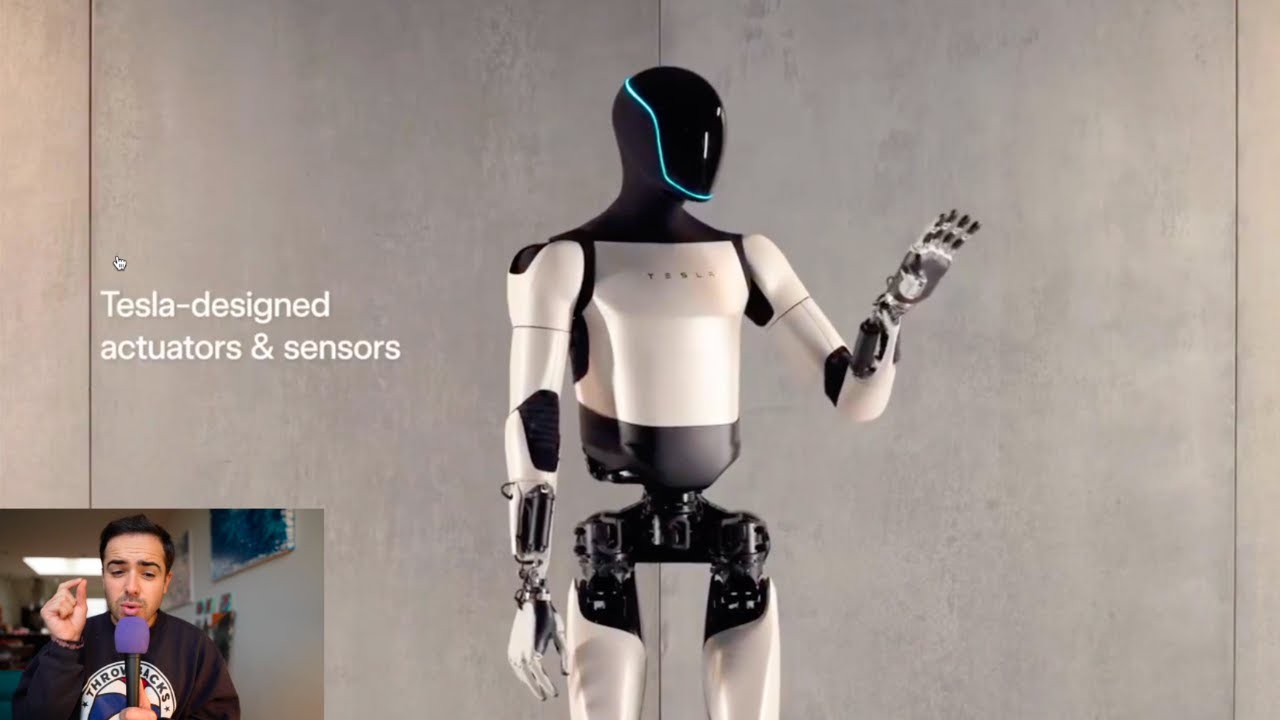

In the pantheon of modern technological ambition, few projects have captured both the industrial imagination and skeptical critique quite like Tesla’s Optimus humanoid robot. The promise is bold: not merely incremental advances in automation, but an entirely new class of general‑purpose humanoid machines capable of performing everyday work — from factory labor to household chores. Yet as we stand at the dawn of 2026, the burning question has shifted from “Can Tesla build a robot?” to “Will Optimus V3 finally enter volume production this year?” The data, the industry signals, and even Tesla’s own corporate communications suggest that 2026 will be a pivotal year — but the answer is both yes… and not exactly how you might expect.
1. The Long Road to V3: From Concept to Production Lines
Tesla’s Optimus project has been on the radar for years — ever since Elon Musk first transformed the idea from science‑fiction whimsy into a core company initiative. Early generations of Optimus were largely technical demonstrations: robots walking, gesturing, and performing basic tasks. But making production‑ready robots is a league beyond creating animations or demos. It requires breakthroughs in mechanical design, redundancy‑tolerant hardware, AI perception, real‑world stability, and robust manufacturing automation.
By late 2025 and into early 2026, the strategic shape of this effort has become clearer:
- Tesla has set up pilot production lines in its Fremont facility, where early units are being assembled and deployed internally. These aren’t mass production yet, but they represent the first stage of physical scaling.
- Supply chains are gearing up, with major orders for critical components like linear actuators from Chinese suppliers — an indicator Tesla may be buying at volume scale rather than prototype quantities.
- Industry insiders and reports suggest that Optimus V3 designs are substantially finalized, at least enough to justify placing large bulk orders for parts.
These steps are exactly what you’d expect when a prototype graduates to serious volume production — but there’s an important distinction between pilot scale and true volume output.
2. Defining “Volume Production” in the Robot Era
In the automotive world, “volume production” usually means credible thousands to million‑plus units per year. In consumer electronics, it can mean tens of millions. Robots like Optimus complicate the picture:
- Tesla reportedly targeted 5,000 units in 2025 as early production.
- Official and insider projections for 2026 have ranged from tens of thousands to a potential 100,000 units — but not millions, at least not immediately.
- Some commentary even suggests Tesla might begin output toward the end of 2026, with volume rising in 2027 as factories like Gigafactory Texas come online.
So what qualifies as “volume production” for Optimus?
A. Pilot & Internal Deployment (2025–2026):
By mid‑2026, Tesla is expected to shift from experimental units and internal tools to scaled production for external use cases — meaning robots for commercial customers, not just Tesla plants.
B. Early Commercial Scale (Late 2026):
Late 2026 may see production numbers jump as Tesla moves beyond basic factory output toward broader commercial distribution — likely in the tens of thousands range.

C. Full Volume (2027 and beyond):
Only by 2027 or later, once dedicated facilities are finished and automation matures, might Tesla approach “true” volume comparable to consumer markets — potentially approaching hundreds of thousands annually.
In short: Optimus V3 is very likely to start volume production in 2026 — but full‑blown, high‑volume output at massive scale probably arrives later.
3. Why 2026 Is ‘Production‑Moment Zero’
Multiple strategic signals reinforce that 2026 will be the watershed year:
Supply Chain Activation
Tesla’s contracts with major component suppliers indicate advance buys for robot subsystems — linear actuators, precision gearboxes, sensors — at volumes that go beyond mere prototyping.
Finalized V3 Design
V3’s mechanical and software architecture appears to have reached functional maturity, suggesting that Tesla feels confident enough to manufacture at scale rather than tinker endlessly.
Dedicated Manufacturing
Tesla is building new factory capacity specifically for Optimus. Early production in Fremont is just stage one; large‑scale facilities in Texas (and possibly elsewhere) are slated for construction and later operation.
Internal Adoption
Tesla is already using early Optimus units in its own operations. This internal testing loop helps refine both hardware and AI in real‑world use — a smart precursor to external sales.
All of these signal that Tesla’s leadership believes the product is no longer just experimental — and that they have enough confidence to start producing substantial numbers.
4. The Elephant in the Room: Technical and Market Challenges
Despite the optimism, several daunting challenges remain before Optimus becomes a true mass‑market device:

Mechanical Durability
Humanoid robots must function in unstructured environments with unpredictable dynamics — a massive step beyond factory automation. Even a minor software glitch combined with physical imbalance can disrupt operation.
Battery Life and Power Density
Most reports peg current battery duration around 6–8 hours for basic tasks, which is far short of what many industrial users would find practical.
Artificial Intelligence
Perception, locomotion, object manipulation, and real‑world adaptability are still frontier problems in robotics. Recent academic criticism even claims the broader robotics industry isn’t as close to general intelligence as hype suggests.
Pricing and Economics
Tesla hopes to push unit costs toward ~$20,000 for scale — a remarkable target — but this is ambitious given the complexity of the product.
Regulatory and Safety Hurdles
Robots operating in public or private spaces raise ethical, legal, and safety questions that automakers rarely face. Regulation could easily delay broad deployment depending on usage context.
These are non‑trivial hurdles. Overcoming them will require not just engineering — but breakthroughs in AI, perception, and robust hardware scaling.
5. A Strategic Shift: Tesla, Not JUST a Car Maker
Perhaps the most fascinating implication of Optimus production is how it redefines Tesla itself. Elon Musk and some insiders have repeatedly suggested that Optimus may be larger than electric vehicles in the company’s long‑term future:
- Musk reportedly envisions robots outpacing cars as Tesla’s biggest product — a narrative backed by supply chain moves and corporate strategy.
- Optimus aligns with Tesla’s broader shift toward AI, with overlapping ambitions in self‑driving, neural network training, and energy optimization.
This convergence creates a rare synergy where Tesla’s production expertise, machine intelligence development, and data advantages reinforce one another — potentially accelerating adoption once volume production begins.
6. What “Yes” Really Means for 2026
So when we ask again: Will Tesla’s Optimus V3 finally enter volume production in 2026? the honest answer is:
Yes — but in a nuanced way.
Tesla is very likely to begin true production volume in 2026, particularly in the latter half, with units moving beyond internal testing and into external markets — but full‑scale mass production may take longer than one calendar year.
In other words, 2026 isn’t the year Optimus saturates the world — it’s the year that Optimus stops being science fiction and becomes an actual product on assembly lines. And that alone is a major milestone.