








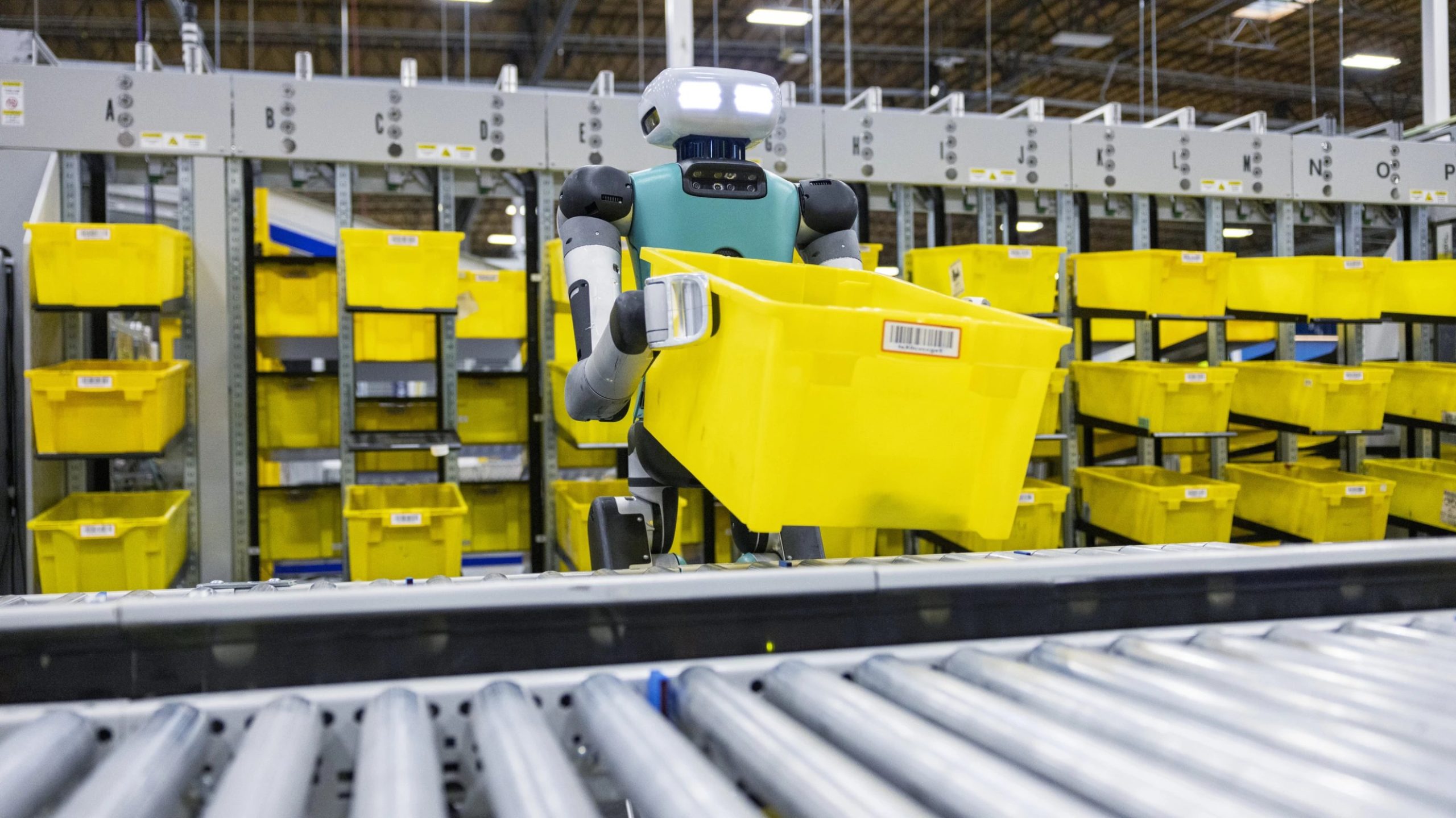

In the realm of automation and modern logistics, few questions are as compelling—or as consequential—as this: Can a humanoid robot really work consistently and productively in a commercial warehouse setting for half a year? For Agility Robotics’ Digit, the answer is unfolding in real industrial operations, and what we’re observing isn’t a science‑fair demo: it’s a genuine evolution in how robotics integrates into the world of work.
Across tens of thousands of tote movements, continuous task execution, and real warehouse conditions, Digit’s performance is teaching us as much about robotics as it is about the future of work itself.
In this detailed, immersive article we’ll explore:
- What Digit actually is and how it’s designed
- The realities of warehouse deployment over six months
- Technical capabilities and autonomy milestones
- Failure modes, durability, and limits
- Safety and human‑robot collaboration
- Operational data and throughput metrics
- Broader business and labor impacts
- What lies ahead for humanoid robots in logistics
Let’s step into the warehouse.
What Is Agility Robotics’ Digit?
At face value, Digit looks like a robot from a science fiction film—two legs, a torso, arms, and a head‑like sensor suite. At a practical level, it’s a general‑purpose humanoid robot designed to work in environments built for humans, without the need to radically modify the facility or workflow around it.
Rather than being a fixed arm bolted to the floor, or an automated guided vehicle (AGV) confined to pre‑mapped lanes, Digit walks independently, perceives objects with onboard sensors, and uses adaptable grippers to pick, carry, and place goods.
What makes this design bold—and historically challenging—is the choice of bipedal locomotion over wheels. In logistics settings, floors are flat and open, so wheeled robots dominate; but Agility’s argument is that human‑like mobility enables robots to access any workspace a person can, without extensive infrastructure changes.
For a robot to do this reliably, its control systems, perception stack, and mechanical design must all be robust enough to handle dynamic environments, variable object shapes and weights, and unexpected disturbances—everyday realities in a busy warehouse.
Deployment Context: Real Work, Not Lab Demonstration
The true testing ground for any robot is not a lab; it’s the daily grind of industrial workflows.
Agility Robotics has moved Digit out of controlled trials and into actual warehouse operations through partnerships—most notably with GXO Logistics at its Flowery Branch, Georgia facility. Here, Digit isn’t mimicking tasks in idealized settings; it’s performing real jobs as part of a live fulfillment workflow.
Unlike robots in siloed trials, Digit is:
- Operating alongside humans
- Interacting with autonomous mobile robots (AMRs)
- Picking and placing totes throughout the entire shift lifecycle
- Handling varied object positions, orientations, and loads
This placement represents a major shift: humanoid robots are not just toys or R&D projects—they are being tested for production‑level utility.
Technical Capabilities That Matter in Warehouses
Mobility and Balance
Digit’s ability to walk, turn, and adjust locomotion makes it uniquely suited to unstructured paths—such as between shelves, around obstacles, or through dynamic human traffic. It can ascend small ramps and shift its balance during manipulation tasks, something wheel‑based robots cannot do without additional infrastructure.
This mobility isn’t just for show; it’s a design choice that expands where Digit can work without facility redesign. Traditional automation often demands costly racks, guides, and fences; Digit navigates what already exists.
Perception and Manipulation
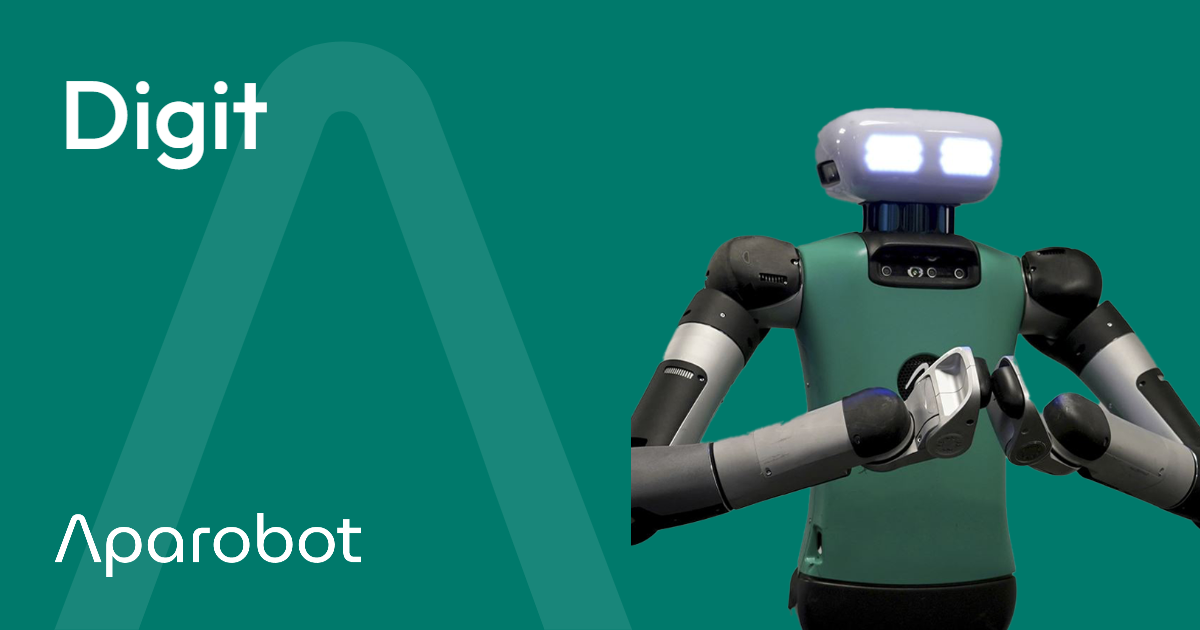
Equipped with cameras, LiDAR, and control systems that integrate vision and motion, Digit perceives its surroundings and plans actions based on real‑time data. Combined with learned policies and reinforcement‑learning training from simulation environments, Digit can execute complex object interactions—like grasping a tote placed at an odd angle—repeatedly and reliably.
This capability is essential when handling thousands of pieces of inventory that might shift, stack differently, or vary in size.
Cloud Integration & Fleet Management
Digit isn’t a lone machine; it’s part of Agility’s automation platform called Agility Arc—a cloud‑connected fleet management system that coordinates task assignments, tracks operational metrics, and updates robot software. Instead of managing robots individually via local consoles, warehouse managers can orchestrate behavior at scale and adapt workflows centrally.
Six‑Month Performance: What the Data Reveals
One of the clearest markers of Digit’s real‑world performance is the 100,000‑tote milestone reached during commercial operation at GXO Logistics. This figure is not a benchmark from controlled tests—it’s the actual number of tote movements Digit completed while integrated into live workflows.
This achievement provides multiple insights:
1. Consistency Over Time
Moving 100,000 totes suggests Digit can handle repetitive tasks consistently over many cycles, a key requirement for warehouse automation systems that often run 24/7 with minimal downtime.
Whether lifting empty or loaded totes, switching between mobile robots and conveyor lines, or adjusting to slightly different object configurations, Digit’s repeated success indicates durability and reliability.
2. Adaptability to Operational Conditions
Warehouses are not perfect environments. Inventory shifts throughout the day, lighting conditions change, and human workers walk around aisles. Digit’s ability to continue executing tasks without catastrophic failure shows adaptability—for example, perceiving a tote under uneven lighting or navigating around a pallet jack left in the aisle.
3. Hardware Endurance
Over tens of thousands of task cycles, Digit’s hardware—legs, joints, sensors, and actuators—has held up. That doesn’t mean Digit never needs maintenance; all mechanical systems do. But operating for months without systemic failure marks a departure from robots that require frequent intervention.
Moreover, upgrades introduced by Agility Robotics (improved autonomy, enhanced safety features, and longer battery life up to ~4 hours with autonomous docking) further boost Digit’s ability to perform sustained shifts.
Failure Modes: Lessons in Real‑World Robotics
Even as Digit racks up operational hours, its journey hasn’t been flawless—and in fact, the missteps tell us more about its maturity than its successes.
Collapses During Long Demos
During extended demonstration events, Digit experienced dramatic “falls” after long operating periods—most notably after 20+ hours of continuous demoing. While such events can be sensationalized, they reveal the stark difference between closed‑loop demos and production workloads.
In real automation, scheduled breaks, charging cycles, and task planning mitigate such outcomes. A robot demonstrating in a continuous loop isn’t representative of how it would be deployed in warehouses, where duty cycles must align with power limits and service intervals.
Speed vs Human Expectations
Some observations from early trials suggested that Digit’s speed at picking and placement tasks is slower than that of experienced human workers. This has been echoed in independent discussions and community observations, although precise comparative metrics vary.
However, speed alone isn’t the full story—machines can operate around the clock without breaks, vacations, or shifts, offering aggregate throughput improvements even if individual picks take longer.
Human‑Robot Collaboration and Safety
One of the cleverest design choices behind Digit is its emphasis on working with humans rather than replacing them entirely.
Safe Around People
Digit incorporates safety hardware and software systems designed to detect and avoid collisions, react to unexpected human movement, and perform emergency stops if necessary. This isn’t optional in a shared workspace—warehouse environments teem with human workers, vehicles, and dynamic obstacles.
Collaborative robotics like Digit are meant to sit in a co‑working environment, where humans and robots each tackle tasks suited to their respective strengths.
Task Delegation and Job Quality
Rather than substituting human labor outright, Digit often handles repetitive or physically strenuous tasks—lifting heavy containers, moving items between conveyors and AMRs—liberating human colleagues to focus on higher‑value activities like quality control, complex pick decisions, and exception handling.
This complementary model improves job quality and reduces injury risk from repetitive strain.

Economics and Workforce Impacts
Deploying humanoid robots in warehouses has implications far beyond technology.
Addressing Labor Gaps
Warehousing and logistics industries face chronic labor shortages. Tens of thousands of positions go unfilled due to turnover, competition, and demographic shifts. Robots like Digit help address these gaps without requiring facilities to install expensive fixed automation.
Even if Digit doesn’t replace every human worker, it augments capacity, enabling operations to scale without proportional increases in staffing costs.
Cost of Operation and ROI
Early reports suggest robot operational cost per hour could eventually undercut human labor when scaled. While precise figures vary, projected long‑term costs—including charging and remote management—position Digit as a cost‑effective automation solution.
Real Stories From the Warehouse Floor
While broad statistics tell the what, individual stories from warehouse environments help illustrate the how:
- Seamless Task Handoffs: Digit receives totes from autonomous mobile robots and places them precisely where conveyor systems require. This choreography across multiple automation platforms underscores interoperability.
- Operational Reliability: Managers report robots functioning throughout shift cycles with scheduled charging and minimal supervision, a step closer to plug‑and‑play industrial robotics.
- Incremental Throughput Gains: Although Digit’s raw pick‑rate may trail experienced humans on certain tasks, its consistent uptime and error‑free performance over long durations result in cumulative productivity gains.
These anecdotes aren’t anecdotes alone—they reflect a transition from concept to commerce.
What Six Months Teaches Us About the Future
A half‑year in a warehouse environment is not just a timeline; it’s proof of relevance. Between simulated training, lab prototypes, and controlled tests, Digit’s six‑month performance marks a real‑world validation of humanoid robotics for industrial use.
Here are key takeaways:
1. Reliability Is Not Mythical
Digit’s operation at scale, handling tens of thousands of tasks without systemic breakdowns, proves that humanoid robots can be more than developmental curiosities.
2. Human‑First Design Pays Off
By operating in existing infrastructure and collaborating with human workers, Digit sidesteps the massive costs associated with fixed automation or workspace redesign.
3. Autonomy and Learning Matter
Behind the scenes, simulation‑trained policies and adaptive perception are key to Digit’s success. The robot learns how the real world behaves—not merely following pre‑programmed sequences.
4. Safety Is Central
Deploying robots among people requires rigorous safety design, and Agility’s investment in enhanced safety systems reflects that priority.
Challenges and the Path Forward
No system is perfect, and Digit still faces challenges:
- Speed vs. throughput demands: Competitors with specialized arms and conveyors may still outperform humanoids on certain tasks.
- Maintenance planning: Long operational cycles necessitate robust servicing strategies.
- Task generalization: While Digit excels at tote handling, expanding task scopes—like packing, sorting irregular objects, or interacting with fragile goods—remains a frontier.
However, every iteration of real work refines the technology. Each tote moved teaches the robot and engineer alike.
Conclusion: A New Chapter in Warehouse Automation
Six months of warehouse operation moves Digit beyond speculation into industrial reality. It’s not the fastest robot, nor the cheapest investment, but it is one of the first humanoids to demonstrate reliable, sustained, real‑work performance without extensive facility modifications or isolated test conditions.
Digit’s journey illuminates a larger truth: the future of automation isn’t just about machines replacing labor—it’s about machines collaborating with people to make work safer, more efficient, and more adaptable.
The next six months—and the ones after that—will tell us even more. But one thing is certain: the era of humanoid robots in real warehouses has already begun.