










As artificial intelligence (AI) evolves, one of the most intriguing questions in the field of robotics and machine learning is whether robots can make decisions that are truly human-like. While AI is advancing rapidly, mimicking human decision-making is a far more complex challenge than simply improving a robot’s ability to process data. It involves understanding emotions, ethics, social context, and an ever-changing world. Can robots one day think, reason, and make decisions like we do? Or is the gap between AI and human-like decision-making insurmountable?
Understanding Human-Like Decision Making
At its core, human-like decision-making encompasses more than just logical reasoning. Humans make decisions not only based on facts but also emotions, past experiences, social cues, and ethical judgments. It’s a rich, multi-dimensional process involving a mix of conscious thought, subconscious bias, and spontaneous reactions.
For a robot to make decisions like a human, it must replicate this entire process, which is challenging due to several factors:
- Emotion: Humans often make decisions influenced by emotional states, whether it’s empathy, fear, love, or stress. Emotions affect decision-making in ways that are difficult to quantify or program into AI. For example, a human might choose to help a stranger based on an innate sense of empathy, something AI currently cannot replicate convincingly.
- Ethics and Morality: Humans don’t just make decisions based on efficiency or outcome—they also consider what’s right or wrong. Ethical dilemmas, like the famous “trolley problem,” demonstrate that human decisions are often influenced by moral considerations that are difficult to define algorithmically.
- Context and Bias: Humans have an exceptional ability to understand context, adapt decisions based on it, and handle ambiguities. AI systems, on the other hand, struggle with generalization. They perform well in controlled environments but falter when confronted with unfamiliar scenarios or nuanced human situations.
Given these complexities, achieving human-like decision-making with current AI is an extraordinary challenge. To understand why, let’s take a deeper dive into the technical and philosophical issues at play.
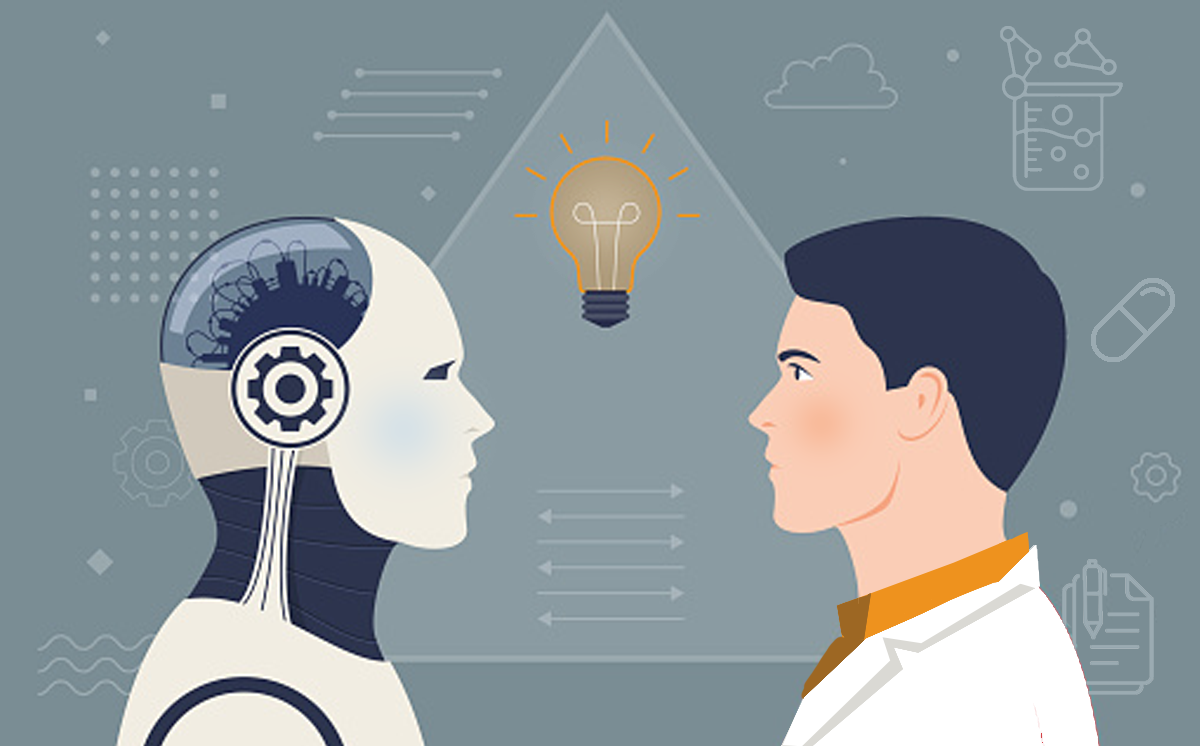
The Technical Hurdles of Human-Like Decision Making in AI
- Data-Driven Decision Making AI relies heavily on data. Current machine learning models, including deep learning systems, make decisions by identifying patterns in large datasets. These models have revolutionized industries like healthcare, finance, and marketing, but they are largely reactive—they make decisions based on past data, not on forward-thinking, emotional, or ethical reasoning. Unlike humans, who can make decisions based on intuition or gut feeling, AI is bound to the information it has been trained on. This limitation is particularly clear in fields where adaptability is key, such as in robotics used for caregiving or customer service. For example, a robot providing care to elderly individuals may struggle to make emotionally intelligent decisions, like offering comfort during moments of distress or assessing the subtleties of a conversation that reveal a patient’s unspoken needs.
- Lack of Generalization and Transfer Learning While AI excels at solving specific, narrowly-defined problems, it struggles with generalization. In other words, AI can’t apply knowledge gained from one task to another that is somewhat related but requires different reasoning. Humans, on the other hand, can transfer knowledge between different contexts seamlessly. For instance, a person who has learned to drive a car can apply their understanding of spatial relationships and road safety to other situations, such as flying a drone or operating heavy machinery. Robots, however, require re-training or fine-tuning to adapt to a new domain, and their performance often drops when confronted with unfamiliar tasks.
- Ethical and Moral Decision-Making One of the greatest hurdles to achieving human-like decision-making in robots is the challenge of programming ethical and moral judgment. Unlike humans, who rely on a combination of personal values, social influences, and cultural norms, AI systems follow programmed rules and guidelines. Take the self-driving car debate, for example. In a life-threatening situation, should the car prioritize the safety of its passengers, or should it sacrifice them to avoid harming pedestrians? This type of decision requires an understanding of ethics and societal values—something that is not easily quantifiable and remains a topic of much debate. Some researchers are working on creating ethical frameworks that can guide robots’ actions in morally ambiguous situations. However, these frameworks are still in their infancy, and many argue that programming an AI system to accurately understand and weigh moral dilemmas remains an unattainable goal in the near future.
- The Need for Emotional Intelligence A large part of human decision-making involves emotional intelligence. We often make choices based not only on logic but on our feelings and the feelings of others. AI, however, typically lacks emotional depth. It doesn’t truly “understand” emotions—it simply analyzes data to determine what is most likely to elicit a certain emotional response from humans. Current emotional AI technologies can recognize facial expressions, voice tones, and physiological cues to gauge emotions. However, understanding the emotional state of a person and responding appropriately in a human-like manner is a far more complicated task. For example, recognizing when a person feels sad versus when they are pretending to be sad is a nuanced skill that requires deep social and cultural understanding—something that even the most advanced AI systems struggle with.
- Social Context and Nuance Humans can perceive and interpret complex social cues. We make decisions based on our understanding of context—what’s appropriate in one situation may not be in another. Social interactions, body language, tone of voice, and even historical relationships all play a role in our decision-making. AI systems, on the other hand, lack this broader understanding. This is particularly important in industries like caregiving, where robots are often designed to interact with humans in emotionally sensitive ways. Without a sophisticated understanding of social cues, robots might struggle to build rapport or establish trust, which are critical components of human interaction.

Can We Achieve Human-Like Decision Making?
Although achieving true human-like decision-making with current AI may seem like an impossible feat, progress is being made. Researchers and engineers are actively exploring ways to bring emotional intelligence, ethical reasoning, and context-awareness into AI systems.
- AI and Emotions: The Role of Affective Computing Affective computing is an emerging field that seeks to imbue machines with the ability to recognize and simulate human emotions. This approach involves the integration of sensors, natural language processing, and machine learning to understand emotional states and respond in an emotionally intelligent way. While affective computing is still in its infancy, its potential to improve human-robot interactions is enormous.
- Ethics in AI: The Quest for Moral Reasoning AI ethics is another field gaining traction. Researchers are developing algorithms that can make ethical decisions by analyzing consequences, fairness, and societal values. For example, frameworks such as value-sensitive design and machine ethics aim to guide robots in making morally acceptable decisions. However, there is still no consensus on how to program AI with a universally accepted sense of morality.
- Learning from Humans: Imitation and Transfer Learning One way to bridge the gap between AI and human-like decision-making is through imitation learning and transfer learning. In imitation learning, AI systems observe human behavior and attempt to replicate it. By leveraging deep learning techniques, robots can be trained to generalize their knowledge and adapt to new situations more effectively. However, this approach still requires a vast amount of data and isn’t yet capable of the flexibility seen in human decision-making.
- The Future: Collaboration Between Humans and Robots While true human-like decision-making may not be achievable in the immediate future, robots can still assist humans in making better decisions. Human-robot collaboration, rather than replacement, may be the key. Robots equipped with AI could act as decision-support tools, providing humans with more data, analyzing trends, and offering insights. In this scenario, robots would complement human decision-making, rather than replicating it entirely.
Conclusion
In summary, while AI and robots are making tremendous strides in decision-making, the dream of achieving truly human-like decision-making remains distant. Current AI systems excel at specific tasks and can even simulate certain aspects of human cognition, such as recognizing emotions or solving complex problems. However, when it comes to the intricacies of human-like reasoning—shaped by emotions, ethical dilemmas, social contexts, and personal experiences—robots still have a long way to go.
In the future, we may see robots that assist in decision-making, help humans navigate moral and ethical issues, or even understand human emotions on a deeper level. But for now, AI remains a powerful tool that, while impressive, is far from being able to fully replicate the complexities of human thought and action.