









Introduction
Humanoid robotics — the development of robots shaped and functionally designed like humans — has captured the imagination of investors, researchers, and technologists around the world. In 2025 and early 2026, investments in humanoid robots have surged into unprecedented territory, driven by advances in artificial intelligence, ambitious scaling plans, and the promise of ubiquitous physical automation. But as funding flows and valuations skyrocket, a critical question emerges: Is there a bubble in humanoid robotics investment?
This article explores the dynamics shaping this sector — from explosive capital influx and technological hurdles to macroeconomic signals and historical comparisons — and offers a comprehensive view of whether current investment patterns reflect sustainable growth or speculative exuberance.
1. The Surge in Investment: Numbers and Narratives
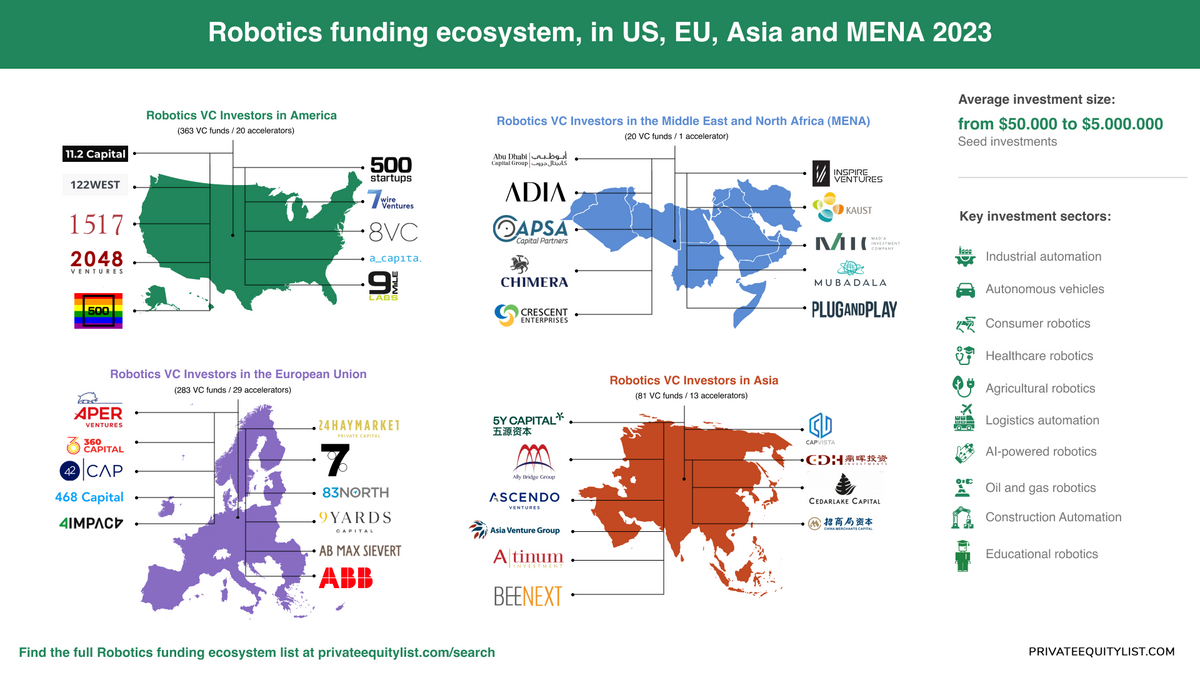
In recent years, humanoid robotics has transformed from a niche research field into an investment hotspot. According to global market data, the humanoid robotics industry experienced more than 610 investment deals in just the first nine months of 2025, totaling around $7 billion — a roughly 250% year-over-year increase.
China’s role has been particularly significant. The country’s robotics ecosystem has not only produced an expansive universe of companies — reportedly over 150 humanoid robotics firms — but also sparked government attention and policymaker involvement.
Outside Asia, venture capital rounds of extraordinary size are also shaping the market. For example, in early 2025, the Austin-based robotics company Apptronik raised $350 million in funding, drawing participation from major venture capital firms and strategic partners.
At first glance, these numbers suggest a vibrant sector on the edge of transformative breakthroughs. However, although the scale of funding may impress, it also raises questions about valuation discipline and the timeline for widespread commercial deployment.
2. Early Stage Investments and the Bubble Signal

One classic indicator of a bubble is significant investment in early-stage companies that lack revenue or proven commercial products. In the humanoid robotics sector, many startups are attracting funding based on promise rather than performance. Industry reports highlight that a large share of capital goes to companies still tackling core challenges like reliable perception, real-time responsiveness, and cost-effective manufacturing.
Moreover, in markets dominated by hype — especially adjacent to generative AI narratives — capital can pour into categories with weak near-term monetization prospects. Analysts from CB Insights, KPMG, and PitchBook have noted that the sector’s rapid capital inflows sometimes outpace the development of corresponding commercial solutions.
When investors focus heavily on future potential — without concrete product validation or revenue — the risk of speculative bubbles increases. While long-term visions can justify early investment, the absence of clear performance benchmarks makes valuations vulnerable to sentiment shifts.
3. Government Warnings: A Rare Note of Caution
China’s National Development and Reform Commission (NDRC), a major economic planning agency, recently issued a warning about a potential investment bubble in humanoid robotics. It noted that the sector’s rapid growth could lead to oversaturation and diminishing returns, especially with many companies producing similar products and pursuing comparable strategies.
This warning is significant because it comes from policymakers who explicitly support robotics as a strategic sector. The fact that authorities are urging caution suggests that they recognize not only the innovation potential but also the market’s speculative dimensions.
Such official signals often act as early-warning indicators in emerging industries — analogous to regulatory concerns prior to the peaks of historical bubbles.
4. The Hype Factor: AI Media Attention and Market Mania
The modern excitement around humanoid robotics is closely tied to the broader AI narrative. Breakthroughs in large language models and perception systems naturally elevate expectations for embodied AI (robots that can interact intelligently with the physical world).
However, these technologies, while impressive on paper, do not immediately solve the complex challenges of bipedal locomotion, sensor fusion, safe physical interaction, and autonomous operation. Many humanoid robots today demonstrate impressive feats in controlled environments, but they remain far from reliably performing general-purpose tasks in diverse real-world settings.
When media narratives emphasize visionary futures — robot butlers in homes, autonomous caregivers, industrial workers replacing humans — while glossing over practical limitations, capital can chase shiny milestones rather than hard market metrics. This mismatch between expectation and reality is a classic hallmark of bubble dynamics.
5. Technological Challenges: Reality Check for Hype
Despite exciting progress, humanoid robotics still faces significant technological and economic hurdles:
- Performance vs. human efficiency: Even leading humanoid robots achieve a fraction of the functional efficiency exhibited by humans in many industrial tasks.
- Reliability and versatility: Robots often perform best in structured environments. In dynamic, unstructured real-world settings, reliability and adaptability remain major open problems.
- Cost considerations: While some models have seen dramatic price drops — with certain units reportedly priced below $10,000 — the full cost of deployment (integration, maintenance, infrastructure) can still be substantial.
These gaps highlight that throughout 2025–2026, many humanoid robotics ventures are navigating a developmental phase where commercial readiness and practical utility are still maturing.
6. Comparative Historical Context: Dot-Com and Beyond
Comparisons between the humanoid robotics sector and past market bubbles — such as the dot-com era — are instructive. In both cases, a technological breakthrough (internet connectivity in the 1990s; AI and robotics today) fuels a narrative of inevitable dominance. Investors pour funds into early ventures, valuations rise, and the promise of future returns becomes the primary investment rationale.
What followed the dot-com peak was not just a crash but a market correction — where companies with real products and sustainable business models survived, and speculative outliers faded.
Similarly, it is plausible that humanoid robotics will undergo a phase of consolidation: strong companies with viable commercial strategies will attract continuing investment, while weaker or overly speculative players will struggle to raise follow-on funding as performance data becomes more visible.
7. Commercial Progress and Real-World Deployments
Despite the risks, there are notable signals of progress:
- Automotive and manufacturing pilots: Major companies, including partnerships involving advanced humanoids for aviation manufacturing, are expanding pilot programs with traditional manufacturing firms.
- Union debates on deployment: Discussion around employment impacts — such as labor union objections to humanoid deployments — underscores that these technologies are shifting from concept to implementation.
These developments show movement beyond laboratory demos toward real-world experimentation. They also illustrate that the industry is beginning to face the practical questions of integration, regulation, and workforce impact — issues that often accompany maturation rather than pure speculative bubbles.
8. Where the Bubble Theory Holds Weight
The argument that a bubble may be forming rests on several pillars:
- Exponential funding without commercial validation across many early-stage ventures.
- Government warnings about oversaturation and homogeneous product offerings.
- Media and investor hype amplified by general AI enthusiasm.
Together, these elements suggest that some portion of investment activity is driven by expectation rather than tangible market demand.
9. Where the Bubble Theory Meets Reality
On the other hand, the humanoid robotics market exhibits features that differentiate it from classic bubbles:
- Tangible technology: Unlike purely digital or speculative assets of past bubbles, humanoid robotics involves real physical products subject to engineering metrics and industrial testing.
- Growing commercial engagement: Deployment pilots and early contracts imply that use cases are emerging, even if still nascent.
- Structural market drivers: Long-term trends — such as labor shortages, aging populations, and the need for flexible automation — provide macroeconomic tailwinds that are not purely speculative.
Thus, rather than a single dramatic crash, the industry might experience a period of correction and maturation — where capital refocuses on realistic timelines and measurable performance outcomes.
10. Conclusion: A Nuanced Perspective
So, is there a bubble in humanoid robotics investment?
Yes — to some extent. The sector shows clear signs of speculative excess, driven by enthusiastic capital flows, media amplification, and early-stage valuations. However, it also rests on substantial technological progress and strategic economic interest from governments and corporations.
This duality suggests that while some aspects of the market may be overhyped, the industry as a whole is still on a trajectory toward meaningful innovation and commercialization. The coming years will likely reveal which companies and technologies survive the reckoning and which fade as market realities take hold.
In short: Humanoid robotics investment today is at a crossroads — where bubble dynamics and genuine technological transformation coexist.