









Humanoid robots — machines built to resemble and mimic human form and motion — have captivated public imagination for decades. From Star Wars to I, Robot and countless science fiction visions, the idea of mechanical beings indistinguishable from humans in capability has become part of our cultural fabric. Today, the real-world pursuit of humanoid robotics is no longer mere fantasy. Scientific breakthroughs, massive investments, and ambitious corporate roadmaps show that these machines might be closer to everyday life than many people think. But the question remains: are humanoid robots genuinely the future… or are they an overhyped dream?
In this article, we’ll unpack the state of humanoid robotics — including the rapid progress, the enormous challenges, the real-world applications, and the vision for widespread adoption — in a lively, professional, and readable exploration that aims to balance optimism with critical insight. Along the way, we’ll ground our discussion in the latest data, industry developments, and expert analysis, concluding with a clear perspective on what’s realistic — and what remains speculative.
The Allure of Humanoid Robotics
Humanoid robots are designed to share the human body plan: two arms, two legs, a torso, and (often) a head. This form factor isn’t just whimsical. It’s rooted in a practical idea: most human environments — buildings, furniture, tools — are optimized for the human body. So if a machine can match that body, in principle it can work anywhere humans can. The International Federation of Robotics described humanoids as “the next big thing” in robotics for this reason — our world is, quite literally, built for human form and movement.
This vision is compelling: a robot that can navigate stairs, open doors, lift objects, help in factories, assist in homes, care for the elderly, and even serve in public spaces like cafés or hospitals. The idea of a universal physical assistant, capable of performing both physical and cognitive tasks, is attractive to inventors, investors, and technologists alike.
Where Humanoid Robotics Stands Today: From Labs to Pilot Projects
Prototypes and Early Commercial Deployments
In the last decade, the field has moved from academic labs into early commercial pilots, though widespread practical deployment remains limited.
Leading companies and institutes are pushing boundaries:
- Tesla — With its Optimus humanoid, Tesla aims to bring robots capable of basic tasks to the market by the end of the decade, with initial slow production underway to support work in factories first.
- Figure AI — Focused on creating robots with advanced sensory and AI systems, Figure’s humanoids are designed to learn from and interact with humans, showing incremental improvements in manipulation and environmental awareness.
- UBTech — Chinese firm UBTech is actively partnering with aviation giant Airbus and other industrial players to test humanoid robots in manufacturing contexts — yet current models operate at only a fraction of human efficiency.
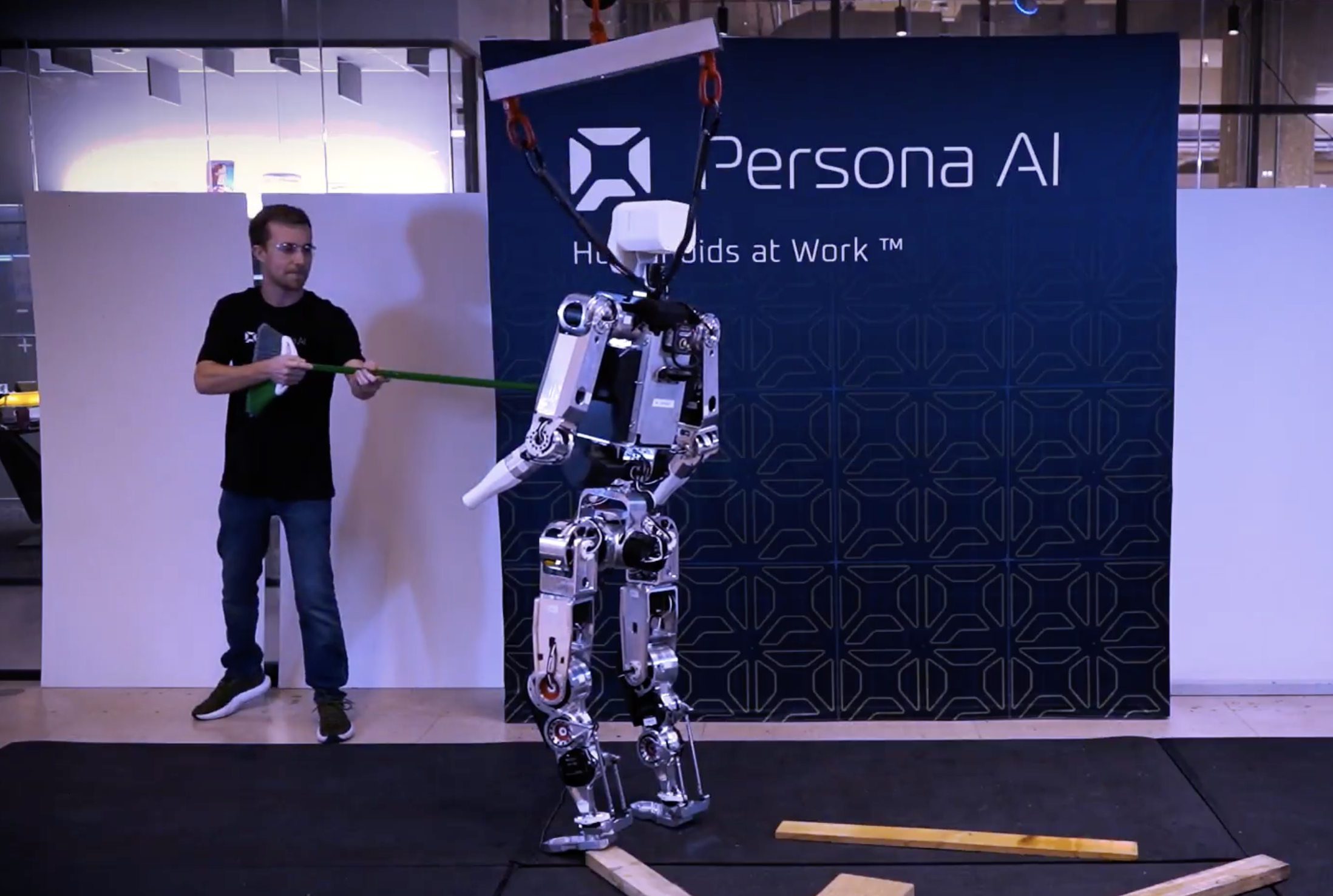
Other humanoids like Ameca, developed by Engineered Arts as interactive social robots, show off the form and expressive capacities of these machines, even if their functional use is currently limited compared with industrial robots.
A robust robotics ecosystem is emerging globally. For example, South Korea’s K-Humanoid Alliance brings together government, universities, and industry players to accelerate commercialization and AI integration for future humanoid robotics platforms.
The Market Reality: Still a Long Road
Despite headlines and exciting prototypes, commercial deployment of humanoid robots is still nascent:

- Humanoid robots are largely in pilot testing phases in automotive and industrial settings, performing basic tasks such as material handling, inspection, and simple logistics.
- Real-world deployments outside of controlled environments remain rare, especially in complex scenarios like caregiving or home services.
- Analysts and market researchers project strong growth — potentially a multi‑billion‑dollar industry with sustained compound annual growth — but emphasize that full commercial viability could take years.
In other words, the robots we see today are important milestones, but they are far from fully autonomous general‑purpose assistants.
Why Humanoid Robots Are Hard: The Engineering Challenges
Humanoid robots are incredibly demanding to build. They combine the hardest problems in mechanical design, control theory, artificial intelligence, perception systems, and human‑robot interaction.
Here’s why progress has been slow and difficult:
1. Complex Motion and Balance
Walking upright like a human — dynamically balancing on two legs while adapting to terrain — is deceptively hard. Traditional wheeled systems are mechanically simpler and more energy efficient. A recent robotics community discussion highlighted this precisely: wheels often outperform bipedal locomotion in cost, efficiency, and safety, making specialized robots more practical in many applications.
2. Vision, Perception, and Decision‑Making
To operate in real environments, robots need advanced perception — recognizing objects, understanding context, and predicting outcomes. These are areas where cutting‑edge AI models like vision‑language‑action systems show promise — integrating language understanding with physical control.
3. Power and Autonomy
Battery technology and power management remain significant hurdles. Mobile robots with long operational lifetimes — particularly without frequent recharging or tethering — are still an active research challenge.
4. Safety and Interaction
When robots act in close proximity to humans, safety is paramount. Falls, miscalculations, or sensor failures can pose real risks, especially with heavy, agile machines operating in public or home spaces.
The Real Applications Today: Where Humanoids Make Sense
Despite these hurdles, humanoid robots are finding practical niches:
Industrial Assistance
Robots are being introduced on factory floors not to replace specialized machines but to supplement them, performing tasks where human body mimicry helps with existing infrastructure. Early pilots in automotive plants — like those deploying robots for simple handling tasks — show value in environments optimized around human workers.
Logistics and Warehousing
Robots that can pick, place, and transport items in dynamic environments are gaining attention, though wheeled automation is still far more common. The versatility of humanoids may shine where environments are less structured.
Research and Extreme Environments
Some robots are being explored in search and rescue contexts or hazardous conditions where humans are at risk — climbing rubble, navigating disaster zones, or handling materials in contaminated areas.
Interactive Roles (Early Stage)
Social or reception roles — greeting, providing information, assisting visitors — are emerging, though these applications are still primarily experimental due to cost and capability limitations.
The key takeaway? Humanoid robots are not yet ubiquitous helpers, but their capabilities are evolving from static, lab‑bound systems to functional, field‑tested machines with real utility.
The Future: Realistic Expectations vs. Hype
Let’s separate reasonable projections from overblown dreams:
What Is Realistic in the Next Decade
- Incremental expansion in industrial and logistics settings: More pilots, broader application niches, and integration with AI systems for specific functions.
- Hybrid teams of humans and robots: Robots handle repetitive, dangerous, or physically strenuous tasks, while humans focus on supervision, complex reasoning, and decision making.
- Advanced learning algorithms: Transfer learning, shared skill models, and multimodal AI will enhance robot adaptability. Research in whole‑body control and behavior foundation models shows potential for more generalizable skills.
What Is Still Far Off
- Mass‑market household robots: True general‑purpose humanoids that reliably clean, cook, care for children, and perform diverse home tasks are still many years away.
- Emotional companionship robots: Machines with nuanced emotional intelligence, deep social understanding, or meaningful interpersonal interaction remain speculative.
- Universal autonomous assistants: Robots that operate independently in unpredictable environments — without human supervision — will require breakthroughs not just in hardware but in AI reasoning and safety calibration.
So yes, humanoid robots are part of the future — but not in the sensationalized way pop culture sometimes suggests.
The Societal and Economic Implications
The rise of humanoid robotics raises important questions that extend beyond engineering:
Labor and Economy
As robots take on physical roles, the workforce landscape will change. Some jobs may be reshaped or displaced, while new tech‑oriented and supervisory roles emerge — echoing patterns from previous industrial revolutions.
Trust and Regulation
When humans and robots share spaces, trust becomes a key issue. Regulations, safety standards, and ethical frameworks will be critical to ensuring that robot deployment benefits society without unintended harm. Regions such as Europe emphasize cautious, regulated approaches to human‑robot collaboration, prioritizing safety and responsible adoption.
Conclusion: Promising Future, Not Instant Reality
Humanoid robots are neither pure fantasy nor an immediate replacement for human labor across all domains. They represent a long‑term evolutionary trend in robotics — one driven by advances in AI, sensors, materials science, and human‑robot interaction. Engineers and companies have made remarkable strides, turning the once‑fanciful vision of walking, thinking machines into increasingly capable prototypes and pilot systems.
However, significant challenges remain. Technical complexity, energy constraints, deployment safety, and economic viability all temper the pace at which humanoids will become commonplace. The most realistic near‑term future involves collaborative robots that augment human work rather than replace it entirely, gradually expanding into new worlds of application.
In this sense, humanoid robots are part of our future — but not as instantaneous magic. They are a long game, where hype and promise will continue to rise alongside incremental reality, and where critical evaluation and thoughtful adoption will shape outcomes for individuals, industries, and society.