









Introduction: Between Man and Machine
The factory floor has always been a crucible of change — from water wheels to conveyor belts, from electricity to digital control. Today, a new shift is unfolding: robots are no longer isolated tools hidden behind safety fences; they are becoming coworkers that walk, see, learn, and interact. The question on everyone’s mind isn’t just how fast robots move or how smart their algorithms are — it’s whether human workers are ready to supervise these robot coworkers in the complex environment of modern manufacturing.
This article explores that question from technological, sociological, psychological, and industrial perspectives, weaving together evidence from industrial reports, academic research, factory case studies, and on‑the‑ground reporting from real production lines. We will unpack not just whether workers can supervise robots, but whether they want to, what skills they need, and what the broader implications are for industry and society.
1. The Changing Nature of Work on the Factory Floor
1.1 Traditional Automation vs. Collaborative Robots
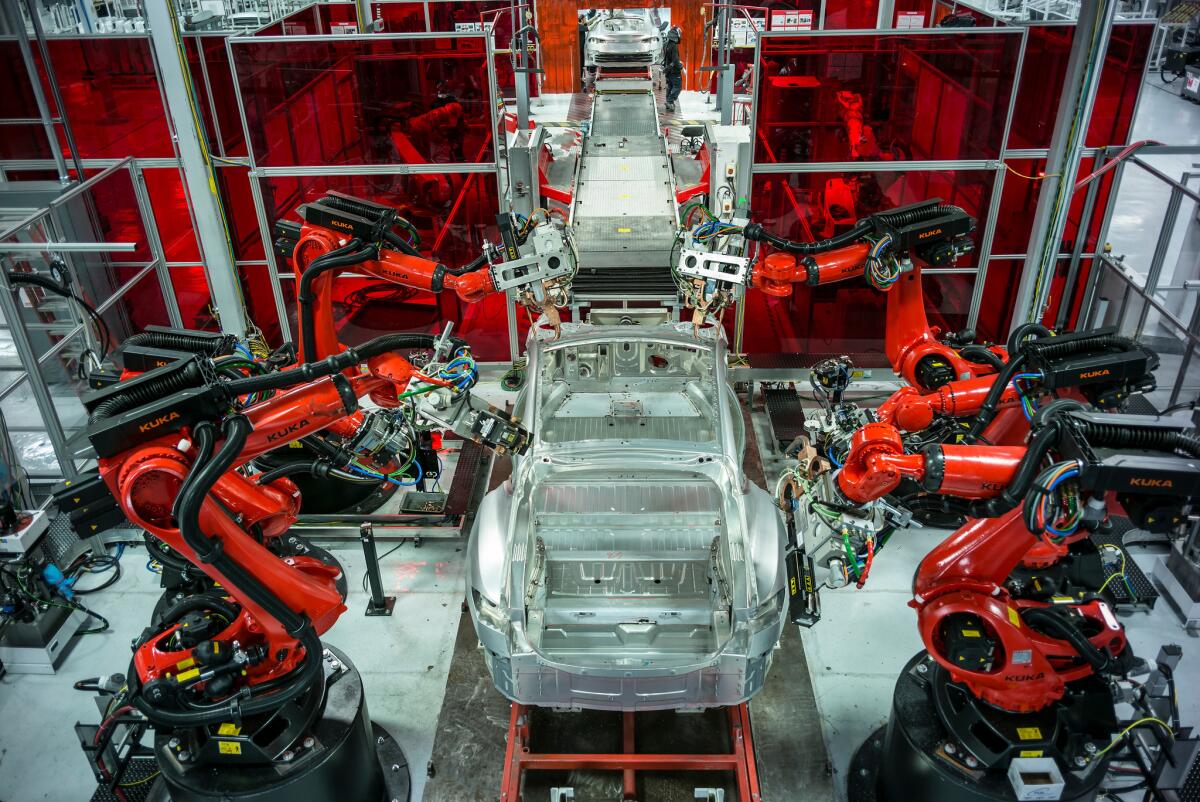
For decades, industrial robots operated safely behind cages, executing repetitive tasks like welding and palletizing. These traditional robots were powerful, fast, and predictable — but isolated. Their actions were planned, rigid, and human intervention happened only when something went wrong.
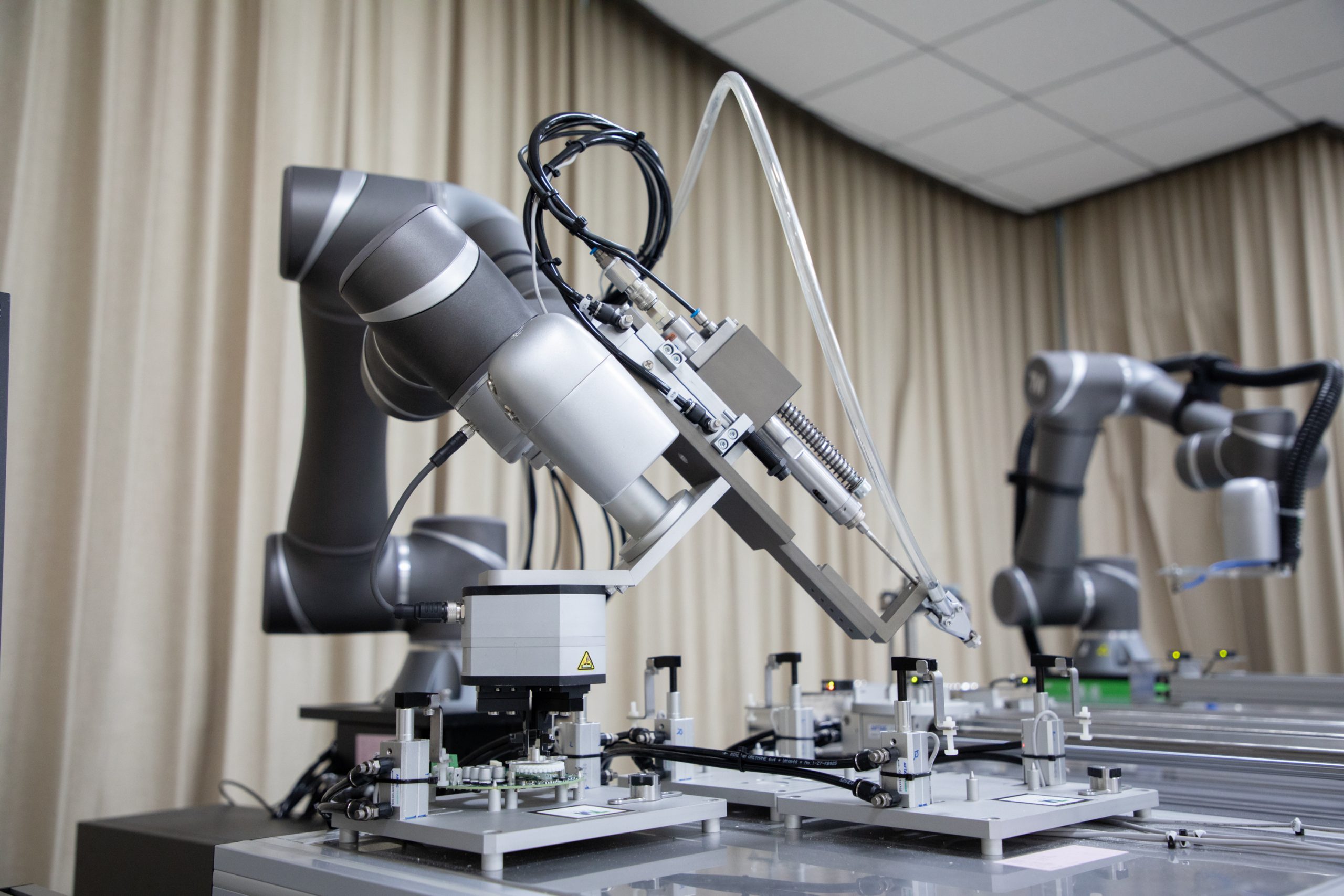
Enter collaborative robots — “cobots” — designed to work beside humans in shared spaces. Unlike traditional industrial robots, cobots use sensors, adaptive programming, and safety‑first control logic to perform tasks with human operators in the same workspace without safety fences. This shift embodies the emerging paradigm of Industry 5.0, where human workers and robots collaborate rather than replace one another.
Cobots can take on monotonous or hazardous tasks, allowing human workers to focus on more skill‑intensive functions such as quality control, decision making, and supervision. But sharing space doesn’t guarantee shared understanding; it requires new competencies, trust, and psychological adaptation.
1.2 Robots as Coworkers — What That Really Means
Robots designed for collaboration aren’t just physical tools; they occupy roles that increasingly resemble agents within a team. They have:
- Perception systems (cameras, sensors, force feedback) to detect human presence and adapt actions.
- AI modules that plan tasks, optimize sequences, and interact via programmable instructions.
- Interfaces that require human oversight, especially for exceptions, safety, and coordination.
Studies show that while workers may view robots positively as equipment, they are less comfortable when robots are framed as coworkers with some autonomy — especially when autonomy increases.
This is crucial: supervising a robot involves more than pushing buttons — it involves understanding and integrating robot behavior into human workflows.
2. Are Workers Ready? Evidence from Research and Industry

2.1 Attitudes and Acceptance
Survey research in industrial settings shows that workers generally accept robots as equipment more readily than as coworkers requiring oversight. Workers with prior experience interacting with robots tend to have a more positive attitude, but trust — especially trust in robot safety and predictability — remains a major factor influencing acceptance.
Negative attitudes — whether due to fear of job loss, distrust of automation, or lack of understanding — correlate with lower acceptance and readiness to work alongside robots. Addressing these concerns needs more than technology; it requires organizational culture, training, and clear communication.
2.2 Case Studies: On the Ground in Factories
Recent industry reports and factory visits illustrate the real-world context:
- In China, where industrial robot deployment has grown rapidly, workers increasingly interact with robot assistants on production lines and in service roles, from maintenance tasks to material handling. Interviews with workers show a mixture of excitement, curiosity, and reasonable caution as they adapt to robot coworkers.
- Experiments with collaborative systems in Europe reveal that shared workcells reduce physical strain and improve ergonomic balance, but supervisors still play a critical role in task allocation, safety checks, and real‑time coordination.
Across these cases, one pattern emerges: robots change the nature of supervision, but do not eliminate it. Workers shift from manual tasks to monitoring robot performance, adjusting workflows, and intervening when deviations occur.
2.3 Skills Gap: Training for Human‑Robot Collaboration
Multiple research and industry sources emphasize that training is essential for readiness. Workers must develop skills in:
- Robot programming and control interfaces
- Safety standards and human‑robot interaction protocols
- Adaptive problem‑solving when automation encounters exceptions
- Communication with AI‑enabled systems
Organizations that prioritize reskilling and upskilling see smoother transitions, higher worker confidence, and better collaboration outcomes.
Without structured training, workers risk feeling displaced or overwhelmed, which undermines both productivity and workplace morale.
3. Psychological and Social Dimensions of Supervising Robot Coworkers
3.1 Trust, Perception, and Human Psychology
Supervising robots isn’t just technical — it’s psychological. Humans have evolved social cognition tailored to human partners. Robots don’t intuitively fit that mold.
Research shows that working side‑by‑side with robots can influence human behavior, sometimes reducing social warmth or altering engagement patterns. Studies in service settings — where robots act as coworkers — show that employees may unconsciously reduce effort or empathic interactions when they know a robot is also involved in the task.
This suggests that workers need cognitive and emotional adjustment, not just technical training. Management teams must foster environments where robots are seen as tools of empowerment, not threats to human identity or agency.
3.2 The Moral and Ethical Side of Supervision
Supervising autonomous or semi‑autonomous robot coworkers also raises ethical questions:
- Who is responsible when a robot makes a mistake — the human supervisor or the programmer?
- How should robots be monitored to ensure safety without infringing on worker autonomy?
- Do robots change perceptions of labor value and dignity?
These issues are not hypothetical. They touch on workplace ethics, responsibility, and long‑term human‑robot trust — topics that organizations need to address alongside technical planning.
4. Organizational Readiness: Beyond the Individual Worker
4.1 Culture, Policy, and Governance
Even if individual workers are technically ready, organizational structures may lag. Successful integration of robot coworkers requires:
- Clear supervision frameworks
- Health and safety policies tailored to human‑robot interaction
- Ongoing performance evaluation metrics
- Roles and responsibilities that include robot supervision
Research suggests that implementation of collaborative robotics is not merely a technical upgrade — it is a socio‑technical transformation, requiring alignment across training, leadership, and strategic investment.
4.2 Workforce Transformation and Job Redesign
Robots do not simply replace workers — they reshape jobs. Supervisory roles are expected to grow, not shrink:
- Robot supervisor
- Process integrator
- AI training specialist
- Human‑robot interaction analyst
These emerging roles demand cognitive flexibility, technical literacy, and a willingness to work with AI‑driven systems.
5. Safety, Standards, and Regulation
Safety systems for collaborative robots are evolving rapidly. Advanced vision systems and dynamic safety zones are being developed to support barrierless human‑robot collaboration, which impacts how workers supervise robots in real time while maintaining safe operational distances.
Regulatory frameworks are also emerging to define minimum competence standards, risk assessment procedures, and accountability structures for human supervisors of robotic systems.
Conclusion: Are Workers Ready?
The answer is complex and multifaceted:
- In terms of technical capability, many workers are rapidly adapting through training and experience.
- In terms of attitudes and acceptance, readiness varies and depends heavily on organizational support, trust building, and social context.
- In terms of workplace transformation, readiness is less about replacing humans and more about redefining human roles.
Supervising robot coworkers is not just a matter of pressing buttons; it is a new frontier of work that blends human judgement with machine precision. And workers — with the right support — are rising to the challenge.