










Artificial intelligence (AI) and humanoid robots — once confined to the pages of science fiction — are now very real forces reshaping how we think about work, collaboration, and everyday interactions. As these embodied intelligences enter human environments, from factories to hospitals, an urgent question arises: Can AI‑powered humanoids truly work safely alongside humans? This article explores that question in depth, blending professional insight with engaging storytelling and evidence from the latest research and industry developments.
Humanoid robots are machines designed to look and move like humans, with arms, legs, and sensors that let them perceive and act in the physical world effectively. They combine mechanical engineering, advanced perception systems, and AI algorithms that make decisions in real time. But it isn’t just about building ‘smart machines’ — it’s about ensuring these machines can operate in proximity to humans without causing harm, misunderstanding human intentions, or creating unintended risks. The answer to this question has profound implications for economics, industry adoption, ethics, workplace design, and the future of human labor itself.
The Rise of AI‑Powered Humanoids
AI‑powered humanoid robots have evolved rapidly over the past decade. Modern designs give robots bipedal locomotion, precise manipulation capabilities, environmental perception, and even conversational abilities. Their potential applications span industries, including manufacturing, logistics, healthcare, and service sectors.
Some real-world examples include robots like Walker S, which assist with quality inspections in automotive factories, demonstrating humanoid capabilities paired with advanced sensory systems and force‑sensitive manipulation. These robots operate alongside humans to increase precision and efficiency in traditionally labor‑intensive tasks.
Early research and development projects have focused on giving robots not just mechanical dexterity, but awareness and adaptability — learning from human demonstration, recognizing objects, and responding in natural language. This progress lays the foundation for machines capable of participating in human workflows, rather than segregated automation cells.
Yet the transition from controlled environments to true human‑robot teams introduces new challenges in safety, regulation, and social acceptance.
Defining “Safe” Human‑Robot Interaction
Safety in human‑robot interaction (HRI) isn’t a single metric — it’s a multi‑layered framework involving physical safety, psychological comfort, predictability of robot behavior, and robust fail‑safe systems.
Physical Safety
Physical safety is the most immediate concern. Robots operating near people must be able to sense when someone is nearby and adjust their motion to avoid collisions. This requires advanced sensor fusion — combining cameras, depth sensors, IMUs, and sometimes tactile skins — to build a real‑time model of the environment and human positions.
Standards like ISO 10218 and the collaborative‑robot specific ISO/TS 15066 outline safety requirements for industrial robots and collaborative robots (cobots) to ensure that forces and speeds remain below thresholds that could injure humans. These standards are increasingly referenced in research on physical human‑robot collaboration and are becoming a regulatory backbone for future “safe coexistence.”
Predictability and Control
Robots must be not only reactive but predictable. This means their actions should be explainable and understandable by human coworkers. If a robot suddenly moves unpredictably because of a misinterpreted sensor signal or poorly trained AI model, it could create dangerous situations. Early research emphasizes safety‑aware reasoning and control strategies that can assess uncertainties in human movement and adjust robot actions accordingly.
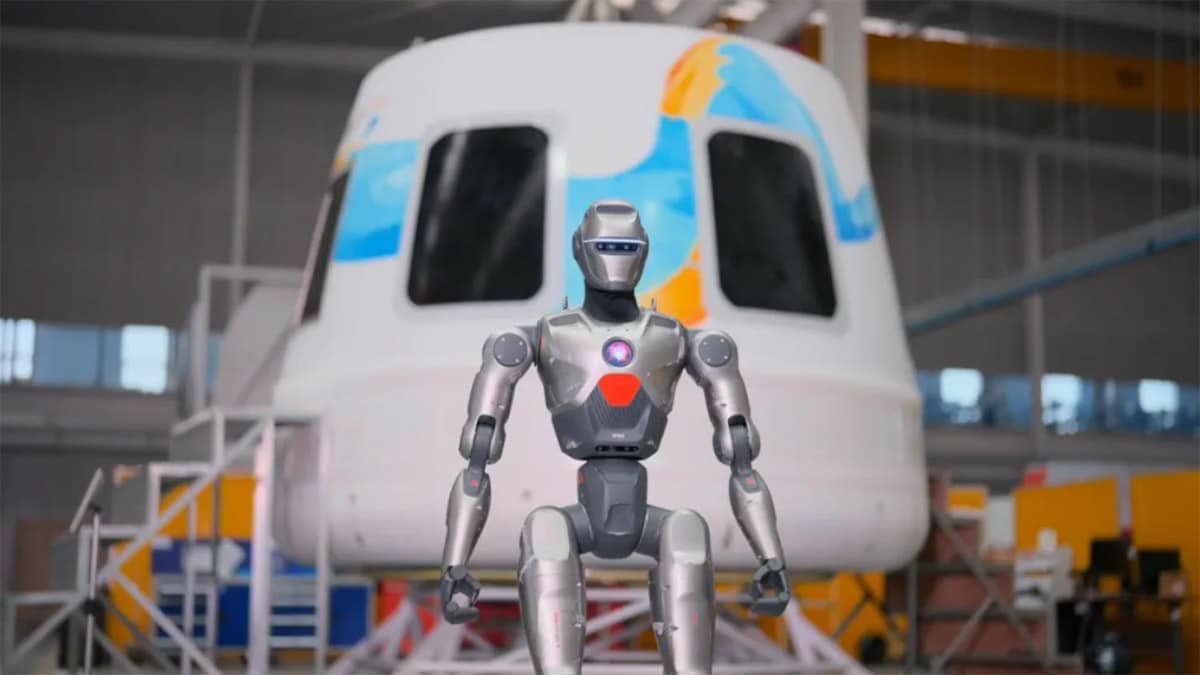
Humanoid robots also benefit from peripersonal space representations: dynamic safety margins around their bodies that adapt as humans move nearby, ensuring that sensitive regions like the head or torso are protected with higher avoidance priority.
Psychological Safety and Trust
Beyond physical proximity, humans need to feel comfortable working with machines. Social humanoids like Nadine and Furhat engage in natural language interaction, eye contact, and even personalized conversation — bridging the gap between “robot” and “collaborative partner.”
When humans understand what a robot is doing and why it is doing it, trust increases. Trust is not an abstract social value — it directly impacts safety: a hesitant worker might move unpredictably around a robot, or ignore obvious hazards, if they don’t understand how the robot behaves.
Levels of Human‑Robot Collaboration
Researchers often categorize human‑robot interaction across several collaboration levels:
Coexistence
At this most basic level, humans and robots share the same workspace but do not collaborate on the same task. Robots adjust their movements when humans are nearby, reducing speed or pausing entirely to avoid close contact.
Cooperation
Here, humans and robots work toward related goals but don’t directly interface with the same tool or object. The timing and coordination become more critical, and the robot must understand complex human actions to avoid interference.
Collaboration
The most advanced level involves simultaneous, shared work on a common task — lifting an object together, assisting in medical procedures, or co‑manipulating tools. This requires refined force control, finely tuned safety limits, and often real‑time adaptation to human inputs.
Each level of collaboration increases the technical demands on AI systems and the associated safety protocols.
Technological Enablers of Safe Collaboration
Several technological advancements underpin safe human‑humanoid interaction:
Advanced Sensors and Perception
Robots must perceive their environment with exceptional fidelity. This requires multimodal sensing — a combination of vision, depth sensing, tactile feedback, and motion prediction — allowing robots to detect and predict human movement, obstacles, and changes in context in real time.
Machine Learning and Adaptation
Machine learning enables robots to learn from demonstrations, improving their responses and adapting to new situations without explicit reprogramming. Research in shared autonomy and learning from human teaching reduces the reliance on rigid automation and increases flexibility.
Safety‑Critical Controllers
Innovations in control theory — such as safety‑critical adaptive control with uncertainty estimation — ensure that robots respect predefined safety constraints even in dynamic environments where human motion is unpredictable.
Red Teaming and Safety Testing
Emerging research suggests “human‑robot red teaming” — intentionally stress‑testing robots with human operators to discover safety vulnerabilities and edge‑case failures — as a promising path toward building trust and robustness in safety‑aware reasoning.

Real‑World Industry Deployments and Challenges
Despite impressive technological progress, real‑world deployment of humanoid robots still faces limitations.
Factory Automation and Logistics
Companies like Agility Robotics are pushing humanoids into warehouse and manufacturing contexts, where robots like Digit assist with physically demanding tasks. While these robots currently operate in human environments separated by safety cells, efforts continue to enable cooperative operation without barriers.
In some cases, humanoids like Walker S are already integrated into assembly lines performing inspections alongside human workers, suggesting that human‑robot teams can be safe and productive under the right conditions.
Healthcare and Service
Social robots such as Nadine and Furhat demonstrate how humanoids can assist with caregiving tasks, patient engagement, and administrative support — not just industrial work. Their ability to recognize people, recall interactions, and communicate naturally supports safe and empathetic operation in human settings.
Adoption Hurdles
Yet significant barriers remain. Deployments often rely on controlled environments or require modifications to workplace layout, increasing costs. Reliability and battery life can limit continuous operation. Economists and technologists caution that despite strong interest and investment, widespread adoption may be slower than hype suggests, due to practical and economic constraints.
Safety standards tailored to humanoids — beyond those designed for industrial arms or simple cobots — are also under discussion. Researchers argue that humanoid robots’ unique embodiments and operating contexts require new regulations to ensure operator protection.
Ethical and Societal Implications
The safe integration of AI‑powered humanoids raises ethical questions that extend beyond hardware and algorithms:
Responsibility and Accountability
If a robot makes a mistake that injures a human, who is responsible — the manufacturer, the AI developer, the operator, or the organization deploying it? Clear frameworks for liability and accountability are essential as robots take on more autonomous roles.
Trust, Transparency, and Social Acceptance
Humans must trust not just the technology, but the intentions and decisions of robots operating nearby. This requires transparency in how AI models make decisions, how safety constraints are enforced, and how robots communicate their intentions to humans.
Labor and Economic Impact
Humanoid robots may reshape labor markets, replacing or augmenting human work. Some roles may evaporate, but new categories of human oversight, design, and management of AI systems are likely to emerge. Managing this transition responsibly will be critical for economic stability and social welfare.
Toward a Collaborative Future
So, can AI‑powered humanoids safely work alongside humans? The answer depends on how we define “safe.” From a technological standpoint, significant progress in sensing, control, learning, and safety standards brings this goal within reach. Robots are already operating in shared spaces under strict safety protocols, performing tasks humans find difficult or dangerous, and coexisting in ways that enhance productivity and quality of life.
However, true collaborative integration — where humans and robots work side by side in dynamic environments without physical barriers — still faces hurdles. Achieving this level of trust, adaptability, and robust safety requires ongoing innovation, clear regulatory frameworks, thoughtful workplace design, and a deeper understanding of human‑robot interaction.
The future likely lies not in robots replacing humans wholesale, but in human‑robot partnerships where each brings strengths to a shared task: humans provide judgment, creativity, and adaptability, while robots contribute strength, precision, and endurance. When thoughtfully designed and responsibly regulated, these partnerships have the potential to redefine productivity and expand human capabilities in unprecedented ways.