








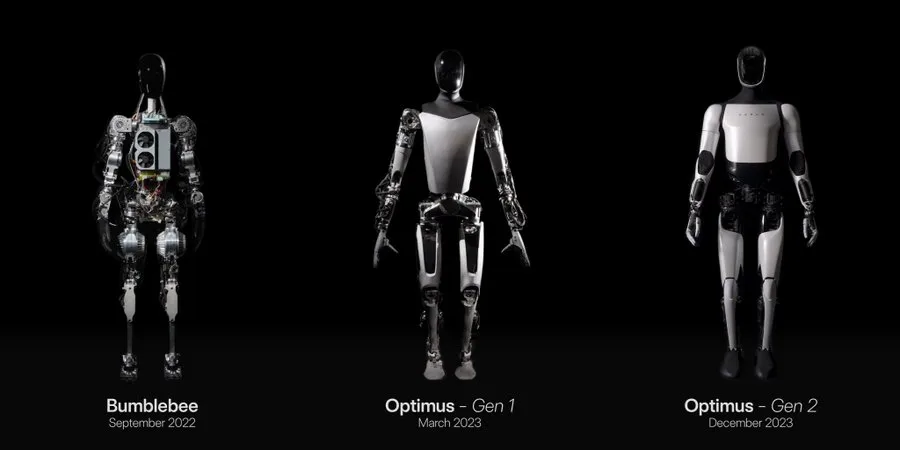

Introduction: The Benchmark of Humanoid Robotics
For many years, humanoid robots were often treated as impressive technological demonstrations rather than practical machines capable of performing meaningful work. Engineers built prototypes that could walk, balance, or perform limited movements, but these machines rarely demonstrated the agility and power required for real-world environments.
Among all humanoid robots developed over the past two decades, one machine has consistently stood out as a benchmark of engineering excellence: Atlas, developed by Boston Dynamics.
Atlas is not simply another humanoid robot. It represents a major milestone in robotics engineering, demonstrating levels of agility, balance, and dynamic movement that were once thought to be impossible for machines.
Videos of Atlas performing parkour, backflips, and complex navigation tasks have captured global attention. However, these demonstrations are not just viral internet content—they represent years of breakthroughs in mechanical engineering, control systems, and artificial intelligence.
This product review does not focus solely on Atlas’s performance in demonstrations. Instead, it explores the robot’s internal design philosophy and engineering architecture. By examining its mechanical systems, control algorithms, and sensor technologies, we can better understand why Atlas remains one of the most advanced humanoid robots ever built.
The Evolution of Atlas
From DARPA Challenge to Modern Robotics Platform
The origins of Atlas trace back to the robotics research programs sponsored by the U.S. government, particularly the DARPA Robotics Challenge.
The early versions of Atlas were designed primarily as disaster-response machines capable of navigating environments that were too dangerous for human workers.
These early robots were large, bulky, and connected to external power sources. Although they could walk and manipulate objects, their movement was relatively slow and cautious.
Over the past decade, however, Atlas has undergone dramatic transformation.
The modern version is:
- fully electric
- highly agile
- significantly lighter
- dramatically more dynamic
These improvements reflect advances not only in robotics hardware but also in control algorithms and machine intelligence.
Atlas is no longer just a research robot—it is now a highly sophisticated platform that demonstrates the future potential of humanoid mobility.
Mechanical Architecture
Lightweight but Powerful
One of the most impressive aspects of Atlas is its mechanical design.
Unlike traditional industrial robots that rely on rigid structures and stationary bases, Atlas must combine strength with flexibility. The robot’s body is built from lightweight materials that reduce overall mass while maintaining structural integrity.
The current generation of Atlas stands approximately 1.5 meters tall and weighs roughly 80 kilograms. While this size is comparable to a human adult, the internal structure is far more complex.
Inside the robot are dozens of actuators—motorized joints that allow the machine to move its limbs with remarkable precision.
Each actuator must meet several demanding requirements:
- high torque output
- fast response times
- compact size
- efficient energy consumption
Balancing these requirements is one of the most difficult challenges in humanoid robotics engineering.
Degrees of Freedom
Human movement is incredibly complex. Our bodies rely on dozens of joints that can move in multiple directions.
To replicate this flexibility, Atlas includes more than 20 degrees of freedom across its limbs and torso.
Key joints include:
- multi-axis shoulders
- articulated hips
- knee joints capable of absorbing impact
- ankle systems for balance and stabilization
These joints allow Atlas to perform dynamic movements such as jumping, running, and turning.
What makes Atlas especially impressive is not just the number of joints, but the coordination between them. Every movement requires precise synchronization across the robot’s entire body.
Actuators and Power Systems
Electric Actuation
Earlier versions of Atlas used hydraulic actuators, which provided tremendous power but required heavy pumps and fluid systems.
Modern versions of the robot have transitioned to fully electric actuation.
This change offers several advantages:
- improved energy efficiency
- reduced mechanical complexity
- quieter operation
- better control precision
Electric motors combined with advanced gearing systems provide the torque required for dynamic movement while maintaining fine control.
This shift toward electric systems reflects a broader trend across the robotics industry.
Energy Management
Battery technology remains one of the biggest constraints in robotics.
Humanoid robots require large amounts of energy to perform dynamic movements such as jumping or running.
Atlas addresses this challenge through optimized energy management systems that regulate power usage across different components.
High-efficiency motors and intelligent control software help extend operational time while maintaining performance.
However, like most humanoid robots today, Atlas still faces limitations in battery duration during intensive tasks.
Sensor Systems
Perception and Environmental Awareness
For a humanoid robot to move effectively in the real world, it must understand its environment.
Atlas relies on a sophisticated array of sensors that provide real-time data about its surroundings.
These sensors include:
- stereo cameras
- depth sensors
- inertial measurement units
- force sensors in the limbs
Together, these sensors allow the robot to perceive obstacles, detect terrain variations, and maintain balance.
The integration of these sensors is crucial for dynamic movement.
When Atlas jumps or lands, its sensors immediately detect changes in orientation and adjust motor commands to maintain stability.
Balance and Control Algorithms
Dynamic Stability
Walking robots must constantly maintain balance while moving.
Humans accomplish this effortlessly through complex neurological systems. Replicating this ability in robots requires advanced control algorithms.
Atlas uses sophisticated balance control systems that calculate stability in real time.
These algorithms analyze multiple variables simultaneously, including:
- body orientation
- foot placement
- momentum
- ground contact forces
Using this data, the robot adjusts its movements hundreds of times per second.
This capability allows Atlas to recover from disturbances that would cause many other robots to fall.
Motion Planning
Another critical component of Atlas’s intelligence is motion planning.
Motion planning systems determine how the robot should move from one position to another while avoiding obstacles and maintaining stability.
For complex movements such as jumping across platforms or navigating uneven terrain, the robot must calculate optimal trajectories for its limbs.
These calculations involve physics simulations that predict how the robot’s body will respond to each action.
Advances in motion planning algorithms have played a major role in enabling Atlas’s remarkable agility.
Real-World Capabilities
Parkour and Dynamic Demonstrations
One of the most famous demonstrations of Atlas involves parkour-style obstacle navigation.
In these demonstrations, the robot runs, jumps between platforms, and performs complex movements such as backflips.
While these demonstrations may appear theatrical, they serve an important engineering purpose.
They test the limits of the robot’s control systems and mechanical capabilities under dynamic conditions.
Successfully performing these movements requires extremely precise coordination between sensors, actuators, and control algorithms.
Industrial Potential
Although Atlas is currently used primarily as a research platform, its capabilities have important implications for real-world applications.
Potential future roles for robots with Atlas-level mobility include:
- disaster response operations
- industrial inspection
- hazardous environment exploration
- construction site assistance
These environments often contain obstacles and irregular terrain that traditional wheeled robots cannot navigate effectively.
Humanoid robots capable of walking, climbing, and manipulating objects could offer significant advantages in these scenarios.
Strengths and Limitations
Engineering Strengths
Atlas demonstrates several extraordinary engineering achievements:
- unmatched humanoid agility
- highly advanced balance systems
- sophisticated motion planning algorithms
- powerful yet compact actuation systems
These capabilities place it among the most advanced humanoid robots ever created.
Current Limitations
Despite its impressive capabilities, Atlas still faces several challenges that prevent widespread commercial deployment.
These include:
- limited battery life
- high manufacturing costs
- complex maintenance requirements
- reliance on controlled testing environments
Addressing these challenges will be essential if humanoid robots are to transition from research laboratories into everyday industries.
The Future of Atlas
The development of Atlas represents more than a single robot project.
It reflects decades of progress in robotics engineering and serves as a technological foundation for future humanoid systems.
As advances in artificial intelligence, battery technology, and materials science continue, many of the limitations facing Atlas today may gradually be overcome.
Future generations of humanoid robots may combine Atlas-level mobility with advanced AI systems capable of learning new tasks autonomously.
If that happens, robots like Atlas could play an important role in industries ranging from disaster response to manufacturing.
Final Verdict
Atlas remains one of the most extraordinary engineering achievements in the field of robotics.
While it is not yet a commercial product, the robot has demonstrated capabilities that redefine what humanoid machines can accomplish.
Its advanced mobility, powerful actuation systems, and sophisticated control algorithms make it a benchmark against which many other robots are measured.
As humanoid robotics continues to evolve, the technologies pioneered in Atlas will likely influence the design of many future machines.
For engineers, researchers, and technology enthusiasts, Atlas represents not only the present state of humanoid robotics—but also a glimpse into its future.
Inside Atlas: Engineering Breakdown of the World’s Most Advanced Humanoid Robot
Introduction: The Benchmark of Humanoid Robotics
For many years, humanoid robots were often treated as impressive technological demonstrations rather than practical machines capable of performing meaningful work. Engineers built prototypes that could walk, balance, or perform limited movements, but these machines rarely demonstrated the agility and power required for real-world environments.
Among all humanoid robots developed over the past two decades, one machine has consistently stood out as a benchmark of engineering excellence: Atlas, developed by Boston Dynamics.
Atlas is not simply another humanoid robot. It represents a major milestone in robotics engineering, demonstrating levels of agility, balance, and dynamic movement that were once thought to be impossible for machines.
Videos of Atlas performing parkour, backflips, and complex navigation tasks have captured global attention. However, these demonstrations are not just viral internet content—they represent years of breakthroughs in mechanical engineering, control systems, and artificial intelligence.
This product review does not focus solely on Atlas’s performance in demonstrations. Instead, it explores the robot’s internal design philosophy and engineering architecture. By examining its mechanical systems, control algorithms, and sensor technologies, we can better understand why Atlas remains one of the most advanced humanoid robots ever built.
The Evolution of Atlas
From DARPA Challenge to Modern Robotics Platform
The origins of Atlas trace back to the robotics research programs sponsored by the U.S. government, particularly the DARPA Robotics Challenge.
The early versions of Atlas were designed primarily as disaster-response machines capable of navigating environments that were too dangerous for human workers.
These early robots were large, bulky, and connected to external power sources. Although they could walk and manipulate objects, their movement was relatively slow and cautious.
Over the past decade, however, Atlas has undergone dramatic transformation.
The modern version is:
- fully electric
- highly agile
- significantly lighter
- dramatically more dynamic
These improvements reflect advances not only in robotics hardware but also in control algorithms and machine intelligence.
Atlas is no longer just a research robot—it is now a highly sophisticated platform that demonstrates the future potential of humanoid mobility.
Mechanical Architecture
Lightweight but Powerful
One of the most impressive aspects of Atlas is its mechanical design.
Unlike traditional industrial robots that rely on rigid structures and stationary bases, Atlas must combine strength with flexibility. The robot’s body is built from lightweight materials that reduce overall mass while maintaining structural integrity.
The current generation of Atlas stands approximately 1.5 meters tall and weighs roughly 80 kilograms. While this size is comparable to a human adult, the internal structure is far more complex.
Inside the robot are dozens of actuators—motorized joints that allow the machine to move its limbs with remarkable precision.
Each actuator must meet several demanding requirements:
- high torque output
- fast response times
- compact size
- efficient energy consumption
Balancing these requirements is one of the most difficult challenges in humanoid robotics engineering.
Degrees of Freedom
Human movement is incredibly complex. Our bodies rely on dozens of joints that can move in multiple directions.
To replicate this flexibility, Atlas includes more than 20 degrees of freedom across its limbs and torso.
Key joints include:
- multi-axis shoulders
- articulated hips
- knee joints capable of absorbing impact
- ankle systems for balance and stabilization
These joints allow Atlas to perform dynamic movements such as jumping, running, and turning.
What makes Atlas especially impressive is not just the number of joints, but the coordination between them. Every movement requires precise synchronization across the robot’s entire body.
Actuators and Power Systems
Electric Actuation
Earlier versions of Atlas used hydraulic actuators, which provided tremendous power but required heavy pumps and fluid systems.
Modern versions of the robot have transitioned to fully electric actuation.
This change offers several advantages:
- improved energy efficiency
- reduced mechanical complexity
- quieter operation
- better control precision
Electric motors combined with advanced gearing systems provide the torque required for dynamic movement while maintaining fine control.
This shift toward electric systems reflects a broader trend across the robotics industry.
Energy Management
Battery technology remains one of the biggest constraints in robotics.
Humanoid robots require large amounts of energy to perform dynamic movements such as jumping or running.
Atlas addresses this challenge through optimized energy management systems that regulate power usage across different components.
High-efficiency motors and intelligent control software help extend operational time while maintaining performance.
However, like most humanoid robots today, Atlas still faces limitations in battery duration during intensive tasks.
Sensor Systems
Perception and Environmental Awareness
For a humanoid robot to move effectively in the real world, it must understand its environment.
Atlas relies on a sophisticated array of sensors that provide real-time data about its surroundings.
These sensors include:
- stereo cameras
- depth sensors
- inertial measurement units
- force sensors in the limbs
Together, these sensors allow the robot to perceive obstacles, detect terrain variations, and maintain balance.
The integration of these sensors is crucial for dynamic movement.
When Atlas jumps or lands, its sensors immediately detect changes in orientation and adjust motor commands to maintain stability.
Balance and Control Algorithms
Dynamic Stability
Walking robots must constantly maintain balance while moving.
Humans accomplish this effortlessly through complex neurological systems. Replicating this ability in robots requires advanced control algorithms.
Atlas uses sophisticated balance control systems that calculate stability in real time.
These algorithms analyze multiple variables simultaneously, including:
- body orientation
- foot placement
- momentum
- ground contact forces
Using this data, the robot adjusts its movements hundreds of times per second.
This capability allows Atlas to recover from disturbances that would cause many other robots to fall.
Motion Planning
Another critical component of Atlas’s intelligence is motion planning.
Motion planning systems determine how the robot should move from one position to another while avoiding obstacles and maintaining stability.
For complex movements such as jumping across platforms or navigating uneven terrain, the robot must calculate optimal trajectories for its limbs.
These calculations involve physics simulations that predict how the robot’s body will respond to each action.
Advances in motion planning algorithms have played a major role in enabling Atlas’s remarkable agility.
Real-World Capabilities
Parkour and Dynamic Demonstrations
One of the most famous demonstrations of Atlas involves parkour-style obstacle navigation.
In these demonstrations, the robot runs, jumps between platforms, and performs complex movements such as backflips.
While these demonstrations may appear theatrical, they serve an important engineering purpose.
They test the limits of the robot’s control systems and mechanical capabilities under dynamic conditions.
Successfully performing these movements requires extremely precise coordination between sensors, actuators, and control algorithms.
Industrial Potential
Although Atlas is currently used primarily as a research platform, its capabilities have important implications for real-world applications.
Potential future roles for robots with Atlas-level mobility include:
- disaster response operations
- industrial inspection
- hazardous environment exploration
- construction site assistance
These environments often contain obstacles and irregular terrain that traditional wheeled robots cannot navigate effectively.
Humanoid robots capable of walking, climbing, and manipulating objects could offer significant advantages in these scenarios.
Strengths and Limitations
Engineering Strengths
Atlas demonstrates several extraordinary engineering achievements:
- unmatched humanoid agility
- highly advanced balance systems
- sophisticated motion planning algorithms
- powerful yet compact actuation systems
These capabilities place it among the most advanced humanoid robots ever created.
Current Limitations
Despite its impressive capabilities, Atlas still faces several challenges that prevent widespread commercial deployment.
These include:
- limited battery life
- high manufacturing costs
- complex maintenance requirements
- reliance on controlled testing environments
Addressing these challenges will be essential if humanoid robots are to transition from research laboratories into everyday industries.
The Future of Atlas
The development of Atlas represents more than a single robot project.
It reflects decades of progress in robotics engineering and serves as a technological foundation for future humanoid systems.
As advances in artificial intelligence, battery technology, and materials science continue, many of the limitations facing Atlas today may gradually be overcome.
Future generations of humanoid robots may combine Atlas-level mobility with advanced AI systems capable of learning new tasks autonomously.
If that happens, robots like Atlas could play an important role in industries ranging from disaster response to manufacturing.
Final Verdict
Atlas remains one of the most extraordinary engineering achievements in the field of robotics.
While it is not yet a commercial product, the robot has demonstrated capabilities that redefine what humanoid machines can accomplish.
Its advanced mobility, powerful actuation systems, and sophisticated control algorithms make it a benchmark against which many other robots are measured.
As humanoid robotics continues to evolve, the technologies pioneered in Atlas will likely influence the design of many future machines.
For engineers, researchers, and technology enthusiasts, Atlas represents not only the present state of humanoid robotics—but also a glimpse into its future.
Discussion about this post