









Introduction: A New Technological Race
For decades, humanoid robots belonged mostly to the realm of science fiction. Popular films, novels, and television series imagined a future where intelligent machines walked among humans, performing work, assisting families, or even becoming companions.
In reality, progress in humanoid robotics was slow for many years. Engineers could build machines that walked, waved their arms, or performed carefully choreographed demonstrations, but these robots were rarely capable of performing useful tasks in real-world environments.
That situation has changed dramatically over the past few years.
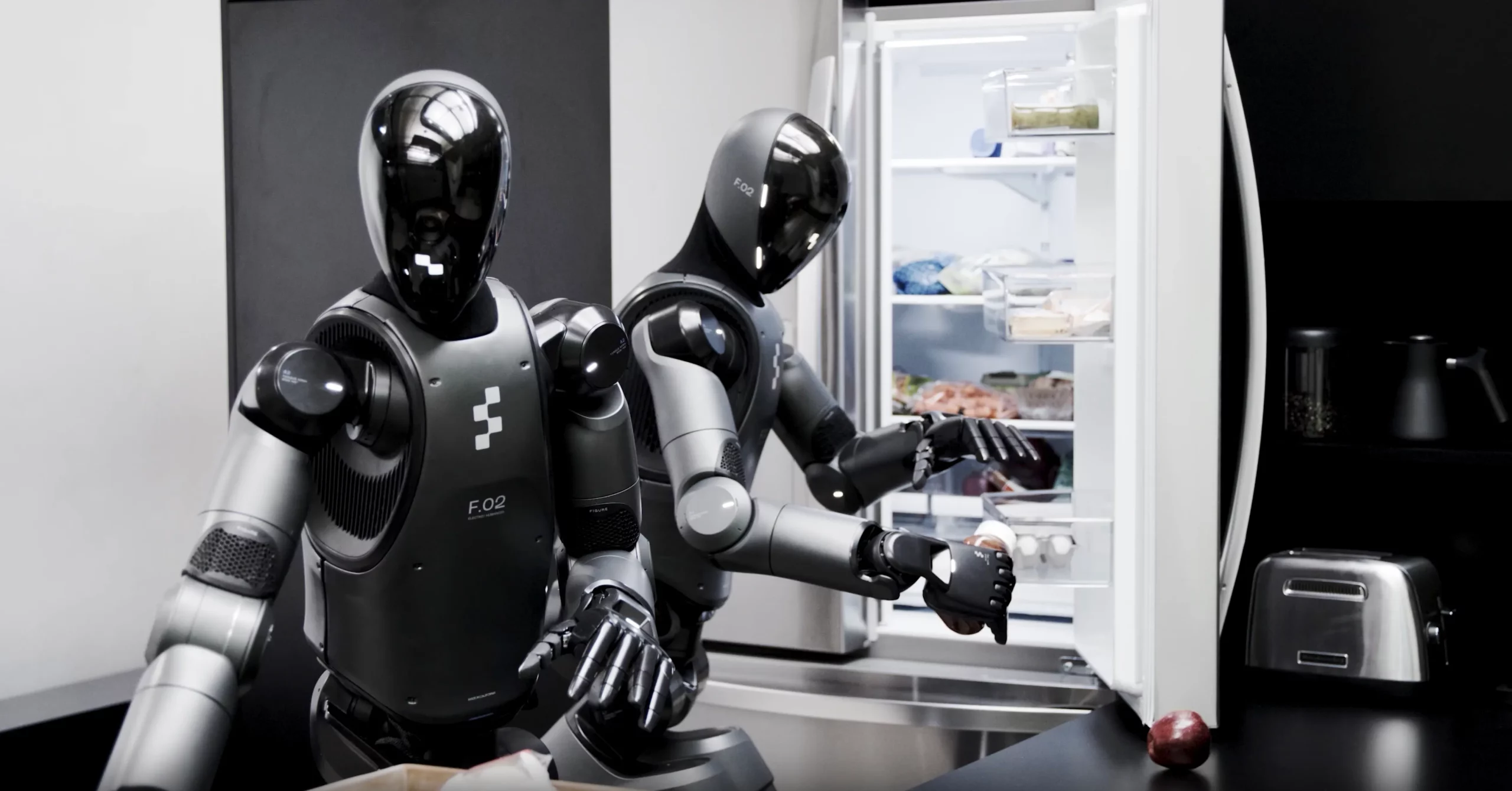
Suddenly, some of the world’s most influential technology companies and research institutions are investing heavily in humanoid robots. A growing list of companies—including Tesla, Boston Dynamics, Figure AI, and Agility Robotics—are racing to build machines that look and move like humans.
This surge of interest raises an important question:
Why now?
Why are humanoid robots suddenly becoming one of the most exciting and competitive areas in modern technology?
The answer lies at the intersection of several powerful trends: advances in artificial intelligence, global labor shortages, breakthroughs in robotics engineering, and the growing belief that humanoid robots could become the next major computing platform.
Understanding this new race requires looking not only at robotics technology itself but also at the economic, technological, and social forces driving the industry forward.
The Long History of Humanoid Robots
Early Experiments
Humanoid robotics has fascinated engineers for more than half a century.
Some of the earliest humanoid machines were built in university laboratories during the 1970s and 1980s. These early robots could perform limited actions such as walking slowly or manipulating simple objects.
However, they were extremely fragile and required carefully controlled environments.
In the early 2000s, robotics research began to produce more sophisticated humanoid platforms. One of the most famous examples was the robot ASIMO developed by Honda. ASIMO could walk, climb stairs, and interact with people in limited ways.
Although impressive, these robots were still far from practical tools. Their capabilities were limited, and their costs were extremely high.
As a result, most industries focused instead on industrial robots—machines designed for specific tasks such as welding, assembly, or packaging.
Industrial robots became incredibly successful in manufacturing environments, but they were fundamentally different from humanoid robots. They were usually fixed in place and performed highly repetitive actions inside controlled workspaces.
Humanoid robots, by contrast, were designed to operate in the complex and unpredictable environments created for humans.
For many years, achieving this goal seemed impossibly difficult.
The Turning Point: Artificial Intelligence
The Role of AI in Robotics
One of the biggest reasons for the recent surge in humanoid robotics development is the rapid progress in artificial intelligence.
In the past, robots relied heavily on traditional programming methods. Engineers had to specify exactly how the robot should move and react in specific situations.
This approach worked well for controlled environments but failed when robots encountered unexpected situations.
Modern AI systems have changed this equation.
Advances in machine learning—particularly deep learning—have made it possible for robots to perceive and interpret the world in ways that were previously impossible.
Companies such as OpenAI and Google DeepMind have developed powerful AI models capable of understanding images, language, and complex patterns.
These technologies can now be integrated into robotic systems.
With AI-powered perception and decision-making, humanoid robots can begin to understand their surroundings, recognize objects, and adapt to new environments.
This development represents a major shift in robotics.
Instead of being rigid machines following predefined instructions, robots can now become adaptive systems capable of learning from experience.
Hardware Breakthroughs
Better Motors and Actuators
Artificial intelligence alone cannot create humanoid robots. The machines also require highly advanced mechanical systems.
Over the past decade, major improvements in electric motors, actuators, and materials have significantly improved robot performance.
Modern actuators can deliver high torque while remaining compact and energy efficient. These improvements allow humanoid robots to perform dynamic movements such as walking, climbing, and lifting objects.
Companies like Boston Dynamics have demonstrated extraordinary mobility in robots such as Atlas, showing that machines can achieve levels of agility once thought to be impossible.
At the same time, improved battery technology has made mobile robots more practical. Although battery life remains a limitation, energy density continues to improve each year.
These hardware breakthroughs are essential for making humanoid robots capable of performing real-world work.
Why Humanoid Form Matters
Designing Robots for Human Environments
One might ask an obvious question: why build robots that look like humans at all?
After all, many robots already perform useful tasks without having human-like shapes.
The answer lies in the environments where humans live and work.
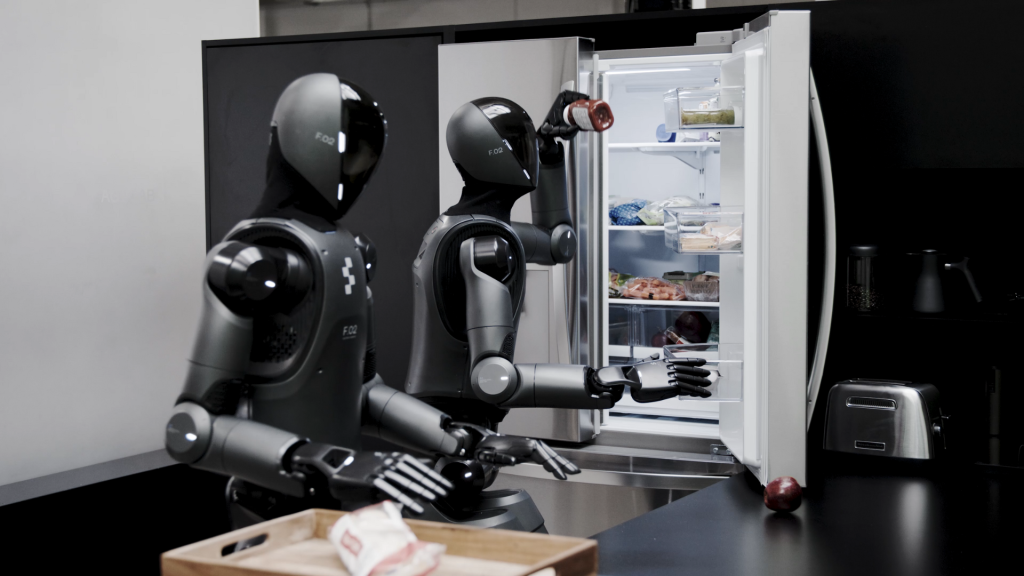
Modern cities, factories, and homes are designed entirely around human bodies.
Doorways, stairs, tools, vehicles, and machines are all built with human dimensions and abilities in mind.
A humanoid robot has several advantages in such environments:
- it can walk through standard doorways
- it can climb stairs
- it can use tools designed for human hands
- it can operate equipment built for human workers
Instead of redesigning entire infrastructures for robots, engineers can design robots that adapt to existing environments.
This compatibility could make humanoid robots far more flexible than traditional automation systems.
The Labor Shortage Problem
Demographic Changes
Another major driver behind the humanoid robotics boom is the growing global labor shortage.
Many countries are experiencing rapid demographic changes. Populations are aging, birth rates are declining, and fewer young workers are entering physically demanding jobs.
Industries such as logistics, manufacturing, agriculture, and healthcare are already struggling to find enough workers.
These trends are particularly visible in developed economies such as Japan, the United States, and many European countries.
As labor shortages increase, companies are becoming more willing to invest in automation technologies.
Humanoid robots offer a potential solution because they can perform tasks currently done by human workers.
Rather than replacing workers entirely, robots may fill roles that companies cannot otherwise fill.
The Tech Industry Joins the Race
Silicon Valley’s New Frontier
The involvement of major technology companies has dramatically accelerated the development of humanoid robotics.
For example, Tesla has announced plans to build a humanoid robot known as Optimus, designed to perform repetitive and dangerous tasks.
The company believes that advances in artificial intelligence developed for self-driving cars can also be applied to robots.
Meanwhile, startups such as Figure AI are building robots intended to work in warehouses and factories.
Another important player, Agility Robotics, has developed the humanoid robot Digit, which has already been tested in logistics environments.
These companies are supported by large investments from venture capital firms and technology partners.
The result is an increasingly competitive global race to build practical humanoid robots.
Economic Potential
A Trillion-Dollar Market?
Some analysts believe that humanoid robots could eventually become one of the largest technology markets in the world.
If robots become capable of performing many types of human labor, the potential market size could be enormous.
Humanoid robots could be deployed in industries such as:
- manufacturing
- logistics
- retail
- healthcare
- hospitality
- construction
Some technology leaders have even suggested that humanoid robots could eventually outnumber humans in certain types of jobs.
While such predictions remain speculative, they highlight the enormous economic potential of the technology.
For companies investing in robotics today, the rewards could be transformative.
Remaining Challenges
Technical Obstacles
Despite the excitement surrounding humanoid robots, the technology still faces major challenges.
Walking on two legs is far more complex than moving on wheels. Maintaining balance while performing tasks requires extremely advanced control systems.
Robotic hands also remain far less capable than human hands. Humans can manipulate delicate objects with remarkable precision, a capability that robots still struggle to replicate.
Battery life is another major limitation. Humanoid robots consume large amounts of energy when walking or lifting objects.
Finally, the cost of building these machines remains very high. Advanced sensors, actuators, and computing systems make humanoid robots expensive to manufacture.
These challenges mean that widespread adoption will take time.
The Future of Humanoid Robotics
From Research to Real Work
Despite these obstacles, the momentum behind humanoid robotics continues to grow.
Every year, new prototypes demonstrate improved mobility, perception, and manipulation capabilities.
Advances in artificial intelligence are making robots more adaptable and capable of learning new tasks.
At the same time, improvements in manufacturing could eventually reduce production costs, making robots more affordable for businesses.
Many experts believe that the first large-scale deployments of humanoid robots will occur in industrial settings such as warehouses and factories.
From there, the technology may gradually expand into other areas, including service industries and healthcare.
Conclusion: The Beginning of a New Industry
The sudden surge of interest in humanoid robots is not a coincidence.
It is the result of several powerful forces converging at the same time:
- breakthroughs in artificial intelligence
- improvements in robotics hardware
- global labor shortages
- massive investments from technology companies
Together, these trends are transforming humanoid robotics from a niche research field into a rapidly growing industry.
While fully capable humanoid robots may still be years away, the race to build them has clearly begun.
And if the technology succeeds, humanoid robots could become one of the most important technological developments of the 21st century—reshaping industries, economies, and the nature of work itself.