









A New Industrial Prize
In the technology industry, the first company to successfully mass-produce a transformative product often gains a decisive advantage. The smartphone revolution created giants such as Apple and Samsung. The electric vehicle transition propelled Tesla into one of the most valuable automakers in the world.
Now, another technological race is unfolding—this time centered on humanoid robots.
The stakes are enormous. If companies succeed in building affordable humanoid robots capable of performing general physical work, the potential market could rival the size of the global automotive industry.
Factories, warehouses, hospitals, construction sites, and even households could one day rely on robotic workers.
Yet the central question remains unresolved: which company will be the first to produce humanoid robots at scale?
Several contenders are competing for this prize, each pursuing different strategies and technological philosophies.
Tesla’s Manufacturing Advantage
One of the most widely discussed competitors in the humanoid robot race is Tesla.
The company introduced its humanoid robot project in 2021 and has since revealed successive prototypes known as Tesla Optimus.
Unlike many robotics companies that focus on research demonstrations, Tesla’s approach emphasizes manufacturing scalability.
Chief executive Elon Musk has repeatedly argued that the real challenge in robotics is not building a prototype—it is producing millions of units.
Tesla believes its experience with electric vehicle manufacturing could give it a critical edge.
The company already operates massive factories capable of producing complex electromechanical systems at scale. Many of the technologies used in electric vehicles—such as battery systems, motors, and computer chips—can also be applied to humanoid robots.
Tesla’s robots are designed to perform tasks such as transporting parts, sorting materials, and assisting with repetitive factory work.
If the company successfully integrates robotics into its existing production lines, it could create a powerful feedback loop: robots building more robots.
Figure AI and the Startup Model
While Tesla brings manufacturing scale, startups offer speed and focus.
One of the most prominent new entrants is Figure AI, a Silicon Valley robotics company founded with the singular mission of building humanoid robots for commercial use.
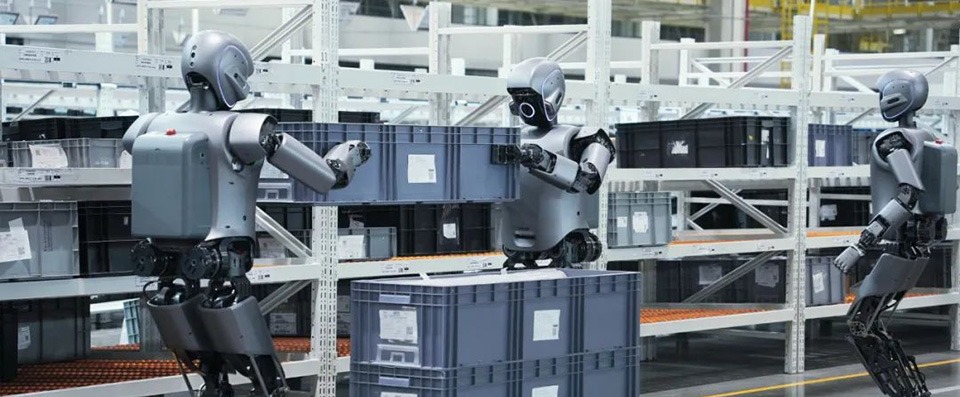
Its first robot platform, Figure 01, is designed to operate in logistics environments such as warehouses and distribution centers.
Unlike many robotics prototypes built primarily for demonstration, Figure has concentrated on practical tasks such as moving boxes, sorting packages, and navigating industrial spaces.
The company’s strategy relies heavily on artificial intelligence.
Through collaboration with OpenAI, Figure aims to equip robots with advanced language and reasoning models.
These AI systems could allow robots to interpret verbal instructions, understand their surroundings, and learn new tasks more quickly than traditional robots.
Investors have taken notice.
Figure has raised hundreds of millions of dollars from venture capital firms and technology partners, signaling strong confidence in the startup’s vision.
Boston Dynamics: Engineering Excellence
Few companies have contributed more to robotics research than Boston Dynamics.
Founded decades ago as a research spin-off from the Massachusetts Institute of Technology, the company has built some of the most advanced robots ever created.
Its humanoid robot Atlas is famous for its extraordinary agility.
Videos of Atlas performing backflips, parkour maneuvers, and complex industrial tasks have captivated audiences worldwide.
However, Boston Dynamics historically focused on research platforms rather than mass-market products.
In recent years, the company has begun shifting toward commercial deployment.
Its quadruped robot Spot is already used in industries such as inspection and security.
The question now is whether the company can translate its engineering expertise into scalable humanoid robot production.
China’s Robotics Expansion
The global humanoid robot race is not limited to Silicon Valley.
China has rapidly emerged as a major player in robotics development.
Companies such as UBTECH Robotics are developing humanoid robots designed for industrial and service applications.
China’s competitive advantage lies in manufacturing infrastructure.
The country’s electronics supply chains, battery production capacity, and large-scale factories could allow Chinese companies to produce robots more efficiently once designs mature.
Additionally, China’s government has made robotics a national priority as part of its broader strategy to modernize manufacturing and address labor shortages.
As the population ages, automation is becoming increasingly important.
Humanoid robots may play a central role in that transition.
Competing Technical Approaches
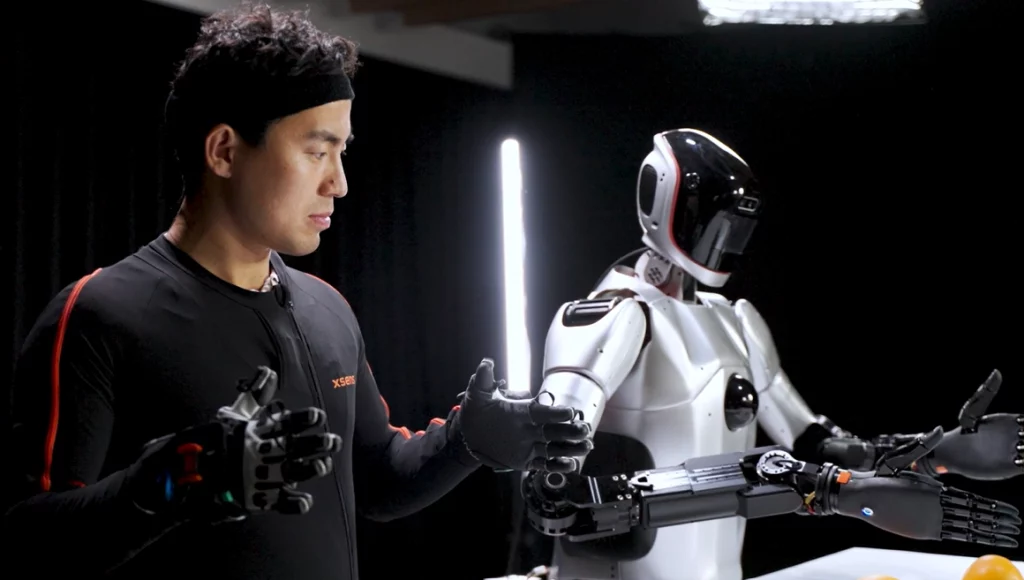
Although all humanoid robots share a similar appearance, their underlying technologies can differ significantly.
One major difference lies in actuation systems—the motors and mechanical structures that allow robots to move.
Some companies prioritize strength and industrial durability, designing robots capable of lifting heavy loads.
Others focus on agility and dexterity, attempting to replicate the flexibility of human motion.
Another key distinction involves control systems.
Traditional robots rely on precise programming and predefined motion paths.
Newer robots incorporate machine learning algorithms that allow them to adapt to changing environments.
This shift toward AI-driven control may ultimately determine which robots can operate in complex real-world environments.
The Economics of Humanoid Robots
Even if companies succeed in building capable humanoid robots, economic viability remains a critical challenge.
Robots must become affordable enough to justify their deployment.
Industry analysts often compare the cost of robots to human labor.
If a robot can perform the equivalent of a full-time worker’s tasks at a lower long-term cost, businesses may have strong incentives to adopt the technology.
However, early humanoid robots are extremely expensive.
Development costs remain high, and manufacturing volumes are still limited.
Reducing costs will likely require large-scale production similar to the automobile industry.
Companies that achieve manufacturing efficiency may dominate the market.
The Software Ecosystem
Hardware is only part of the equation.
Humanoid robots will also require sophisticated software ecosystems.
Operating systems, cloud platforms, and application development tools could become essential components of the robotics industry.
Technology companies with strong software capabilities may have a strategic advantage.
Robots connected to cloud networks could receive software updates, share data, and continuously improve their performance.
This model resembles the smartphone ecosystem, where hardware and software innovation reinforce each other.
The Labor Question
As humanoid robots approach commercial viability, debates about employment are intensifying.
Supporters argue that robots could fill labor shortages in industries where workers are difficult to recruit.
They could also take on dangerous or physically demanding tasks, improving workplace safety.
Critics, however, worry that widespread automation could displace millions of workers.
Jobs involving manual labor—such as warehouse operations, manufacturing, and logistics—may be particularly vulnerable.
Economists remain divided on the long-term effects.
Some believe new industries and occupations will emerge alongside robotics, while others warn that the pace of technological change may outstrip society’s ability to adapt.
Who Will Win?
Predicting the winner of the humanoid robot race is extremely difficult.
Each competitor has unique strengths.
Tesla brings manufacturing scale and engineering integration.
Figure AI offers startup agility and strong AI partnerships.
Boston Dynamics possesses unmatched robotics expertise.
Chinese companies benefit from massive industrial infrastructure.
The eventual leader may depend on which factor proves most important: manufacturing efficiency, artificial intelligence, or mechanical engineering.
What is clear is that the race is accelerating.
Over the next decade, the company that successfully combines advanced robotics technology with mass production could reshape the global economy.
The battle for the first mass-produced humanoid robot has only just begun.
But its outcome may define the next era of industrial innovation.
Discussion about this post