








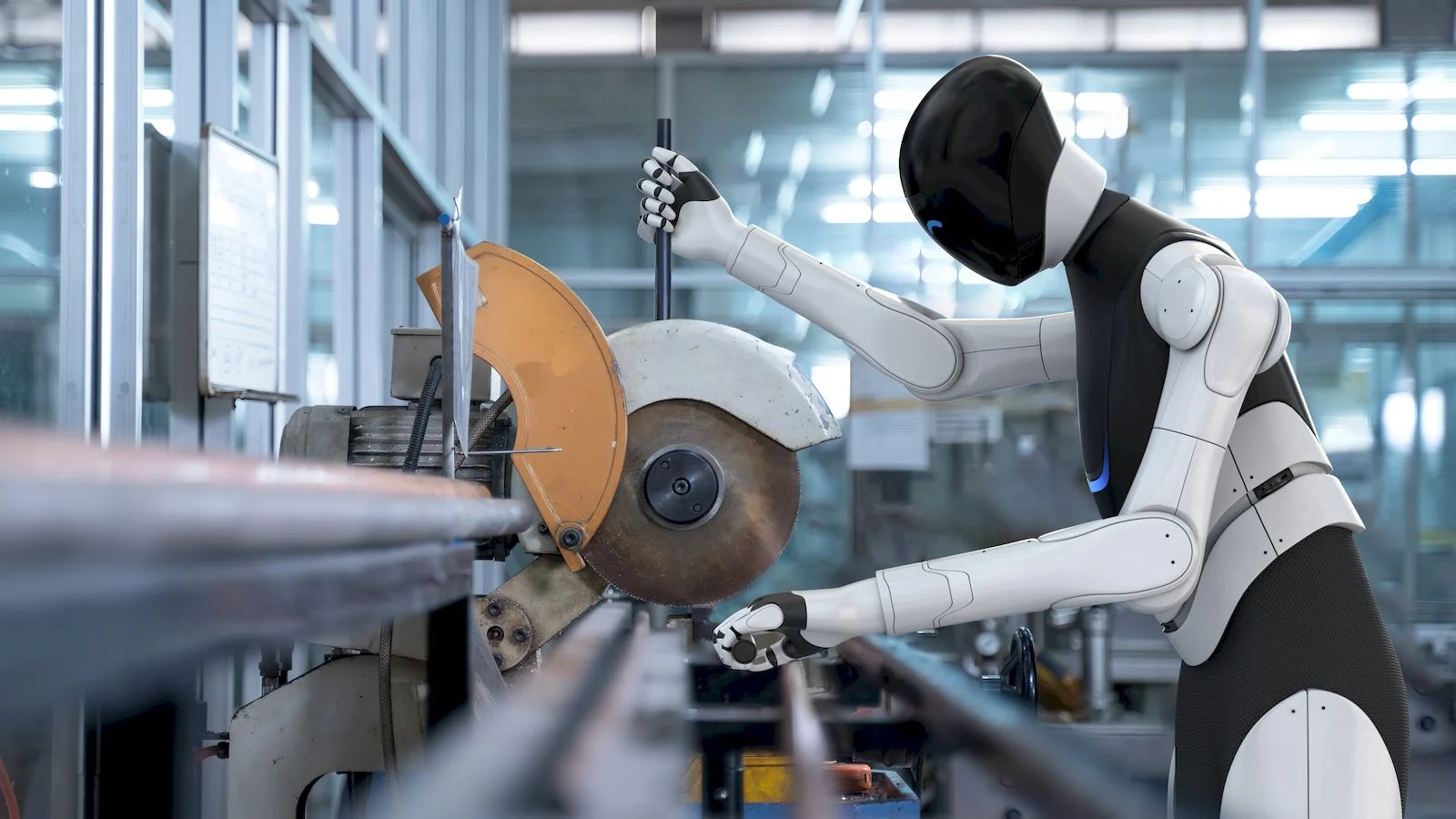

The Industry Has Finally Left the Lab
For decades, humanoid robots lived in a perpetual state of “almost.”
Almost useful.
Almost deployable.
Almost ready for the real world.
They impressed in research labs, went viral online, and fueled endless speculation—but never quite crossed the threshold into economic relevance.
That moment is now changing.
Today, four distinct players are shaping the future of humanoid robotics:
- Tesla Optimus (scale-driven industrialization)
- Figure 01 (AI-native intelligence)
- Atlas (engineering frontier)
- Digit (commercial deployment)
Each represents a fundamentally different answer to the same question:
👉 What should a humanoid robot actually be?
This is no longer a technical debate.
It is an economic one.
Four Philosophies, Four Futures
To understand who might win, you have to understand that these robots are not competing on the same axis.
They are built on entirely different philosophies.
1. Tesla Optimus — The Manufacturing Bet
Backed by Tesla, Optimus is built on a simple but powerful idea:
👉 The winner is the one who can produce millions of robots.
Tesla’s strengths:
- Supply chain control
- Mass manufacturing expertise
- Integrated hardware + AI stack
This is the iPhone strategy of robotics.
Don’t just build a great product.
Build the system that can scale it globally.
Risk:
If the robot isn’t useful enough, scale doesn’t matter.
2. Figure 01 — The Intelligence Bet
Driven by Figure AI and supported by OpenAI, Figure 01 represents a different thesis:
👉 The winner is the one who builds the smartest robot.
Key advantages:
- Multimodal AI integration
- Natural language interaction
- Adaptive learning capabilities
This is the ChatGPT moment for robotics.
Instead of programming robots, you talk to them.
Risk:
Intelligence without reliability is dangerous in physical environments.
3. Atlas — The Engineering Bet
Developed by Boston Dynamics, Atlas answers a different question:
👉 What is the physical limit of robotics?
Strengths:
- Unmatched mobility
- Advanced control systems
- Real-world resilience
Atlas is not trying to win the market.
It is trying to define the frontier.
Risk:
Being the best doesn’t mean being useful—or profitable.
4. Digit — The Business Bet
Created by Agility Robotics, Digit focuses on one thing:
👉 The winner is the one who makes money first.
Advantages:
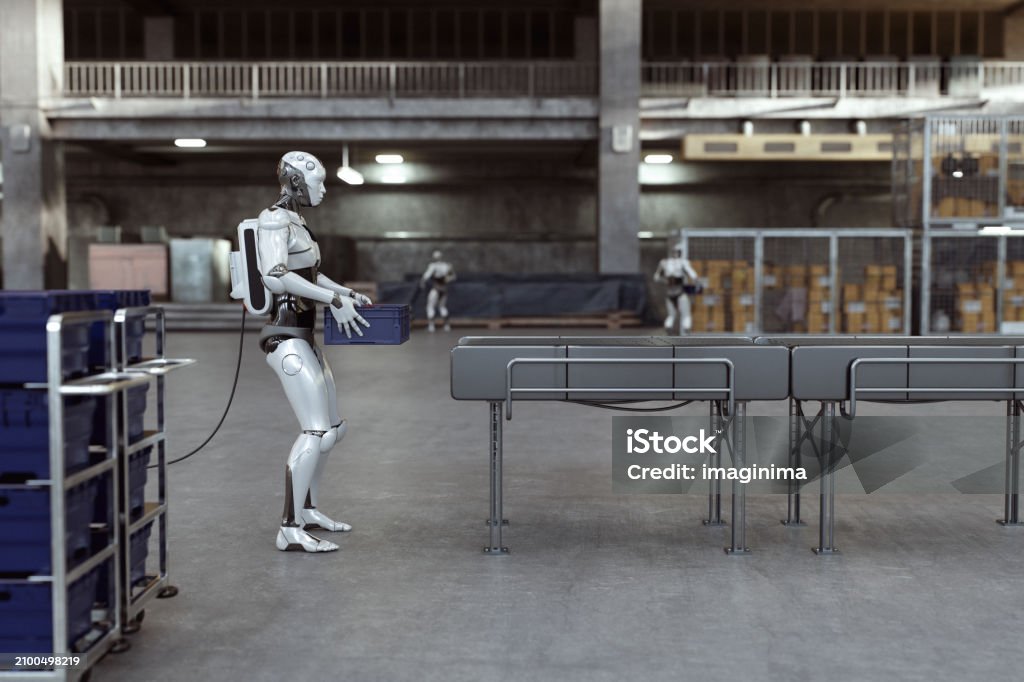
- Narrow, high-value use case (logistics)
- Real-world deployment (e.g. Amazon)
- Faster path to ROI
This is the Amazon warehouse strategy of robotics.
Solve one problem. Scale that problem.
Risk:
May be outpaced if general-purpose robots mature quickly.
The Core Battle: Four Dimensions That Decide Everything
Despite their differences, all humanoid robots must converge on four critical dimensions:
1. Mobility (Can it move in the real world?)
- Winner: Atlas
- Reality: Over-optimized for most use cases
2. Manipulation (Can it actually do work?)
- Leader: Figure 01
- Challenger: Optimus
3. Intelligence (Can it adapt?)
- Leader: Figure 01
- Dark horse: Optimus (via Tesla AI)
4. Scalability (Can it be mass deployed?)
- Leader: Optimus
- Close second: Digit
No single robot dominates all four.
And that’s the key insight:
👉 The winner hasn’t been built yet.
The Hidden Constraint: Economics, Not Technology
The biggest misconception about humanoid robots is that this is a technology race.
It isn’t.
It’s a cost equation.
For any robot to succeed, it must beat human labor on:
- Cost per hour
- Reliability
- Flexibility
- Total lifetime value
This is where most advanced robots fail.
Atlas is incredible—but too expensive.
Figure 01 is intelligent—but not yet predictable.
Optimus is scalable—but not fully capable.
Digit is the only one currently close to solving this equation.
Timeline Reality Check: What Happens Next
Let’s break this down realistically.
Short Term (0–3 years)
- Digit leads in real deployments
- Optimus begins pilot programs
- Figure 01 improves AI capabilities
- Atlas remains a research platform
👉 Winner: Digit (commercially)
Mid Term (3–7 years)
- Optimus scales manufacturing
- Figure 01 achieves better generalization
- AI + robotics integration accelerates
👉 Most uncertain phase
Long Term (7–15 years)
- General-purpose humanoid robots emerge
- AI becomes the dominant differentiator
- Cost drops dramatically
👉 Likely winner: a hybrid of Optimus + Figure philosophy
The Real Endgame: A Converged System
The future humanoid robot will not look like any one of these.
It will combine:
- Atlas-level mobility
- Figure-level intelligence
- Optimus-level scalability
- Digit-level economics
That system does not exist today.
But every major player is building toward it—from a different direction.
Investment Perspective: Where the Smart Money Goes
If you look at this like an investor, the strategy becomes clearer.
Low Risk Bet
- Digit / logistics robotics
👉 Already generating value
Medium Risk Bet
- Optimus / Tesla ecosystem
👉 Depends on execution at scale
High Risk, High Reward
- Figure 01 / AI robotics
👉 Could redefine everything
Research / Long-Term Value
- Atlas / Boston Dynamics
👉 Technology spillover, not direct ROI
The Brutal Truth: Most Humanoid Robots Will Fail
History suggests that most ambitious robotics projects do not succeed commercially.
Reasons include:
- Overengineering
- Lack of clear use cases
- High costs
- Integration challenges
Humanoid robots are especially vulnerable because they try to solve too many problems at once.
That’s why Digit’s narrow approach is so powerful.
And why many “impressive” robots may never matter.
So Who Wins?
The honest answer:
👉 No one—yet.
But if you force a conclusion:
- First to make money: Digit
- Best positioned to scale: Optimus
- Most transformative potential: Figure 01
- Most advanced engineering: Atlas
And the real winner?
👉 The company that combines AI + hardware + cost + scale into one system.
Final Verdict
The humanoid robot race is not about building the best machine.
It is about building the first machine that:
- Works reliably
- Costs less than humans
- Scales globally
- Adapts to real environments
We are closer than ever.
But not there yet.
Final Scorecard
| Robot | Score | Core Strength |
|---|---|---|
| Digit | 8.6 | Commercial viability |
| Figure 01 | 8.4 | Intelligence |
| Atlas | 8.4 | Engineering |
| Optimus | 8.3 | Scalability |
Closing Thought
The most important thing to understand is this:
The humanoid robot revolution will not be led by the most impressive machine.
It will be led by the most boring, reliable, and economically viable one.
Just like every industrial revolution before it.
Discussion about this post