








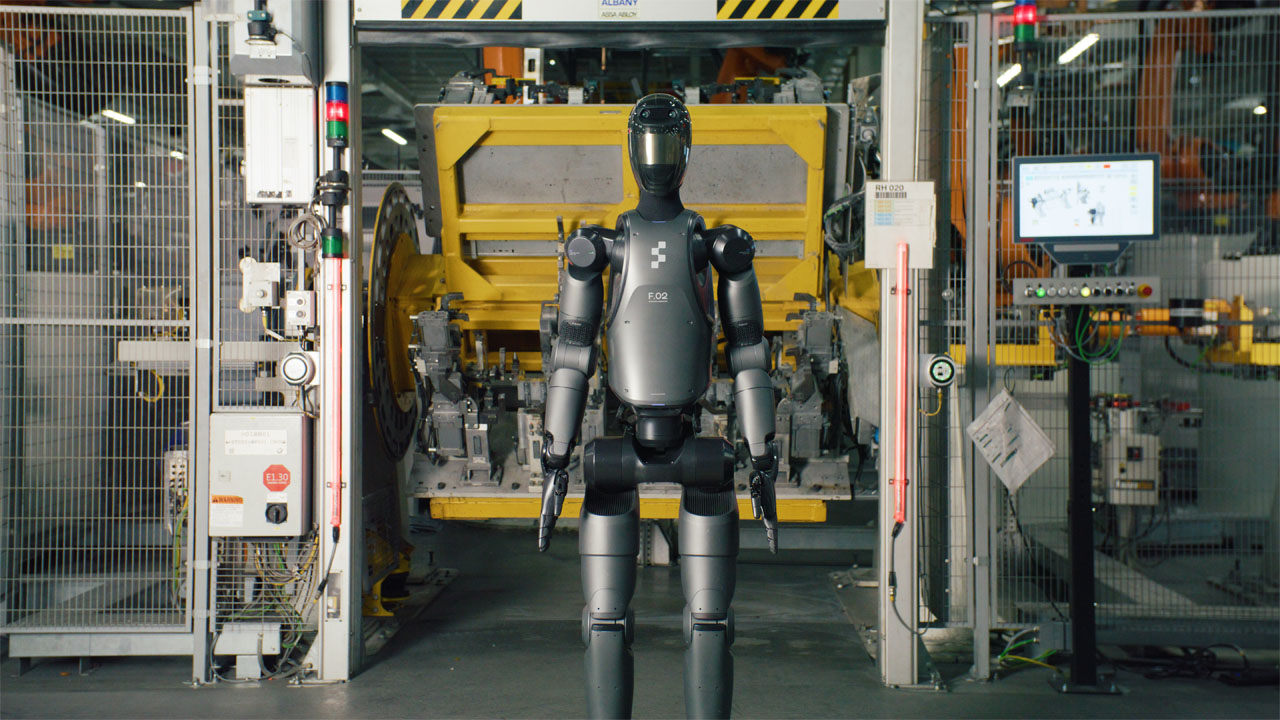

1. A Factory Without a Fixed Form
For over a century, factories have been defined by structure.
- Conveyor belts
- Fixed assembly lines
- Specialized machines
Every movement was pre-designed.
Every step optimized.
But this model has a limitation:
It is rigid.
To change production, you must change the system.
Now imagine a factory that does not need to be rebuilt to adapt.
A factory where the workers—not the infrastructure—change.
This is the promise of humanoid robots like Tesla Optimus and Figure 01.
2. The Shift From Automation to Generalization
Traditional industrial robots are powerful—but narrow.
They excel at:
- Repetition
- Precision
- Speed
But only within:
- Fixed environments
- Predefined tasks
Humanoid robots represent a different paradigm:
General-purpose automation.
They can:
- Move across stations
- Handle different tools
- Adapt to changing tasks
This reduces the need for:
- Dedicated machinery
- Reconfigured layouts
- Complex retooling processes
Production becomes more flexible.
3. The End of the Assembly Line?
The assembly line is one of the most important innovations in industrial history.
But it is built on a key assumption:
Workers (or machines) stay fixed.
Products move.
Humanoid robots challenge this model.
If robots can move freely, then:
- Workstations become fluid
- Processes become dynamic
- Production flows can be reconfigured in real time
The factory becomes less like a line—
and more like a network.
4. Labor, Cost, and Strategic Advantage
Manufacturing has always been tied to labor economics.
- Low-cost labor → competitive advantage
- High labor costs → automation pressure
Humanoid robots disrupt this equation.
If robots can perform general labor tasks, then:
- Labor cost differences between countries shrink
- Production can move closer to consumption markets
- “Reshoring” becomes economically viable
This is not just an industrial shift.
It is a geopolitical one.
5. The New Production Stack
Factories of the future will not just rely on physical robots.
They will integrate:
- AI decision systems
- Real-time data analytics
- Digital twins
- Autonomous coordination
Humanoid robots act as the physical layer of this stack.
They execute decisions generated by:
- Software systems
- Optimization algorithms
- Predictive models
The result is a tightly integrated system where:
Software thinks.
Robots act.
6. Human Workers in the New Factory
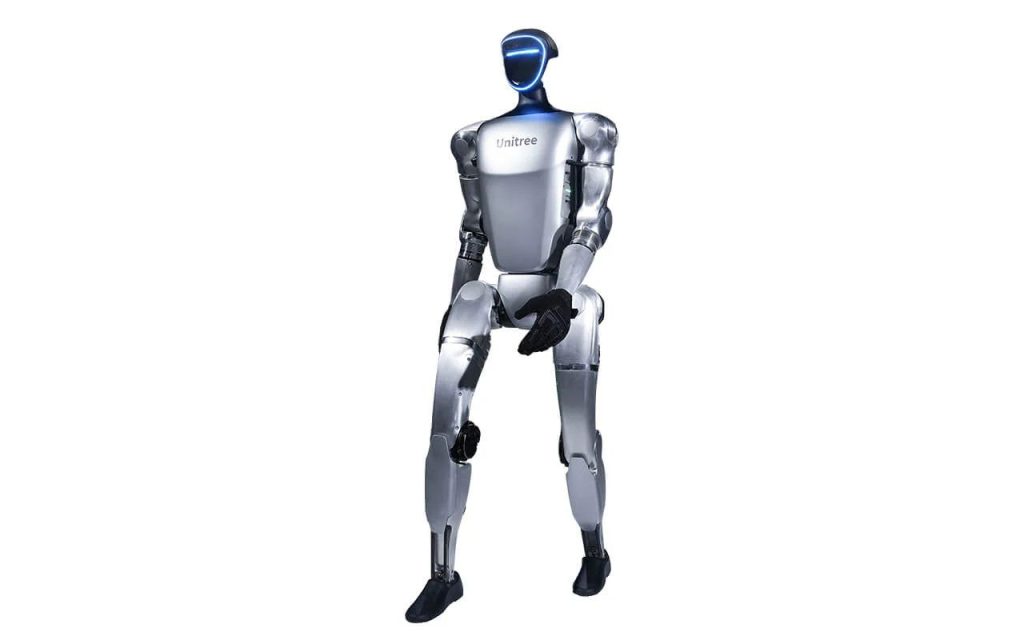
As humanoid robots take on more physical tasks, human roles evolve.
From:
- Manual execution
To:
- Supervision
- System management
- Problem-solving
Workers become:
- Operators of complexity
- Interpreters of systems
- Controllers of exceptions
This requires new skills:
- Technical literacy
- Systems thinking
- Adaptability
The challenge is not just job displacement—
but skill transition.
7. The Productivity Leap
One of the most significant impacts of humanoid robots is productivity.
They offer:
- Continuous operation (24/7)
- Consistent performance
- Reduced downtime
Even incremental improvements can compound at scale.
For large manufacturers, this means:
- Faster production cycles
- Lower unit costs
- Increased output capacity
Over time, this creates a productivity gap between:
- Early adopters
- Late adopters
8. The Capital Barrier
Despite their potential, humanoid robots face a key limitation:
Cost.
Initial deployment requires:
- High capital investment
- Infrastructure integration
- Technical expertise
This creates a barrier to entry.
Large corporations gain early advantages.
Smaller manufacturers may struggle to adopt.
This risks increasing:
- Market concentration
- Industry inequality
9. Resilience and Supply Chains
Global supply chains have proven fragile.
Disruptions—from pandemics to geopolitical tensions—have exposed vulnerabilities.
Humanoid robots offer a potential solution:
- Localized production
- Reduced reliance on human labor availability
- Greater operational continuity
Factories become more:
- Resilient
- Autonomous
- Predictable
But also more dependent on technology.
10. The Race Between Nations
Industrial power has always shaped global influence.
Countries that lead in manufacturing often lead economically.
Humanoid robotics introduces a new dimension to this competition.
Nations investing heavily in robotics may gain:
- Production efficiency
- Technological leadership
- Strategic independence
This creates a race:
Not just between companies—
but between countries.
11. The Risk of Over-Automation
While automation increases efficiency, it also introduces risks:
- System fragility
- Over-reliance on technology
- Reduced human oversight
Highly automated systems can fail in unexpected ways.
And when they do, recovery may be complex.
Balance becomes critical.
Too little automation → inefficiency.
Too much automation → vulnerability.
12. Environmental Implications
Automation can both help and harm sustainability efforts.
Potential benefits:
- Reduced waste
- Optimized resource use
- Energy-efficient operations
Potential risks:
- Increased energy demand
- Higher production volumes (and consumption)
The environmental impact depends on:
- Implementation choices
- Energy sources
- Regulatory frameworks
13. A New Industrial Era
Humanoid robots represent more than an incremental improvement.
They signal a transition:
From:
- Task-specific automation
To:
- Human-level physical capability
This opens the door to:
- Fully adaptive factories
- Real-time production shifts
- Highly responsive manufacturing systems
Conclusion: Power in Motion
Factories have always been engines of power.
Economic power.
Technological power.
Political power.
Humanoid robots are redefining how that power is generated.
Not by replacing machines—
but by replacing the need for rigid systems altogether.
The factory is no longer just a place.
It is a dynamic system of intelligence and motion.
And those who control it will shape the future of industry.
Discussion about this post