









Introduction: When the Teacher Is No Longer Only Human
For centuries, education has been defined by a simple structure: a human teacher delivering knowledge to human students within a physical or institutional setting. Even with the rise of digital tools—online courses, virtual classrooms, AI tutors—the core relationship has remained fundamentally unchanged.
But that is beginning to shift.
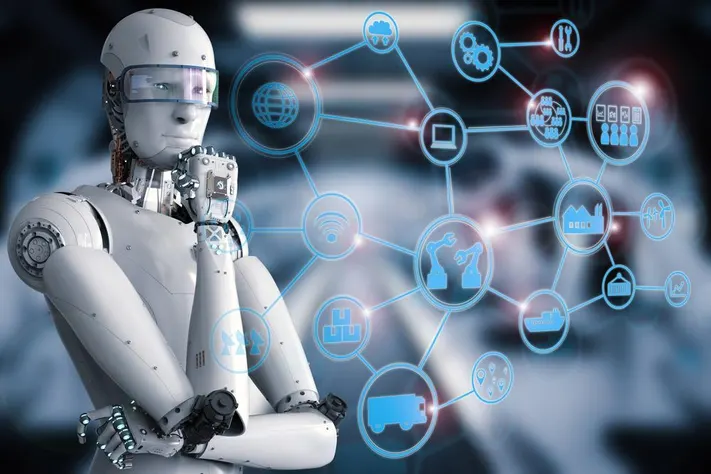
Humanoid robots are introducing a new kind of presence into education—one that is physical, interactive, intelligent, and increasingly adaptive. Unlike software-based learning tools, humanoid robots exist within the learner’s environment, capable of observing behavior, responding in real time, and engaging through both language and body.
This changes everything.
Education is no longer just about access to information—it becomes about interaction, personalization, and continuous feedback, delivered through a form that feels almost human.
This article explores how humanoid robots are transforming education and training across age groups and industries, and what this means for the future of learning, teaching, and human development.
1. From Tools to Companions: The Evolution of Educational Technology
1.1 The Limits of Digital Learning
Digital education platforms have expanded access, but they face persistent challenges:
- Lack of engagement
- Limited personalization
- High dropout rates
- Absence of physical presence
Watching a video or interacting with a screen often fails to replicate the dynamics of real-world learning.
1.2 The Emergence of Embodied Intelligence
Humanoid robots introduce the concept of embodied learning interfaces:
- They occupy physical space
- They use gestures and movement
- They respond to non-verbal cues
This makes learning more immersive and intuitive, particularly for younger students or hands-on training environments.
2. Applications in K-12 Education
2.1 Personalized Learning Assistants
In classrooms, humanoid robots can function as individualized tutors:
- Adapting lessons to each student’s pace
- Identifying knowledge gaps
- Providing instant feedback
Unlike traditional classrooms, where one teacher must manage many students, robots can offer one-on-one attention at scale.
2.2 Enhancing Engagement and Participation
Students are naturally curious about humanoid robots. This curiosity can be leveraged to:
- Increase classroom participation
- Encourage interactive learning
- Make abstract concepts more tangible
For example, a robot teaching science can physically demonstrate experiments or simulate real-world phenomena.
2.3 Supporting Teachers, Not Replacing Them
Humanoid robots can assist teachers by:
- Handling repetitive instruction
- Managing administrative tasks
- Monitoring student progress
This allows teachers to focus on:
- Critical thinking development
- Emotional support
- Creative instruction
3. Special Education and Inclusive Learning
One of the most impactful applications of humanoid robots is in special education.
3.1 Autism Spectrum Support
Children on the autism spectrum often respond well to structured, predictable interactions.
Humanoid robots can:
- Provide consistent communication patterns
- Teach social skills step by step
- Reduce anxiety in social learning situations
Their non-judgmental nature creates a safe learning environment.
3.2 Accessibility for Diverse Learning Needs
Humanoid robots can adapt to:
- Visual impairments (through audio interaction)
- Hearing impairments (through gestures and visual cues)
- Cognitive differences (through customized pacing)
This makes education more inclusive than ever before.
4. Higher Education and Research Environments
4.1 Interactive Lectures and Labs
In universities, humanoid robots can:
- Assist in laboratory demonstrations
- Simulate complex systems
- Provide interactive explanations
This enhances understanding in fields such as:
- Engineering
- Medicine
- Physics
4.2 Research Collaboration
Humanoid robots are also becoming subjects and tools of research, enabling studies in:
- Human-robot interaction
- Cognitive science
- AI development
They serve as both learning assistants and research platforms.
5. Corporate Training and Workforce Development
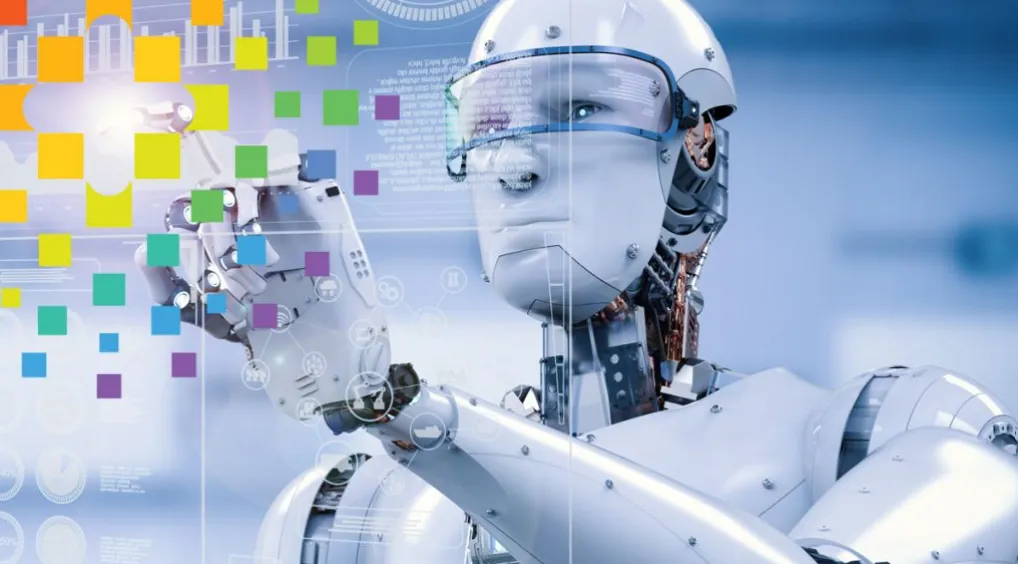
Education does not stop at school. In professional environments, humanoid robots are transforming training processes.
5.1 Simulation-Based Training
In industries such as healthcare, aviation, and manufacturing, humanoid robots can simulate:
- Real-world scenarios
- Emergency situations
- Customer interactions
This allows trainees to practice in a safe and controlled environment.
5.2 Continuous Learning in the Workplace
Humanoid robots can provide:
- On-demand training
- Skill updates
- Performance feedback
This supports the shift toward lifelong learning.
6. The Psychology of Learning with Robots
6.1 Social Learning Dynamics
Humans are inherently social learners. We learn not just from content, but from:
- Interaction
- Observation
- Feedback
Humanoid robots tap into these dynamics by acting as social agents rather than passive tools.
6.2 Motivation and Emotional Engagement
Students are more likely to stay engaged when learning feels interactive and responsive.
Humanoid robots can:
- Encourage progress
- Celebrate achievements
- Adjust tone based on emotional cues
This creates a more motivating learning environment.
7. Ethical and Philosophical Questions
7.1 What Is the Role of a Teacher?
As robots take on instructional roles, society must reconsider:
- Is teaching about delivering knowledge or guiding growth?
- Can empathy be replicated by machines?
7.2 Dependency and Over-Reliance
There is a risk that students may become too dependent on robotic assistance, potentially affecting:
- Critical thinking
- Problem-solving skills
- Human interaction abilities
7.3 Data Privacy and Security
Humanoid robots collect significant amounts of data, including:
- Learning behaviors
- Emotional responses
- Personal preferences
Ensuring this data is used responsibly is essential.
8. Challenges in Implementation
8.1 Cost and Accessibility
Advanced humanoid robots are still expensive, limiting widespread adoption.
8.2 Technical Limitations
- Understanding complex human emotions
- Adapting to unpredictable classroom dynamics
- Maintaining long-term reliability
8.3 Resistance to Change
Educational institutions are often slow to adopt new technologies due to:
- Tradition
- Policy constraints
- Lack of training
9. The Future of Learning: Human-Robot Co-Education
9.1 Hybrid Learning Environments
Future classrooms will likely include:
- Human teachers
- Humanoid robot assistants
- Digital platforms
This creates a multi-layered learning ecosystem.
9.2 Hyper-Personalized Education
Each student may have a dedicated robotic companion that:
- Tracks progress over years
- Adapts to learning styles
- Evolves with the learner
9.3 Global Access to Quality Education
Humanoid robots can bring high-quality education to:
- Remote areas
- Underserved communities
- Regions with teacher shortages
10. Rethinking Education Itself
Perhaps the most profound impact of humanoid robots is not technological—but conceptual.
They force us to ask:
- What does it mean to learn?
- What does it mean to teach?
- What is uniquely human in education?
In answering these questions, we may redefine education for the next century.
Conclusion: Learning Beyond Human Boundaries
Humanoid robots are not just tools—they are participants in the learning process. By combining physical presence, intelligent interaction, and adaptive learning capabilities, they open new possibilities for education at every level.
The future of education will not be purely human, nor purely technological. It will be a collaborative system, where humans and machines learn, teach, and evolve together.
In that future, the classroom is no longer confined to a space or a teacher—it becomes a dynamic, intelligent environment, shaped by both human insight and artificial intelligence.
Discussion about this post