









07:15 AM — Before the City Wakes
The first delivery of the day is not made by a human.
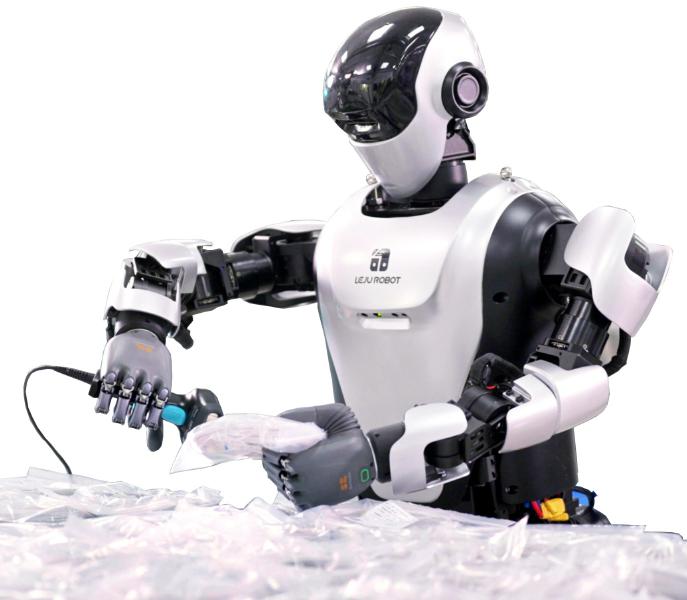
Inside a distribution hub at the edge of the city, rows of humanoid robots begin moving in near silence. They lift packages, scan labels, and organize delivery sequences with mechanical precision.
There are no drivers waiting for assignments.
No dispatch calls.
No rush-hour stress.
Just systems coming online.
The Invisible Backbone of Modern Cities
Urban life depends on logistics.
Food. Parcels. Medicine. Retail goods.
Every day, millions of items move through cities in tightly coordinated systems.
Traditionally, this system relies heavily on human labor:
- Warehouse workers
- Sorters
- Delivery drivers
- Last-mile couriers
Humanoid robots are beginning to enter every layer of this chain.
Not all at once.
But steadily.
09:40 AM — Sorting at Scale
Inside the warehouse, the robots operate in a hybrid environment.
Conveyor belts move continuously.
Humanoid robots work alongside them—not replacing automation, but filling the gaps.
What They Do Differently
Unlike fixed robotic arms:
- They can move between stations
- Handle irregular packages
- Adapt to changing workflows
A damaged box arrives.
A traditional system might reject it.
A humanoid robot:
- Picks it up
- Reorients it
- Places it manually into the correct stream
This flexibility reduces friction.
And in logistics, friction is cost.
The Mid-Layer Revolution: From Warehouse to Street
The most significant transformation is not happening at the edges.
It’s happening in the middle.
11:20 AM — Dynamic Routing
Packages are no longer assigned to fixed routes hours in advance.
Instead, humanoid robots work with AI systems to:
- Recalculate delivery paths in real time
- Adjust for traffic, demand, and priority
- Reorganize loads dynamically
This creates a system that behaves less like a schedule—
and more like a living network.
Last-Mile Delivery: The Hardest Problem
The final step—getting a package to a door—is the most complex.
It involves:
- Human interaction
- Navigation in unpredictable environments
- Building access
- Weather conditions
This is where humanoid robots face their biggest challenge.
01:05 PM — A Delivery Attempt
A humanoid robot arrives at an apartment building.
It scans the entrance.
No elevator access.
No response from the intercom.
The robot pauses.
Then reroutes the task.
A human courier is assigned.
The Reality
Humanoid robots are not replacing last-mile delivery entirely.
They are selectively augmenting it.
Where They Work Best
Humanoid robots perform strongest in:
- Controlled environments (warehouses, hubs)
- Semi-structured spaces (office buildings, campuses)
- Repeatable delivery routes
Where They Struggle
They still face limitations in:
- Dense urban environments
- Complex human interactions
- Edge-case scenarios (locked doors, unclear addresses)
The Economics of Speed
Logistics is not just about movement.
It’s about time.
Every second saved per package scales across millions of deliveries.
Key Advantage of Humanoid Robots
- Continuous operation (24/7)
- Reduced dependency on shift labor
- Lower error rates in sorting and handling
But There’s a Trade-Off
- Slower than humans in complex environments
- Higher upfront cost
- Infrastructure adaptation required
The Hybrid Model: Humans + Robots
The current model is not replacement.
It is integration.
A Typical Flow
- Robots handle sorting and preparation
- Humans handle complex delivery scenarios
- Robots assist in predictable delivery zones
Result
- Increased overall system efficiency
- Reduced human workload in repetitive tasks
- Maintained flexibility for edge cases
04:30 PM — Peak Load
As evening approaches, demand spikes.
Food delivery. E-commerce orders. Same-day shipping.
The system adjusts.
Robots are reassigned.
Routes are recalculated.
Workflows shift in real time.
What’s New
The system is no longer static.
It is adaptive.
Data: The Real Engine
Behind every movement is data.
Humanoid robots generate:
- Movement efficiency data
- Error logs
- Route optimization inputs
This feeds into a continuous improvement loop.
The System Learns
- Which routes are inefficient
- Which tasks fail frequently
- Where human intervention is needed
Over time, the system becomes:
Smarter—not just faster.
The Urban Impact
If humanoid robots scale in logistics, cities may change.
Potential Effects
- Reduced delivery times
- Fewer human-driven delivery vehicles
- More distributed micro-warehouses
- Increased automation in urban infrastructure
But Also
- Job displacement in certain roles
- Increased dependency on automated systems
- New regulatory challenges
07:50 PM — The System Doesn’t Stop
The city slows down.
The logistics system does not.
Robots continue sorting, moving, optimizing.
Night becomes just another operating window.
The Bigger Shift
Humanoid robots are not just speeding up logistics.
They are changing its structure.
From:
- Scheduled → Dynamic
- Human-driven → System-driven
- Fixed → Adaptive
Conclusion
The future of logistics is not just faster delivery.
It is a system that organizes itself.
Humanoid robots are a key part of that shift—not because they replace humans entirely—
but because they connect the gaps between machines and real-world complexity.
And in doing so, they turn cities into something new:
Not just places where goods move—
but systems that move themselves.
Discussion about this post