








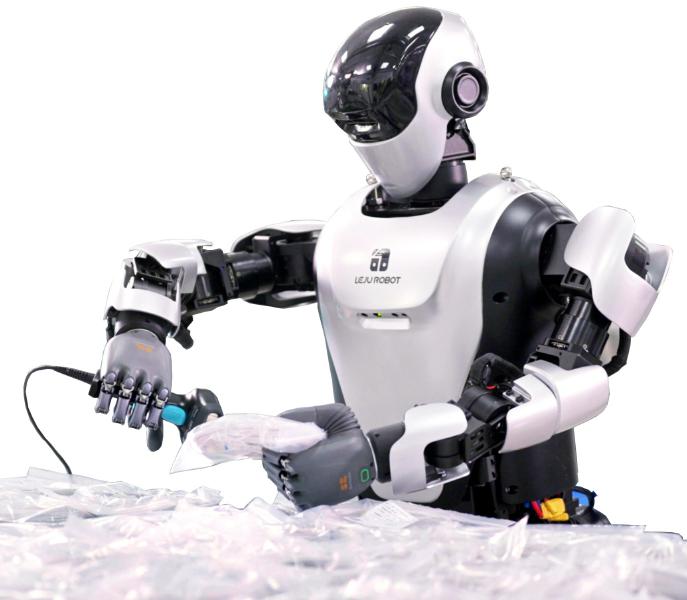

06:10 AM — The Shift That Never Ends
The lights in the factory turn on before sunrise.
But no one clocks in.
Instead, a line of humanoid robots—standing silently along the assembly floor—activates almost simultaneously. One adjusts its posture. Another runs a calibration check. A third begins moving toward a workstation even before the conveyor belts start rolling.
There is no morning briefing.
No coffee break.
No shift rotation.
The factory is already running.
The New Workforce: Designed for Human Spaces
Unlike traditional industrial robots—fixed, specialized, and often isolated behind safety barriers—humanoid robots are built differently.
They are designed not for factories.
But for human environments inside factories.
That distinction matters.
Because most manufacturing systems were originally designed around human workers:
- Workstations at human height
- Tools designed for human hands
- Processes built around human flexibility
Instead of redesigning the factory, companies are now redesigning the worker.
08:30 AM — Task Switching in Real Time
On one side of the facility, a humanoid robot assembles electronic components.
Minutes later, it is reassigned.
Now it’s transporting materials across the floor.
No reprogramming.
No physical reconfiguration.
Just a software-level task switch.
This is where humanoid robots differ most from traditional automation.
They are not fixed-function machines.
They are general-purpose operators.
The Economics: Why Companies Are Actually Deploying Them
The hype around humanoid robots is easy to dismiss.
But inside factories, the motivation is not futuristic.
It’s practical.
Three pressures are driving adoption:
1. Labor Shortages
In many manufacturing regions, especially in aging economies, finding workers for repetitive or physically demanding roles is becoming increasingly difficult.
Humanoid robots don’t solve this completely.
But they reduce the gap.
2. Flexibility Over Efficiency
Traditional automation is highly efficient—but rigid.
Humanoid robots are less efficient—but adaptable.
And in modern manufacturing, adaptability is becoming more valuable than pure speed.
3. Cost Over Time
Upfront costs remain high.
But over multi-year periods, companies are beginning to see:
- Reduced labor dependency
- Lower turnover-related costs
- Continuous operation capability
The result is a shift from labor cost to capital cost.
11:45 AM — Human Workers Still Matter
Despite the presence of robots, humans are not gone.
They are just… different.
Instead of performing repetitive tasks, workers now:
- Monitor systems
- Handle exceptions
- Manage workflows
- Perform complex assembly steps
The factory floor becomes less about execution—and more about coordination.
The Hidden Reality: Robots Are Not Replacing Everything
There is a misconception that humanoid robots will fully replace human workers.
Inside real factories, that’s not what’s happening.
Instead, we see:
- Robots handling consistency
- Humans handling complexity
For example:
A robot can assemble a standard component thousands of times.
But when something deviates—a defect, a misalignment, a supply issue—a human is still faster at diagnosing and resolving the problem.
02:20 PM — When Things Go Wrong
A part arrives slightly deformed.
The robot attempts to fit it.
Fails.
Retries.
Fails again.
Then pauses.
It flags the issue.
A human steps in.
This moment reveals something critical:
Robots are excellent at repetition.
Humans are still better at ambiguity.
Scaling the System: The Real Challenge
Deploying one robot is manageable.
Deploying hundreds is not.
Companies face new challenges:
- System coordination
- Software updates across fleets
- Maintenance at scale
- Data synchronization
This transforms robotics from a hardware problem into a systems engineering problem.
The Data Layer: Factories That Learn
One of the most powerful—but less visible—impacts of humanoid robots is data generation.
Every movement, error, and correction is recorded.
Over time, this creates:
- Optimization opportunities
- Predictive maintenance models
- Continuous process improvement
Factories are no longer just production systems.
They become learning systems.
04:50 PM — No End of Day
As the day shifts into evening, nothing changes.
The robots continue.
No slowdown.
No fatigue.
No transition.
The concept of a “shift” begins to disappear.
What This Means for the Future of Manufacturing
Humanoid robots are not making factories fully autonomous.
But they are reshaping them in three key ways:
1. From Fixed to Flexible Systems
Production lines become adaptable rather than static.
2. From Labor-Driven to System-Driven
Humans shift from execution to oversight.
3. From Efficiency to Resilience
The ability to adapt becomes more important than maximum output.
The Bigger Picture
The adoption of humanoid robots in manufacturing is not about replacing humans.
It is about redefining the role of human labor.
Factories are becoming less like machines—
and more like ecosystems.
Conclusion
At 6:10 AM, the factory started without people.
At 6:10 PM, it is still running.
And tomorrow, it will do the same.
Not because humans are gone.
But because the definition of “worker” is changing.
And in that change, manufacturing itself is being rewritten.
Discussion about this post