








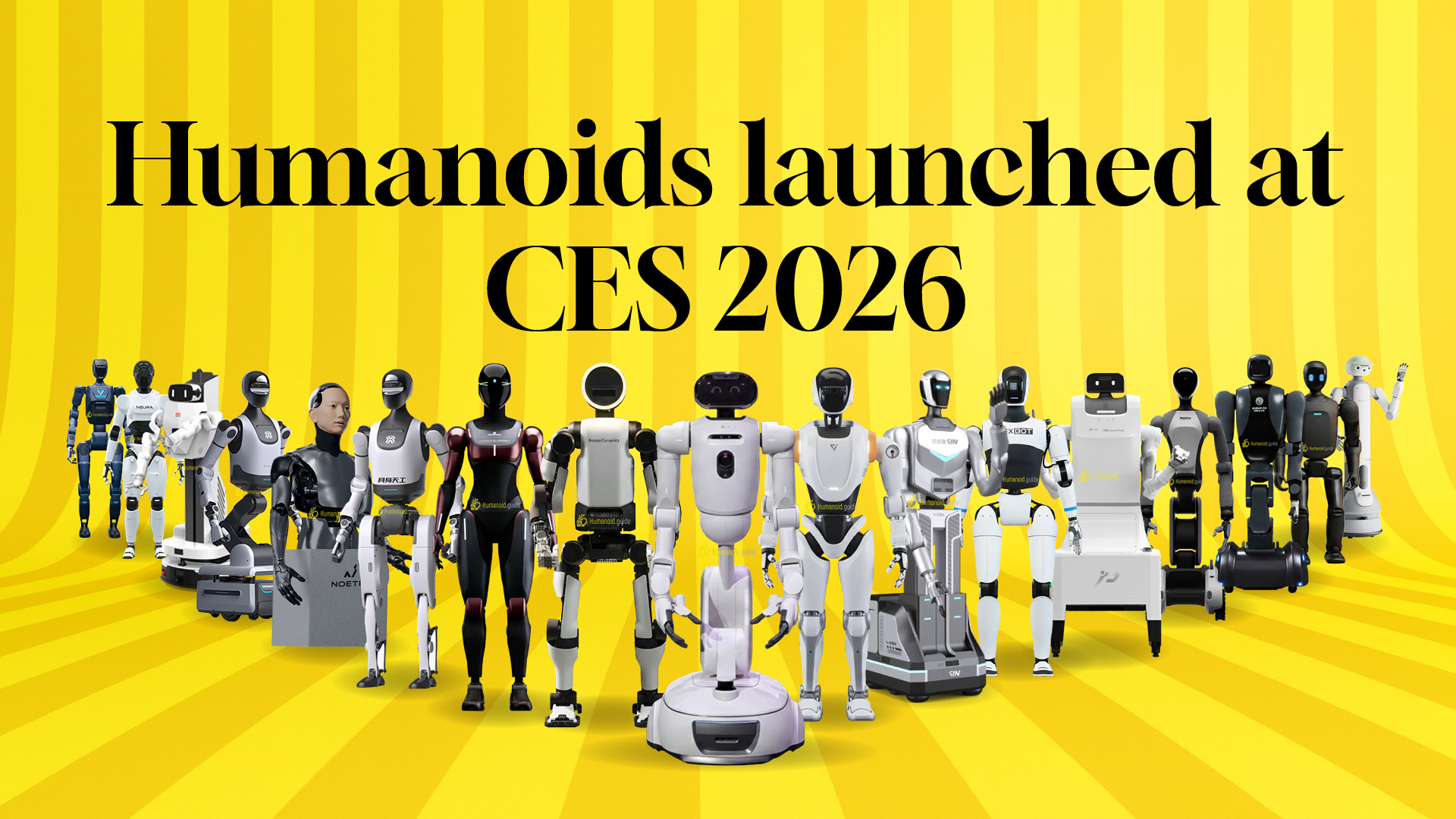

Introduction: The Next Device Is Not a Screen
For decades, the evolution of consumer technology has followed a predictable trajectory: smaller, faster, more connected. From personal computers to smartphones, from tablets to wearable devices, each generation brought users deeper into digital ecosystems.
But what if the next major consumer device is not something you hold—but something that walks?
In 2026, that question is no longer speculative. A growing number of companies are actively developing humanoid robots designed not for factories, but for homes. The ambition is enormous: to create machines capable of assisting with daily life, performing chores, and eventually acting as intelligent companions.
The idea of a household robot has existed for generations, popularized by science fiction. But today, driven by breakthroughs in artificial intelligence and robotics, it is beginning to move from imagination to reality.
The transition, however, is far more complex than simply shrinking industrial robots and placing them in living rooms.
From Smart Homes to Smart Bodies
The modern smart home is already filled with connected devices:
- voice assistants
- robotic vacuum cleaners
- smart thermostats
- security systems
Yet these devices remain fragmented. Each performs a narrow function. None possess a unified understanding of the home.
Humanoid robots promise something fundamentally different: a single embodied system capable of performing multiple tasks.
Instead of:
- a vacuum that cleans floors
- a speaker that answers questions
- a camera that monitors security
A humanoid robot could, in theory:
- pick up objects
- clean surfaces
- assist elderly residents
- interact conversationally
- adapt to new tasks
This shift—from specialized devices to general-purpose physical agents—represents a new paradigm in consumer technology.
Tesla’s Consumer Vision: Optimus Beyond the Factory
Although initially designed for industrial use, Tesla’s Optimus robot is increasingly framed as a future consumer product.
The company’s roadmap suggests a phased approach:
- Internal deployment in factories
- Enterprise applications
- Eventual consumer release
The logic is strategic. Home environments are far more unpredictable than factories. By first deploying robots in controlled settings, Tesla can:
- collect data
- refine AI models
- improve reliability
Only then can it attempt the far more difficult challenge of domestic deployment.
Elon Musk has hinted that Optimus could eventually:
- cook simple meals
- perform household chores
- provide assistance for elderly individuals
Yet even optimistic projections suggest that true household autonomy remains several years away.
The Hard Problem of the Home
If factories are structured, homes are chaotic.
A typical household environment includes:
- cluttered spaces
- unpredictable human behavior
- diverse object types
- constantly changing layouts
For robots, this presents a nightmare scenario.
Tasks that seem trivial for humans—like folding laundry or loading a dishwasher—are extraordinarily complex for machines.
The challenges fall into several categories:
1. Perception
Robots must recognize:
- objects of varying shapes and materials
- partially obscured items
- changing lighting conditions
2. Manipulation
Handling objects requires:
- precise grip control
- adaptability to different textures
- force sensitivity
3. Decision-Making
Robots must determine:
- what task to prioritize
- how to handle unexpected situations
- how to interpret ambiguous instructions
Even with advanced AI models, achieving reliable performance across all these domains remains a significant hurdle.
Startups Enter the Living Room
While tech giants dominate headlines, startups are quietly shaping the future of consumer humanoid robotics.
Companies like Figure AI and 1X Technologies are exploring robots designed specifically for human environments.
Unlike industrial robots, these systems prioritize:
- safety
- human-robot interaction
- adaptability in unstructured spaces
Some prototypes already demonstrate capabilities such as:
- assisting with basic household tasks
- responding to natural language commands
- learning from human demonstrations
A notable trend is the integration of large language models (LLMs) into robotic systems, enabling more natural communication.
Instead of programming tasks manually, users can simply say:
“Pick up the clothes from the floor and put them in the basket.”
This represents a major shift in usability—from programming to conversation.
Aging Populations and the Care Economy
One of the most compelling drivers of consumer humanoid robots is demographic change.
Across the world, populations are aging:
- Japan already faces a severe caregiver shortage
- Europe is experiencing similar trends
- China’s aging population is accelerating rapidly
In these contexts, humanoid robots are increasingly seen as a potential solution to the care gap.
Possible applications include:
- assisting elderly individuals with mobility
- reminding patients to take medication
- monitoring health conditions
- providing companionship
Unlike traditional care technologies, humanoid robots offer physical interaction—something that purely digital systems cannot provide.
However, this also raises ethical questions about:
- emotional attachment
- human dignity
- the replacement of human caregivers
The Cost Barrier: Why Consumer Robots Are Still Expensive
Despite rapid progress, one major obstacle remains: cost.
Current humanoid robots are expensive due to:
- complex hardware (actuators, sensors, batteries)
- advanced AI systems
- low production volumes
Even optimistic estimates place early consumer models in the range of:
- $20,000 to $50,000
This positions them closer to cars than household appliances.
To achieve mass adoption, companies must:
- scale manufacturing
- reduce component costs
- improve durability
Tesla’s strategy—leveraging its existing supply chain—may provide an advantage here.
But for most companies, reaching consumer price points remains a significant challenge.
Trust, Safety, and the Human Factor
Even if cost and technology barriers are overcome, another challenge remains: trust.
Inviting a robot into one’s home is fundamentally different from using a smartphone.
Consumers must feel confident that robots will:
- operate safely around children and pets
- respect privacy
- function reliably without constant supervision
Any high-profile failure—such as:
- a malfunction causing injury
- a privacy breach
- unexpected behavior
could significantly slow adoption.
This places enormous pressure on companies to ensure:
- rigorous testing
- robust safety systems
- transparent communication
Cultural Differences in Adoption
Interestingly, attitudes toward household robots vary significantly across regions.
In countries like Japan:
- robots are often viewed positively
- cultural narratives emphasize harmony between humans and machines
In contrast, Western societies tend to exhibit:
- greater skepticism
- concerns about job loss and surveillance
These cultural differences may influence:
- adoption rates
- product design
- marketing strategies
Companies entering the consumer robotics space must navigate not just technical challenges—but cultural ones as well.
The Platform Question: Robots as the Next Ecosystem
If humanoid robots succeed, they could become the next major computing platform.
Just as smartphones created app ecosystems, robots could enable:
- third-party software development
- service marketplaces
- personalized automation
Imagine a future where users can download “skills” for their robot:
- cooking routines
- cleaning behaviors
- caregiving protocols
This would transform robots from products into platforms.
Companies that control these ecosystems could wield enormous influence—similar to today’s tech giants.
Reality Check: How Close Are We?
Despite the excitement, fully autonomous household humanoid robots are not imminent.
Most experts agree that:
- limited-function robots will appear first
- true general-purpose home robots may take a decade
In the near term, we are more likely to see:
- semi-autonomous assistants
- teleoperated robots
- hybrid human-AI systems
These intermediate steps will gradually bridge the gap between current capabilities and future ambitions.
Conclusion: The Long Road to Domestic Robotics
The dream of a household humanoid robot is closer than ever—but still incomplete.
Technological progress is undeniable:
- AI models are becoming more capable
- hardware is improving
- investment is accelerating
Yet the home remains one of the most challenging environments for robotics.
The race to build consumer humanoids is not just about engineering—it is about:
- understanding human behavior
- earning trust
- integrating seamlessly into daily life
If successful, humanoid robots could redefine what it means to live with technology.
Not as tools.
But as participants in our everyday environments.
Discussion about this post