








Introduction: From Sci-Fi to Strategic Industry
For decades, humanoid robots existed primarily in the realm of science fiction—machines that walked, talked, and worked alongside humans were more fantasy than reality. However, in 2026, the global robotics landscape has undergone a profound transformation. Humanoid robots are no longer experimental novelties confined to research labs; they are rapidly becoming a central pillar of industrial automation, service economies, and even national strategic planning.
Major technology companies, startups, and governments are now locked in an intense race to develop and deploy humanoid robots at scale. This competition is not just about technological prestige—it is about economic dominance, labor transformation, and redefining the future of human work.
From manufacturing floors in Asia to logistics hubs in North America and aging societies in Europe, humanoid robots are being positioned as a solution to some of the most pressing challenges of the 21st century.
The Key Players Driving the Revolution
The current wave of humanoid robotics innovation is being led by a mix of established tech giants and ambitious startups.
Tesla and the Optimus Vision
One of the most high-profile entrants is Tesla, whose humanoid robot, Optimus, has evolved significantly since its initial unveiling. In 2026, Optimus units are already being tested in controlled factory environments, performing repetitive tasks such as sorting, lifting, and assembly.
Tesla’s strategy is clear: leverage its expertise in AI, sensors, and manufacturing to mass-produce humanoid robots at scale. CEO Elon Musk has repeatedly emphasized that robots could eventually become more important than the company’s automotive business.
Boston Dynamics and Advanced Mobility
Meanwhile, Boston Dynamics continues to push the boundaries of robotic mobility. Known for its agile machines, the company has been adapting its technologies into more human-like forms capable of navigating complex environments.
Their humanoid prototypes demonstrate impressive balance, dexterity, and real-world adaptability—critical factors for deployment outside controlled environments.
China’s Rapid Acceleration
China has emerged as a formidable force in humanoid robotics. Companies such as UBTECH Robotics and Xiaomi are investing heavily in humanoid systems designed for both industrial and consumer applications.
Government-backed initiatives are also accelerating development, with humanoid robotics designated as a key strategic industry. China’s advantage lies in its manufacturing ecosystem, which could enable faster and cheaper production compared to Western competitors.
Why Humanoid Form Matters
One of the most debated questions in robotics is: why humanoid?
After all, traditional industrial robots—robotic arms, conveyor systems, and automated guided vehicles—are already highly efficient. So why invest in robots that mimic human shape?
Compatibility with Human Environments
The answer lies in infrastructure. Human environments—from factories to homes—are designed for human bodies. Stairs, tools, door handles, and workstations all assume a humanoid form.
Humanoid robots can integrate into these environments without requiring costly redesigns. This makes them uniquely suited for:
- Warehouse operations
- Retail assistance
- Elderly care
- Hospitality services
Labor Flexibility
Unlike specialized machines, humanoid robots can theoretically perform a wide range of tasks. This flexibility is particularly valuable in industries facing labor shortages and fluctuating demand.
For example, a single humanoid robot could:
- Stock shelves in the morning
- Assist customers in the afternoon
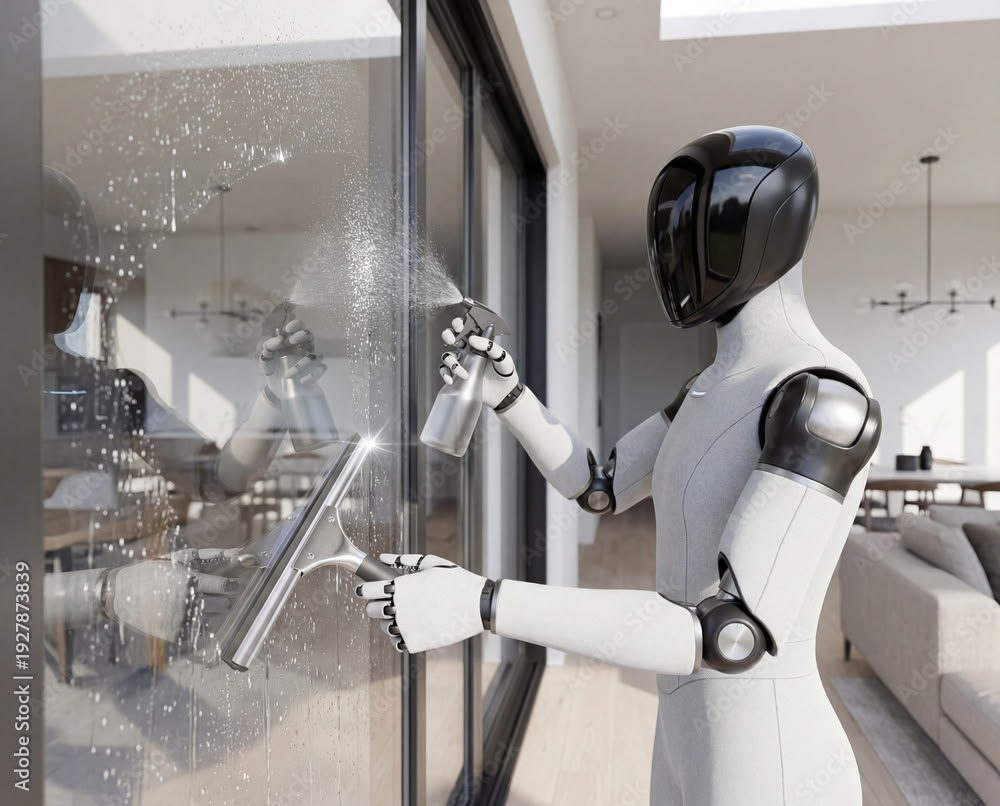
- Clean facilities at night
This multi-role capability is a key selling point for businesses seeking efficiency.
Breakthroughs in Artificial Intelligence
The rapid progress of humanoid robots would not be possible without advances in artificial intelligence.
Foundation Models Meet Robotics
Large-scale AI models—similar to those used in language processing—are now being integrated into robotic systems. These models enable robots to:
- Understand natural language commands
- Interpret visual environments
- Learn tasks through demonstration
This shift marks a departure from traditional rule-based programming toward more adaptive, learning-based systems.
Real-Time Decision Making
Modern humanoid robots are equipped with sophisticated sensor arrays, including cameras, LiDAR, and tactile sensors. Combined with AI, these systems allow robots to make real-time decisions in dynamic environments.
For instance, a robot working in a warehouse can:
- Detect obstacles
- Adjust its path
- Handle unexpected situations
This level of autonomy is essential for real-world deployment.
Real-World Deployments in 2026
Humanoid robots are no longer confined to prototypes—they are being actively deployed across multiple sectors.
Manufacturing
Factories remain the primary testing ground. Companies are using humanoid robots for tasks that are:
- Repetitive
- Physically demanding
- Difficult to automate with traditional machines
Logistics and Warehousing
E-commerce growth has created enormous demand for warehouse labor. Humanoid robots are stepping in to fill gaps, particularly during peak seasons.
Healthcare and Elderly Care
In aging societies such as Japan and parts of Europe, humanoid robots are being explored as caregivers. While still in early stages, these robots can assist with:
- Mobility support
- Medication reminders
- Basic companionship
Challenges Slowing Mass Adoption
Despite rapid progress, significant challenges remain.
Cost Barriers
Humanoid robots are still expensive to produce. While companies aim to reduce costs through mass production, current units can cost tens of thousands of dollars.
Safety Concerns
Operating in close proximity to humans introduces safety risks. Ensuring that robots can:
- Avoid collisions
- Handle objects safely
- Respond to emergencies
is critical for widespread adoption.
Ethical and Social Implications
The rise of humanoid robots raises important questions:
- Will they replace human jobs?
- How should they interact with people?
- What rights, if any, should they have?
These debates are becoming increasingly urgent as deployment accelerates.
The Economic Impact
The humanoid robotics industry is expected to become a multi-trillion-dollar market over the next two decades.
Labor Market Transformation
Rather than outright replacing jobs, many experts believe humanoid robots will reshape them. Humans may transition toward:
- Supervisory roles
- Creative work
- High-skill technical positions
Productivity Gains
Businesses adopting humanoid robots could see significant productivity improvements, particularly in sectors facing labor shortages.
Global Competition and Geopolitics
Humanoid robotics is quickly becoming a geopolitical issue.
Technological Leadership
Countries that lead in robotics could gain a significant economic advantage. This has led to increased investment and policy support worldwide.
Supply Chain Control
Control over key components—such as semiconductors, sensors, and batteries—will play a crucial role in determining leadership.
Public Perception and Cultural Influence
Public acceptance will be a निर्णing factor in the success of humanoid robots.
Media, entertainment, and cultural narratives continue to shape how people perceive robots—ranging from helpful assistants to existential threats.
Building trust will require:
- Transparent design
- Clear safety standards
- Positive user experiences
Looking Ahead: The Next Decade
The next ten years will be critical for humanoid robotics.
From Pilot to Scale
Most current deployments are still in pilot phases. The challenge now is scaling production and deployment.
Integration into Daily Life
As costs decrease and capabilities improve, humanoid robots may become a common presence in:
- Homes
- Offices
- Public spaces
Conclusion: A Defining Technological Shift
The rise of humanoid robots represents one of the most significant technological shifts of our time. What was once science fiction is rapidly becoming reality, driven by advances in AI, engineering, and global competition.
While challenges remain, the trajectory is clear: humanoid robots are poised to play a central role in the future of work, society, and human-machine interaction.
The question is no longer whether humanoid robots will become mainstream—but how quickly, and how profoundly, they will reshape the world.