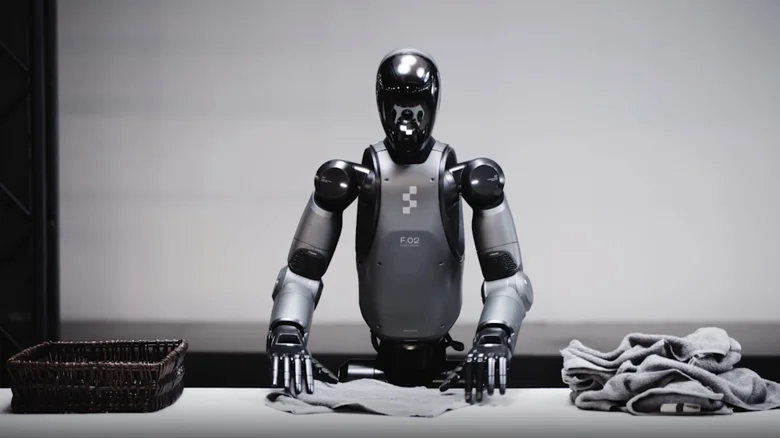










Introduction: From Emerging Technology to Investment Frenzy
In 2026, humanoid robots have officially crossed a critical threshold—from experimental prototypes to one of the most closely watched sectors in global technology markets.
What began as a niche field within robotics is now attracting billions of dollars in investment, drawing interest from venture capital firms, sovereign wealth funds, and some of the world’s largest technology companies.
The excitement is not without reason. Many analysts believe humanoid robots could become the next multi-trillion-dollar industry, reshaping global labor markets, supply chains, and economic structures.
But behind the headlines lies a more complex story—one of rapid innovation, intense competition, and significant uncertainty.
The Scale of the Investment Boom
Over the past two years, funding for humanoid robotics has surged dramatically.
Big Tech Enters the Arena
Major companies are investing heavily in humanoid robotics as part of broader AI strategies.
- Tesla continues to develop its Optimus robot with the goal of large-scale deployment
- Google is supporting AI research that underpins robotic intelligence
- Microsoft is investing in cloud and AI infrastructure critical for robotics systems
These companies see humanoid robots not as standalone products, but as extensions of their AI ecosystems.
Startups and Unicorns
At the same time, a new generation of robotics startups is emerging, attracting significant venture capital.
Companies such as Figure AI are developing general-purpose humanoid robots designed for commercial use. Some of these startups have reached multi-billion-dollar valuations within a short period.
Government Support
Governments are also playing a major role. Countries are investing in robotics to:
- Boost productivity
- Address labor shortages
- Strengthen technological independence
This combination of private and public investment is accelerating the pace of development.
Market Size and Growth Projections
The potential market for humanoid robots is विशाल.
Short-Term Market (2026–2030)
In the near term, adoption will focus on:
- Manufacturing
- Logistics
- Warehousing
These sectors offer clear economic benefits and controlled environments for deployment.
Long-Term Market (2030–2040)
As technology matures, humanoid robots could expand into:
- Healthcare
- Education
- Household services
- Retail
Some forecasts suggest that millions of humanoid robots could be deployed worldwide within the next two decades.
The Business Model Question
Despite strong investment, the business model for humanoid robots is still evolving.
Hardware vs. Service
Companies are exploring different approaches:
- Selling robots as products
- Offering robots as a service (RaaS)
- Subscription-based models
The RaaS model is particularly attractive, allowing businesses to adopt robots without large upfront costs.
Cost Reduction as the Key Driver
For widespread adoption, costs must decrease significantly.
Current estimates suggest that a humanoid robot must reach a price point comparable to annual human labor costs to become economically viable at scale.
Achieving this will require:
- Mass production
- Supply chain optimization
- Advances in materials and design
Competition Heats Up: A Global Race
The humanoid robotics market is becoming increasingly competitive.
United States vs. China
The rivalry between the United States and China is especially intense.
- The U.S. leads in AI and software innovation
- China leads in manufacturing and supply chain efficiency
Companies like UBTECH Robotics and Xiaomi are rapidly advancing their capabilities.
Europe and Japan
Other regions are also active:
- Europe focuses on regulation and ethical frameworks
- Japan leverages its experience in robotics and aging population needs
This global competition is driving rapid innovation.
Supply Chain Challenges
Building humanoid robots at scale requires complex supply chains.
Critical Components
Key components include:
- Semiconductors
- Sensors
- Batteries
- Actuators
Shortages or disruptions in any of these areas could slow progress.
Vertical Integration
Some companies, like Tesla, are pursuing vertical integration to control costs and ensure supply stability.
The Role of Artificial Intelligence
AI is the核心 of humanoid robotics.
From Scripted to Intelligent
Early robots relied on pre-programmed instructions. Today’s humanoid robots use AI to:
- Learn from data
- Adapt to new tasks
- Interact with humans
The Convergence of AI and Robotics
The integration of large AI models with physical systems represents a major technological shift. This convergence is enabling robots to operate in real-world environments with increasing autonomy.
Risks and Uncertainties
Despite optimism, significant risks remain.
Overhype vs. Reality
Some experts warn that expectations may be outpacing reality. Technical challenges—such as dexterity, reliability, and energy efficiency—are still substantial.
Economic Viability
Even with technological progress, businesses must justify the cost of adoption. ROI will be a critical factor.
Regulatory Barriers
Regulation could slow deployment, particularly in areas involving safety and privacy.
Early Winners and Industry Leaders
While the market is still emerging, certain companies are gaining early advantages.
- Tesla with its manufacturing expertise
- Boston Dynamics with advanced mobility technologies
- Figure AI with a focus on general-purpose robots
These companies are shaping the direction of the industry.
The Next Phase: Scaling and Standardization
The future of humanoid robotics will depend on scaling production and establishing standards.
Industrialization of Robotics
Moving from prototypes to mass production will require:
- Standardized components
- Efficient manufacturing processes
- Robust quality control
Ecosystem Development
A broader ecosystem—including software platforms, maintenance services, and training systems—will be essential.
What Comes Next?
Looking ahead, several trends are likely to define the next decade.
Rapid Capability Improvements
Advances in AI and hardware will continue to expand what humanoid robots can do.
Falling Costs
As production scales, costs will decrease, making robots accessible to more businesses.
Integration into Daily Life
Humanoid robots could become as common as smartphones or computers, fundamentally changing how people live and work.
Conclusion: A Defining Industry of the 21st Century
Humanoid robots are no longer a distant vision—they are an emerging reality with the potential to transform the global economy.
The combination of technological breakthroughs, massive investment, and real-world deployment is driving the industry forward at an unprecedented pace.
However, success is not guaranteed. Companies must navigate technical challenges, economic constraints, and societal concerns.
What is certain is this: humanoid robotics is poised to become one of the defining industries of the 21st century.
And the race has only just begun.