









Introduction: A New Kind of Teacher Enters the Classroom
Education has always evolved alongside technology—from printed books to digital platforms, from classrooms to online learning. Now, in 2026, a new player is entering the educational landscape: humanoid robots.
These machines are not just tools or teaching aids. They are interactive, adaptive, and increasingly intelligent systems capable of engaging with students in ways that traditional methods cannot.
From classrooms and training centers to corporate environments, humanoid robots are beginning to reshape how knowledge is delivered, absorbed, and applied.
Why Education Is Ready for Transformation
The Limits of Traditional Systems
Despite technological advancements, many education systems still struggle with:
- Large class sizes
- Limited teacher resources
- One-size-fits-all teaching methods
This creates gaps in learning outcomes and student engagement.
The Demand for Personalized Learning
Modern learners expect education to be:
- Interactive
- Flexible
- Personalized
Humanoid robots, powered by AI, can adapt to individual learning styles and pace, offering a more tailored experience.
Applications in Classroom Education
Interactive Teaching Assistants
Humanoid robots are being introduced as teaching assistants in classrooms.
They can:
- Explain concepts
- Answer student questions
- Lead activities
Robots developed by SoftBank Robotics have already been used in educational settings to engage students through conversation and interaction.
Language Learning
One of the most effective uses of humanoid robots is in language education.
Robots can:
- Converse with students in multiple languages
- Provide instant feedback
- Simulate real-life communication scenarios
This creates an immersive learning environment.
STEM Education
Humanoid robots are also being used to teach science, technology, engineering, and mathematics (STEM).
They can demonstrate:
- Programming concepts
- Robotics principles
- Problem-solving techniques
This hands-on approach increases student interest and understanding.
Training and Professional Development
Corporate Training
Companies are using humanoid robots to train employees in:
- Customer service
- Technical skills
- Safety procedures
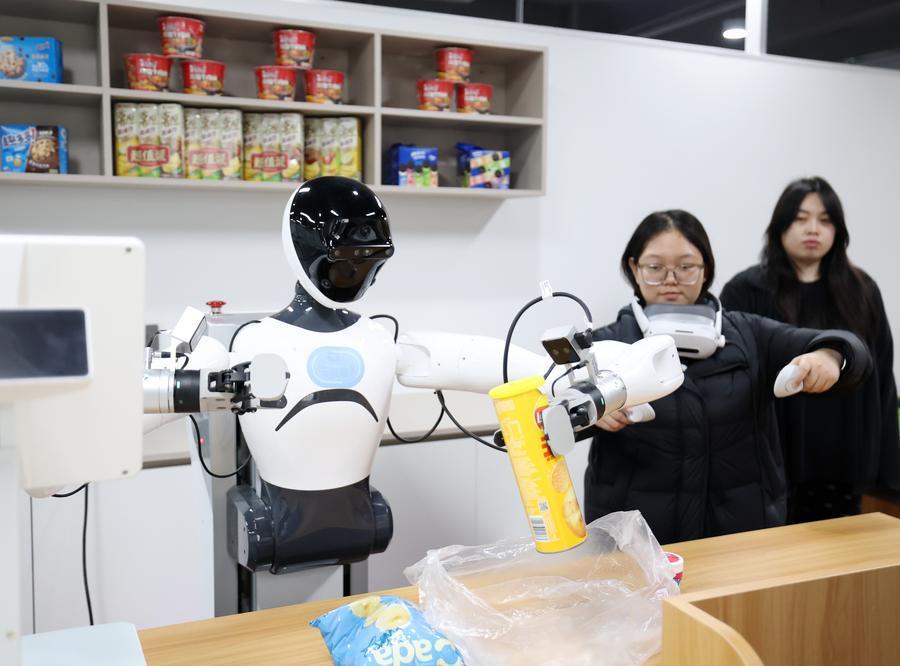
Robots can simulate real-world scenarios, allowing employees to practice in a controlled environment.
Medical and Technical Training
In fields such as healthcare and engineering, humanoid robots can assist with training by:
- Demonstrating procedures
- Simulating patient interactions
- Providing feedback
This improves skill development and reduces training risks.
Personalized Learning Through AI
Adaptive Learning Systems
Humanoid robots can analyze student performance and adjust teaching methods accordingly.
They can:
- Identify strengths and weaknesses
- Modify lesson difficulty
- Provide targeted support
Continuous Feedback
Unlike traditional classrooms, robots can provide immediate feedback, helping students learn more efficiently.
Engagement and Motivation
Making Learning Interactive
Humanoid robots bring a level of interactivity that traditional methods often lack.
They can:
- Use gestures and expressions
- Engage in dialogue
- Create dynamic learning experiences
Gamification
Robots can incorporate game-like elements into learning, making education more enjoyable and motivating.
Benefits for Educators
Reducing Workload
Teachers can delegate repetitive tasks to robots, such as:
- Grading basic assignments
- Managing classroom activities
- Providing routine explanations
Enhancing Teaching Effectiveness
With robots handling routine tasks, educators can focus on:
- Critical thinking
- Creativity
- Student relationships
Challenges and Concerns
Human Connection
Education is not just about information—it is also about human interaction.
Some critics argue that robots cannot replace the emotional and social aspects of teaching.
Accessibility and Cost
The high cost of humanoid robots may limit access, particularly in developing regions.
Ethical Considerations
Issues include:
- Data privacy
- Bias in AI systems
- Over-reliance on technology
Case Studies and Global Trends
Asia Leading Innovation
Countries in Asia are at the forefront of integrating robots into education systems.
Experimental Programs Worldwide
Schools and universities around the world are running pilot programs to explore the potential of humanoid robots.
The Future of Education with Robots
Hybrid Learning Environments
The future will likely combine:
- Human teachers
- AI systems
- Humanoid robots
Lifelong Learning
Robots could support continuous education throughout a person’s life, adapting to changing needs and careers.
Global Access to Education
In the long term, humanoid robots could help deliver education to remote and underserved areas.
Conclusion: A New Learning Paradigm
Humanoid robots are not replacing teachers—they are transforming the way education is delivered.
By combining AI, interactivity, and adaptability, these robots have the potential to create more personalized, engaging, and effective learning experiences.
As technology continues to evolve, humanoid robots may become essential partners in education, helping to prepare individuals for a rapidly changing world.
Discussion about this post