









Introduction: The End of Passive Machines
For most of human history, tools have been passive.
A hammer does nothing until it is picked up.
A computer does nothing until it is instructed.
Even the most advanced industrial robots, despite their precision and efficiency, remain fundamentally reactive—executing predefined instructions within tightly controlled environments.
But something is changing.
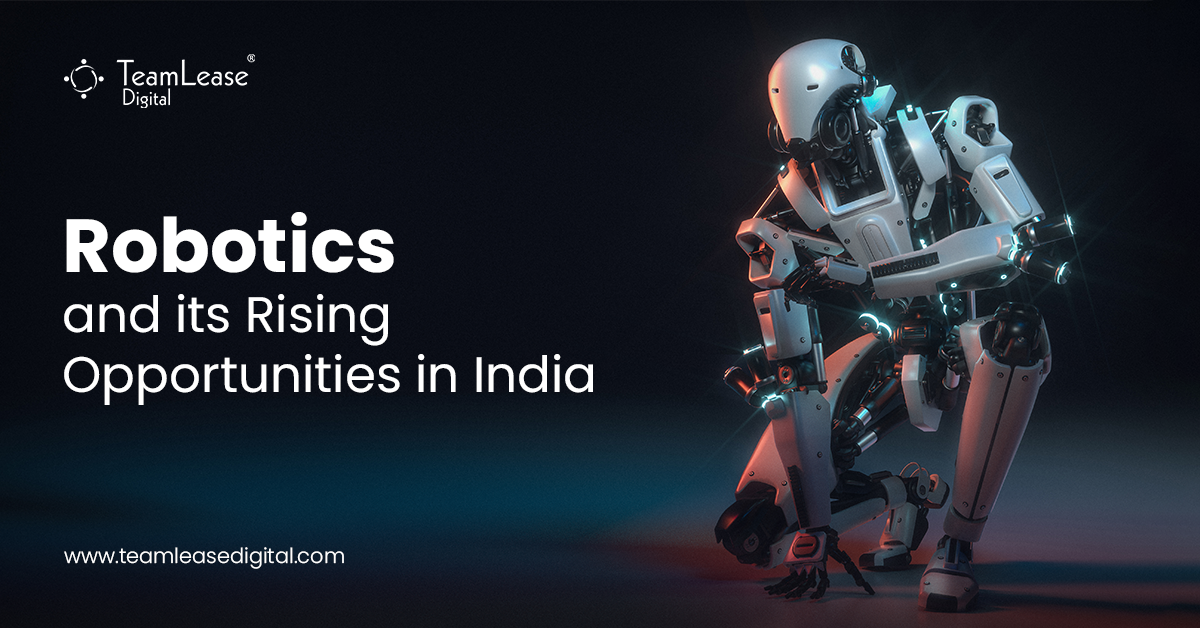
We are entering an era where machines are no longer merely tools, but agents—systems capable of perceiving, reasoning, acting, and adapting autonomously in the real world. And nowhere is this transformation more visible than in the emergence of humanoid robots powered by embodied artificial intelligence.
This shift—from tools to teammates—represents one of the most profound technological transitions of the 21st century.
It is not just about better robots.
It is about redefining the relationship between humans and machines.
1. The Three Eras of Machines
To understand where we are going, we must first understand where we have been.
1.1 The Mechanical Era: Strength Without Intelligence
The first era of machines was defined by mechanical augmentation:
- Steam engines
- Assembly lines
- Early industrial machinery
These systems amplified human physical capabilities but required constant human control.
1.2 The Digital Era: Intelligence Without Embodiment
The second era introduced computational intelligence:
- Personal computers
- The internet
- Software systems
- AI models
These technologies enabled machines to process information, but they remained largely confined to digital environments.
They could think (in a limited sense), but they could not act in the physical world.
1.3 The Agentic Era: Intelligence Meets Action
We are now entering the third era:
Agentic machines that combine:
- Perception (seeing and sensing the world)
- Cognition (understanding and reasoning)
- Action (physical or digital execution)
Humanoid robots are the most visible embodiment of this convergence.
2. What Makes a Robot an “Agent”?
Not all robots are agents.
An industrial robotic arm that repeats a programmed motion is not an agent.
A humanoid robot that can interpret a situation, make decisions, and adapt its behavior is.
2.1 Core Characteristics of Agentic Systems
An agentic robot typically has:
- Goal-directed behavior (it works toward objectives)
- Autonomy (it operates without constant human input)
- Context awareness (it understands its environment)
- Learning capability (it improves over time)
This combination fundamentally changes how machines are used.
2.2 From Commands to Intent
Traditional interaction:
Human: “Do X.”
Machine: Executes X.
Agentic interaction:
Human: “I want outcome Y.”
Robot: Figures out how to achieve Y.
This shift—from instructions to intent—is as significant as the transition from command-line interfaces to graphical user interfaces.
3. Embodied AI: Why Physical Presence Matters
Much of the recent AI revolution has been driven by large language models and digital agents. But these systems lack one critical dimension: a body.
3.1 The Intelligence of Interaction
Intelligence is not just about processing information—it is about interacting with the world.
A robot that can:
- Pick up objects
- Navigate complex spaces
- Respond to physical feedback
develops a form of understanding that purely digital systems cannot achieve.
3.2 Learning Through the Physical World
Humans learn by doing.
Embodied AI allows robots to:
- Learn through trial and error
- Understand cause and effect
- Develop spatial awareness
This leads to more robust and adaptable intelligence.
4. The Rise of General-Purpose Robotics
Historically, robots have been specialized.
- One robot welds
- Another paints
- Another assembles
Humanoid robots challenge this model.
4.1 The Case for Generalization
A general-purpose robot can:
- Perform multiple tasks
- Switch contexts quickly
- Adapt to new environments
This mirrors human labor and opens up entirely new economic possibilities.
4.2 Software as the Differentiator
In this new paradigm:
- Hardware becomes standardized
- Software becomes the key differentiator
The “operating system” of a robot—its AI stack—determines its capabilities.
5. Economic Implications: Labor, Productivity, and Value Creation
5.1 The Reconfiguration of Labor
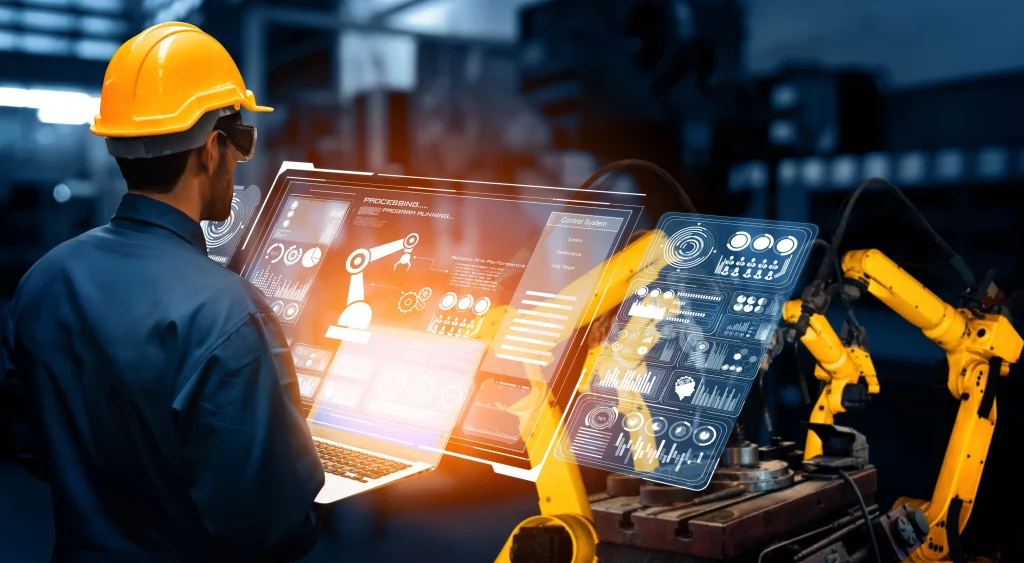
Agentic robots will not simply replace jobs—they will redefine them.
Tasks that are:
- Repetitive
- Dangerous
- Physically demanding
are most likely to be automated.
Humans will shift toward roles that require:
- Creativity
- Judgment
- Emotional intelligence
5.2 Productivity Explosion
If agentic robots can operate continuously and adapt across tasks, the result could be:
- Massive productivity gains
- Lower costs of goods and services
- Increased economic output
5.3 New Business Models
We may see the rise of:
- Robotics-as-a-Service (RaaS)
- Subscription-based labor
- On-demand physical workforces
This transforms labor from a fixed cost into a flexible resource.
6. The Interface Problem: How Humans Work with Robots
6.1 Natural Language as the New Interface
Instead of programming robots, users may simply:
- Speak
- Gesture
- Express intent
This lowers the barrier to adoption dramatically.
6.2 Trust and Transparency
For humans to collaborate with robots, they must:
- Understand what the robot is doing
- Trust its decisions
- Predict its behavior
This requires new design paradigms.
7. Risks and Constraints
7.1 Overestimation vs. Reality
There is a risk of:
- Overhyping capabilities
- Underestimating complexity
Real-world environments are unpredictable and messy.
7.2 Safety and Control
Autonomous systems raise critical concerns:
- What happens when they fail?
- Who is responsible?
- How do we ensure alignment with human values?
7.3 Economic Displacement
While new opportunities will emerge, transitions may be uneven and disruptive.
8. The Strategic Landscape: Who Wins?
8.1 Big Tech vs. Startups
- Large companies have resources and data
- Startups have speed and focus
Both will play critical roles.
8.2 The Importance of Ecosystems
Success will depend on:
- Developer platforms
- Hardware supply chains
- Data networks
9. The Long-Term Vision: A World of Intelligent Agents
Imagine a world where:
- Homes have robotic assistants
- Factories run with minimal human intervention
- Cities are maintained by autonomous systems
This is not a distant future—it is an emerging reality.
Conclusion: Redefining Intelligence in the Physical World
The transition from tools to teammates marks a fundamental shift in how we interact with technology.
Humanoid robots, powered by embodied AI, are not just another category of machines. They are the beginning of a new class of systems—agentic entities that operate alongside humans in the real world.
The implications are vast:
- Economically transformative
- Socially disruptive
- Philosophically profound
The question is no longer whether machines can think.
It is whether they can act, adapt, and collaborate—and what that means for the future of humanity.
Discussion about this post