









Introduction: Our Obsession with Ourselves
From ancient myths to modern science fiction, humans have always imagined creating beings in their own image.
- Mechanical automatons in ancient Greece
- The golem in Jewish folklore
- Androids in modern films
Today’s humanoid robots are the latest expression of this long-standing fascination.
They walk like us.
They gesture like us.
They are designed to fit into a world built by us.
But here’s the uncomfortable question:
What if the humanoid form is not the optimal design for intelligent machines?
What if it is simply the most familiar one?
This article challenges a widely held assumption in robotics: that the future of intelligent machines will look like humans. Instead, it argues that humanoid robots may represent a transitional phase—a bridge between human-centric environments and a future of truly optimized machine forms.
1. The Case for Humanoid Robots
Before questioning the humanoid form, it is important to understand why it has gained so much traction.
1.1 Infrastructure Compatibility
Our world is designed for human bodies:
- Doors, stairs, tools, vehicles
- Workspaces and homes
- Interfaces and controls
A humanoid robot can operate in these environments without requiring redesign.
1.2 Social Interaction
Humans are wired to interact with other humans.
A humanoid form enables:
- Eye contact
- Gestures
- Body language
This makes communication more intuitive.
1.3 General-Purpose Capability
The human body is highly versatile.
Two arms, two hands, and mobility allow for:
- Manipulation of objects
- Navigation of complex spaces
- Execution of diverse tasks
From this perspective, humanoid robots appear to be the logical choice.
2. The Case Against the Human Form
Despite these advantages, the humanoid design comes with significant limitations.
2.1 Evolution Is Not Optimization
The human body is the result of evolution—not engineering optimization.
It is full of compromises:
- Inefficient locomotion compared to wheels
- Limited strength compared to specialized machines
- Fragility and balance constraints
Designing robots in our image may inherit these inefficiencies.
2.2 Energy Inefficiency
Bipedal walking is computationally and energetically expensive.
A humanoid robot must:
- Maintain balance
- Coordinate multiple joints
- Continuously adjust posture
In contrast, wheeled or multi-legged systems can achieve greater stability and efficiency.
2.3 Complexity and Cost
Humanoid robots are among the most complex machines ever built:
- High degrees of freedom
- Advanced control systems
- Sophisticated sensors
This complexity translates into:
- Higher costs
- Increased failure points
- Difficult maintenance
2.4 Task Mismatch
Many real-world tasks do not require a human-like form.
For example:
- Warehouse logistics may benefit from wheeled robots
- Inspection tasks may favor drones
- Micro-manipulation may require entirely different structures
In these cases, humanoid design is not just unnecessary—it may be suboptimal.
3. The Path Dependency Problem
So why are we still building humanoid robots?
3.1 Designing for Today’s World
Humanoid robots are optimized for:
- Existing infrastructure
- Current workflows
- Human expectations
But this creates a form of path dependency—we design machines to fit the present, rather than reimagining the future.
3.2 The Cost of Compatibility
Instead of redesigning the world for machines, we redesign machines for the world.
This is:
- Convenient in the short term
- Potentially limiting in the long term
4. Lessons from Other Technologies
History offers parallels.
4.1 Early Cars Looked Like Carriages
The first automobiles resembled horse-drawn carriages.
Why?
Because that was the existing mental model.
Only later did car design evolve into something entirely new.
4.2 Smartphones Abandoned Physical Keyboards
Early smartphones imitated physical keyboards.
Over time, touchscreens replaced them, enabling entirely new interaction paradigms.
4.3 Industrial Machines Are Rarely Human-Shaped
Factories do not use humanoid robots for most tasks.
They use:
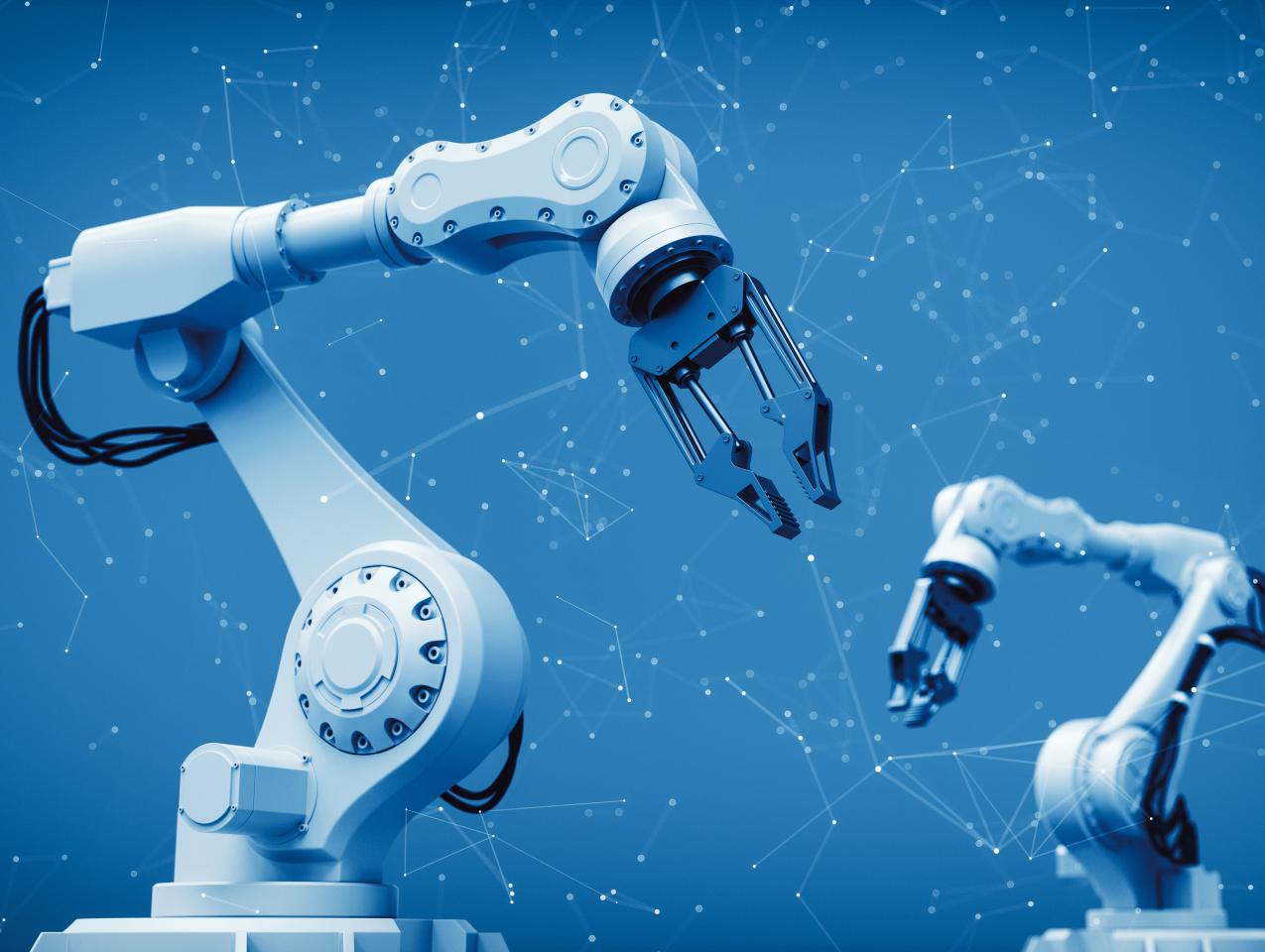
- Robotic arms
- Conveyor systems
- Specialized machinery
Because these forms are optimized for function, not familiarity.
5. Toward Post-Humanoid Robotics
If not humanoid, then what?
5.1 Function-Driven Design
Future robots may be designed around tasks, not human resemblance:
- Modular systems
- Shape-shifting structures
- Task-specific morphologies
5.2 Distributed Intelligence
Instead of a single humanoid entity, intelligence may be distributed across:
- Multiple devices
- Embedded systems
- Environmental infrastructure
The “robot” becomes a network, not a body.
5.3 Invisible Robotics
The most advanced robotics may not look like robots at all.
They may be:
- Embedded in walls
- Integrated into furniture
- Hidden within infrastructure
This shifts the focus from form to function.
6. The Role of Humanoid Robots as a Bridge
Despite their limitations, humanoid robots play an important role.
6.1 Transitional Technology
They serve as a bridge between:
- Human-centric environments
- Machine-optimized systems
6.2 Data Collection and Learning
Humanoid robots can learn:
- How humans interact with the world
- How tasks are performed
- How environments function
This data is invaluable for future designs.
6.3 Social Acceptance
Humanoid robots help society become comfortable with:
- Autonomous machines
- Human-robot interaction
- AI in physical spaces
7. The Real Constraint: Not Form, but Intelligence
Ultimately, the biggest challenge in robotics is not physical design—it is intelligence.
A perfectly designed body is useless without:
- Perception
- Reasoning
- Adaptability
In this sense, the humanoid debate may be secondary.
8. Investment and Market Dynamics
8.1 Why Investors Love Humanoids
Humanoid robots are:
- Visually compelling
- Easy to understand
- Media-friendly
They attract attention and funding.
8.2 The Risk of Misallocation
Focusing too heavily on humanoids may:
- Divert resources from more practical solutions
- Delay progress in specialized robotics
- Create unrealistic expectations
9. A Hybrid Future
The most likely future is not one or the other—but both.
9.1 Coexistence of Forms
We will see:
- Humanoid robots in human-centric roles
- Non-humanoid robots in optimized environments
9.2 Gradual Transition
Over time:
- Environments may adapt to machines
- Machines may become less human-like
The balance will shift.
10. Rethinking the Question
Instead of asking:
“Should robots look like humans?”
We should ask:
“What form best serves the function?”
Conclusion: Beyond the Mirror
Humanoid robots reflect our desire to recreate ourselves.
But the future of robotics may lie not in imitation, but in innovation beyond human constraints.
The humanoid form is:
- Useful
- Familiar
- Powerful
But it may not be final.
In the long arc of technological evolution, it could be remembered not as the endpoint—but as a necessary illusion that helped us transition from a human-centered world to a machine-integrated one.
Discussion about this post