








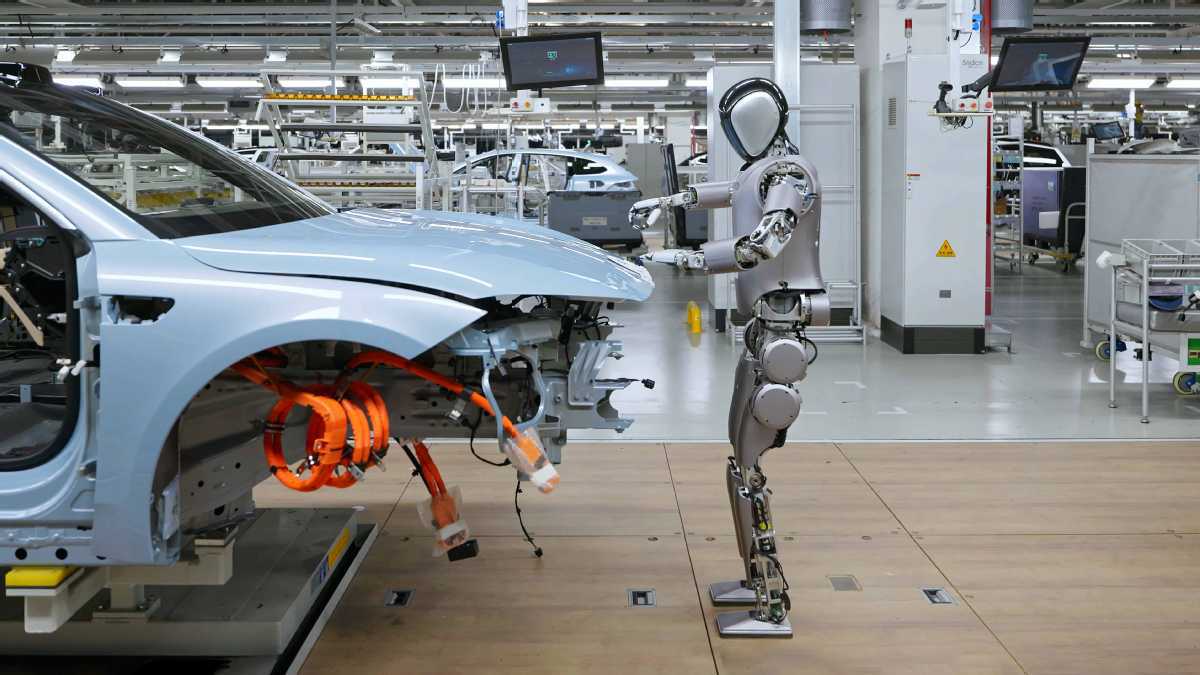

The idea of humanoid robots replacing humans on car assembly lines sounds like something straight out of a sci‑fi blockbuster: metal workers with glowing optics and mechanical limbs buzzing in perfect choreography, building vehicles with superhuman strength and precision. But is this vision realistic? Or is it hype wrapped in future‑tech fairy dust? The truth sits somewhere between bold engineering breakthroughs and tough, real‑world limitations. In this in‑depth, engaging, and professionally detailed exploration, we’ll unpack what’s happening today, where the industry is headed, and whether humanoid robots are a genuine substitute for human workers in automotive manufacturing.
1. A Long History of Robotics in Car Manufacturing
Before we talk humanoids, let’s set the stage with robots that are already ubiquitous:
Traditional industrial robots—think large fixed arms welding, painting, and moving heavy components—have been integral to automotive manufacturing for decades. The very first industrial robot, Unimate, began working on a General Motors assembly line in 1961, transporting die‑cast parts and performing dangerous tasks that would otherwise expose workers to toxic fumes or injuries.
These high‑speed arms dominate production zones because they excel at repetitive, calibrated tasks: spot welding, spray painting, and stamping. However, rigid production line automation has limitations. For example, the car assembly process involves tens of thousands of distinct parts, varied sequences, and frequent product changes—especially in modern flexible factories that produce multiple models on a single line. This is where a new wave of robotic vision steps in.
2. Enter Humanoid Robots: The Next Wave of Automation
What Are Humanoid Robots?
Humanoid robots are machines designed with a human‑like form: two legs, two arms, and sometimes even a torso and head. They aim to replicate human mobility and manipulation capabilities, enabling them to navigate spaces built for humans without extensive re‑tooling of the environment.
Examples include:
- Boston Dynamics’ Atlas – a bipedal robot with advanced mobility and dexterity.
- UBTech’s Walker S – deployed in Chinese automotive factories for tasks like inspecting belt assemblies and material handling.
- Apptronik’s Apollo – tested by Mercedes‑Benz for collaborative assembly assistance.
- Figure Robotics’ humanoids – trialed at BMW facilities to handle more dexterous production tasks.
These robots are built with sensors, actuators, and AI stacks that allow them to perceive, move, and act in environments typically designed for humans.
3. Why Car Makers Are Investing in Humanoid Robots
3.1. Flexibility and Compatibility
Traditional robotic arms are excellent at specific tasks—but they’re inflexible. Changing a robot cell for a new task or product variant can be expensive. Humanoid robots, with human‑like mobility and reach, can theoretically operate wherever humans once did without redesigning factory layouts. They can navigate stairs, handle tools, and interact with the diverse range of parts encountered in assembly.
3.2. Labor Long‑Term Cost Pressures
Automakers face rising labor costs, especially in mature economies. Even in factories with high automation rates (some approaching 95 %), humans are still required for complex assembly tasks involving small components, wiring, and quality adjustments. Humanoid robots promise to fill this last frontier of automation, tackling tasks that robotic arms and conveyors struggle with.
3.3. Addressing Labor Shortages and Worker Safety
Many industrial regions now face an aging workforce and labor shortages in physically taxing jobs. Robots that can work long hours without fatigue and handle heavy lifting or dangerous tasks are attractive for manufacturers seeking both safety and productivity gains.
4. What Humanoid Robots Are Actually Doing Today
Despite headlines about robots replacing workers, real deployments are, for now, more nuanced:
4.1. Augmenting Humans, Not Replacing Them
Most pilot programs integrate humanoid robots as assistants, taking over repetitive or physically strenuous duties while human workers retain oversight and complex operations. For example, Mercedes‑Benz integrated Apollo robots to perform targeted tasks (such as assisting with assembly tools), not to replace entire shifts of human workers.
In many automotive plants in China, robots like UBTech’s Walker S handle inspection, material transport, and repetitive actions, working alongside traditional automation and human crews.
4.2. Logistics and Lineside Operations
Some car manufacturers already deploy humanoid robots for logistic tasks—moving materials between stations or restocking parts shelves. These are simpler jobs that benefit from a robot’s human‑like reach and navigation, yet don’t require full assembly autonomy.
4.3. Testing and Learning Environments
Many initiatives, like BMW and Hyundai’s Atlas deployment plans, are still in early testing phases. Robots may initially handle straightforward or isolated tasks (like parts sequencing) and gradually transition to more complex work as capabilities mature.
5. The Technical Hurdles Standing in the Way
Humanoid robots today are impressive—but still far from human equivalence in many areas.
5.1. Mobility and Dexterity Challenges
Walking on two legs, maintaining balance while lifting, and manipulating small components with delicate precision are enormously complex technical problems. Traditional industrial robots excel because they are fixed and engineered for singular trajectories. Humanoids are attempting to merge perception, balance, and manipulation in unstructured environments—which remains exceptionally difficult.
5.2. Power and Runtime Constraints
Battery technology limits how long humanoid robots can operate autonomously between recharges. Unlike wired industrial machines, mobile robots carry their power source, leading to trade‑offs between battery weight and operational endurance.
5.3. High Development and Deployment Costs
Although prices are trending downward, deploying humanoid robots still costs significantly more than installing traditional production line automation. Mass production and economies of scale are needed before cost advantages materialize.

6. Real Versus Perceived Replacement
6.1. Will Robots Replace All Human Workers? Probably Not, At Least Not Soon
Even in the most ambitious plans, car companies are not tearing up human workforces. Instead, robots are being introduced gradually and selectively in areas where they make the most economic sense.
In many cases, this means robots augment human labor rather than fully replacing it. Human expertise, judgment, adaptability, and problem‑solving remain incredibly valuable—and difficult to encode into an algorithm.
6.2. The Human Touch Still Matters
Vehicles are becoming more complex—with interior electronics, modular parts, and customization. Human workers bring fine motor skills, intuitive adjustments, and nuanced quality decisions that aren’t easily automated. While robots can learn from demonstration and computer vision, truly replacing human judgment across every stage of assembly remains a huge challenge.
7. The Future Scenario: Humans and Robots Coexisting
Rather than an all‑robot takeover, the industry is heading toward collaboration. Think of humanoid robots as highly capable teammates rather than replacements. Future car factories may feature:
- Human workers focusing on creativity, problem solving, and fine quality work
- Robots handling repetitive, strenuous, or hazardous tasks
- Flexible automation architectures where both humans and robots train and learn from each other
Some manufacturers, like Mercedes‑Benz and Hyundai, explicitly emphasize human‑robot collaboration strategies rather than wholesale replacement.
8. Broader Impacts on Industry and Society
8.1. Economic Shifts and Labor Markets
If humanoid robots become widespread, automotive jobs will shift toward more skilled, engineering‑oriented roles. There may be job losses in repetitive positions, but also opportunities in robot maintenance, programming, and supervision—a pattern seen throughout automation history.
8.2. Ethical and Social Questions
Deploying robots raises questions about worker identity, societal values, and workforce retraining. As robots take over physical tasks, society must rethink how it values human contributions and supports transitions for affected workers.
8.3. Regulation and Safety
Integrating mobile, humanoid robots safely requires rules, standards, and oversight. Ensuring robots can work safely around humans—without accidents or unpredictable behavior—will be essential before large‑scale deployments are possible.
9. Conclusion: Robots Won’t Replace Humans Overnight—but They’re Coming
Humanoid robots are advancing rapidly, with tangible deployments in automotive factories around the world. They offer flexibility and adaptability beyond traditional industrial automation and tackle tasks that previously required human reach, judgment, or movement within complex production environments.
However, the idea of humanoid robots entirely replacing humans on car assembly lines is not imminent. Instead, we’re entering an era of collaboration, where robots handle repetitive, dangerous, or physically demanding tasks while humans continue to contribute in areas where adaptability, creativity, and judgment matter most.
The automotive industry is transforming—but humans are still very much in the driver’s seat… for now.
Suggested Image Search Keywords
(Use these to find relevant visual content for your article)
Humanoid factory robot
Car assembly line automation
Apptronik Apollo robot
Boston Dynamics Atlas in factory
BMW humanoid robot production
Industrial humanoid robot sensors
Tags: Automation, Robotics, Industry, Economy
文章里不要出现链接
Can Humanoid Robots Really Replace Humans on Car Assembly Lines?
The vision of humanoid robots stepping onto car assembly lines and taking over the work once done by humans has long captured the imagination of technologists, futurists, and sci‑fi fans alike. But how close are we, really, to a factory floor filled with bipedal machines building vehicles alongside—or instead of—human workers?
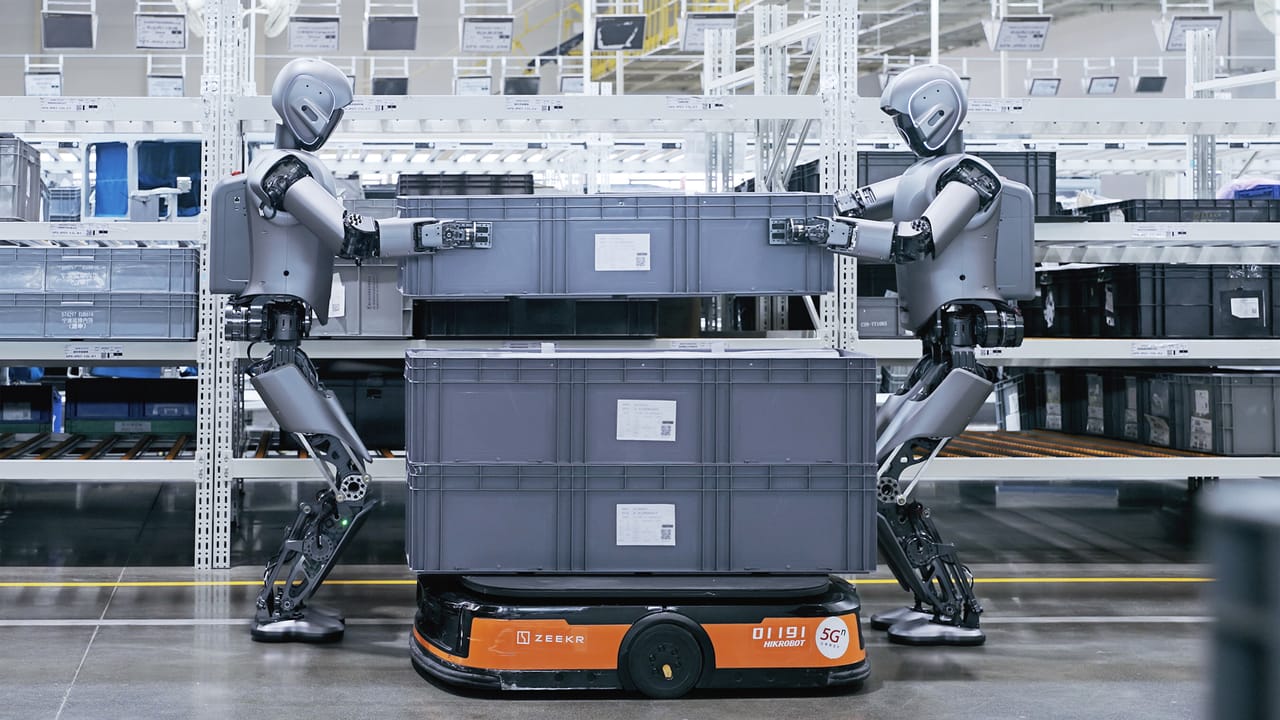
This article dives deep into the evolving world of humanoid robotics in automotive manufacturing. We’ll explore the historical context, current real‑world deployments, technical limitations, economic and social challenges, and where this technology is actually headed. You’ll find the explanation both engaging and professional, written in clear, concise English that balances technical insight with readability.
From Industrial Arms to Humanoid Helpers
Automotive factories have been automated for decades. Heavy industrial robotic arms handle welding, painting, and heavy material handling. These systems are powerful, reliable, and extremely efficient at repetitive, pre‑planned tasks. They work in structured environments where a predictable sequence of operations is repeated again and again.
Yet, despite this high degree of automation, a significant portion of car assembly still depends on human workers—especially tasks that involve nuanced handling, multiple variations of parts, and flexible adaptation to uncertainty. This is where humanoid robots come into the conversation: machines that look like us, walk like us, and—ideally—can fill in where traditional robots struggle.
What Are Humanoid Robots, and Why Do Manufacturers Care?
Humanoid robots are engineered to resemble the human body in form and motion. This design philosophy allows them to potentially operate in environments built for humans without extensive re‑engineering of factory layouts.
In the automotive sector today, companies are experimenting with humanoid robots for tasks such as parts sequencing, material movement, inspection, and even certain stages of assembly. In China, industrial humanoids like the Walker S are already working in car plants conducting inspections of seat belts, door locks, and handling materials in complex zones of assembly operations. These robots are designed to free humans from repetitive and sometimes hazardous tasks.
Other global automakers are also making moves. Several startups and established manufacturers are collaborating on humanoid robot integration. For example, one robotics firm partnered with BMW to introduce humanoid robots on its U.S. assembly line to assist with tasks that are difficult, dangerous, or tedious for human workers.
In another case, a new humanoid called Atlas is being developed and commercialized by a major robotics company for industrial environments. This humanoid is scheduled to begin operations at an automotive plant in the United States by 2028, performing tasks such as parts sequencing and eventually more complex work as its capabilities mature.
The Current Reality: Augmentation, Not Replacement
Despite headlines suggesting robots will replace human workers entirely, the real picture is more nuanced.
1. Robots Are Mostly Assistants Right Now
Today’s humanoid robots are being used mainly to augment human workers, not replace them entirely. Their roles tend to focus on tasks that are repetitive, dangerous, or physically demanding. For instance, they might move parts between stations, assist in quality checks, or handle components that are awkward for humans to reach.
2. Humans Still Dominate Complex Assembly
Car assembly is incredibly complex. Modern vehicles contain over 30,000 individual parts, many of which have specific orientations and tolerances. Workers must make judgements about fit, torque, and quality — judgments that are still difficult to code into robotic control systems. Humanoid robots may excel at gross motor tasks, but fine manipulation and real‑time decision making remain in the human domain.
3. Technical Hurdles Remain Significant
Humanoid robots face challenges in several technical areas:
- Dexterity and sensory perception: Even simple human hand maneuvers—like inserting a clip or guiding a wire harness—require a level of tactile sensing and fine control that robots have only begun to approach.
- Mobility and balance: Walking, turning, and dynamically adjusting positions on a busy factory floor is still tricky for bipedal robots.
- Reliable AI integration: Robots need advanced machine learning and perception systems to recognize and adapt to unexpected situations — a capability that is still developing.
- Robots currently in deployment often require supervision or remote human control in practice.
This means that although robots are improving, many tasks still demand human judgement and flexibility.
Why Automakers Are Still Investing in Humanoids
So if robots aren’t replacing humans yet, why all the emphasis?
1. Flexible Automation Is the Next Frontier
Traditional industrial robots are extremely good at fixed, repetitive tasks. But car production is evolving. Factories now build many different vehicle variants on flexible lines. This complexity makes it expensive and slow to reconfigure fixed robotic systems. In contrast, humanoid robots that can adapt to new tasks without changing the entire production line promise a more flexible path forward.
2. Labor Costs and Workforce Dynamics
In many advanced manufacturing regions, workers command high wages and there is pressure to reduce labor costs where possible. Robots could one day handle less‑desirable work, allowing humans to focus on higher‑skill tasks.
3. Global Competitive Pressure
Asia, Europe, and North America are all investing heavily in robotics and AI. Countries such as China are aggressively deploying humanoid robots in auto plants and expect broader integration over the next decade. Some projections suggest that the humanoid robot share of automotive assembly could grow markedly in the coming years as costs fall and technology matures.
Humanoid Robots: Challenges and Limitations
1. Cost and ROI
Humanoid robots are still expensive. Their complex hardware, advanced sensors, and AI systems make them costly compared to traditional automation. Until costs decline significantly — through economies of scale and manufacturing improvements — widespread replacement of human labor remains economically challenging.
2. Safety and Collaboration
Working alongside humans in a dynamic environment brings serious safety challenges. Ensuring that robots perceive and react safely around people is critical; this requires sophisticated sensing and control systems that are still under refinement.
3. Social and Ethical Concerns
Beyond technical issues, there are ethical considerations. Automation impacts employment, worker identity, and regional economies. If robots do replace certain jobs, societies must address retraining, job displacement, and equitable transitions for affected workers.
Where the Future Really Lies
Based on current trends and deployments, the future of humanoid robots in car assembly is not about wholesale replacement, but about collaboration and augmentation.
Rather than envisioning a factory floor devoid of humans, a more realistic picture is one where:
- Humanoid robots handle repetitive, hazardous, or ergonomically difficult tasks
- Humans handle sophisticated assembly steps, quality control, and oversight
- Workforce roles evolve toward robot supervision, programming, and troubleshooting
Large OEMs and robotics firms are positioning themselves for this collaborative future — building systems where humans and robots complement each other’s strengths. The time horizon for broad replacement is likely decades rather than years. In the meantime, the value lies in increased efficiency, flexibility, and productivity.
Conclusion: A Transformative Partnership, Not a Replacement
Humanoid robots are real, advancing rapidly, and increasingly present on automotive assembly floors. They offer intriguing potential — especially where traditional automation struggles. Yet the vision of robots entirely replacing humans in general car assembly remains distant.
For now, humanoid robots are best viewed as tools that extend human capability, not tools that replace it. They may shoulder more of the workload in the years ahead, but humans will continue to play essential roles in automotive manufacturing for the foreseeable future.