








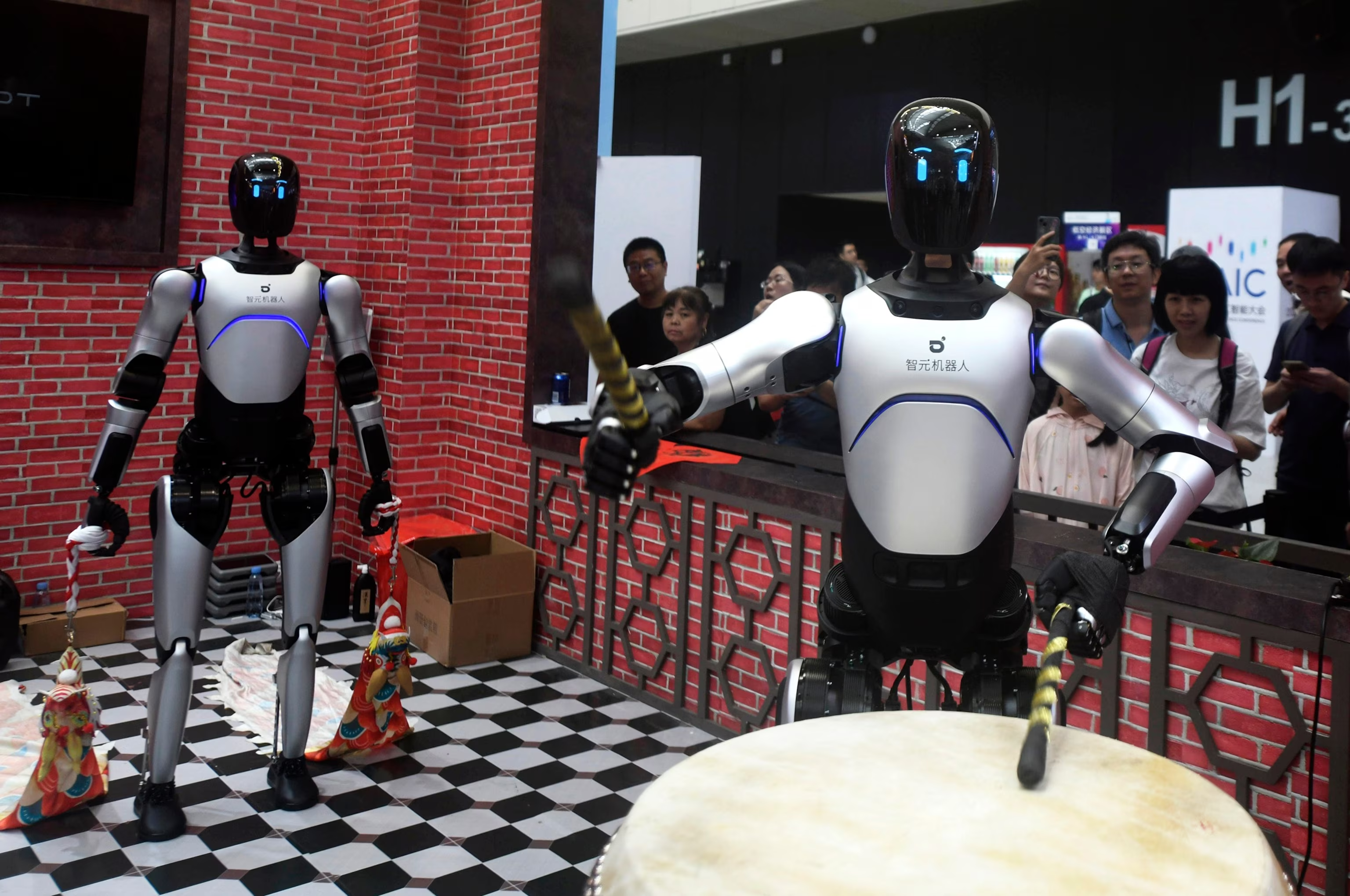

Humanoid robots—machines designed to resemble and interact with humans—are among the most complex and intriguing innovations in the field of robotics. These robots are not just physically shaped like humans; they are intended to emulate human behavior, emotions, and cognition. At the heart of this endeavor lies one of the most important technological breakthroughs of our time: Large Language Models (LLMs). These advanced AI systems, including models like GPT-4, BERT, and others, serve as the “brain” of humanoid robots, driving their understanding, decision-making, and communication.
In this article, we will explore how LLMs function as the cognitive core of humanoid robots, their role in advancing robot-human interactions, and the challenges and implications that come with this integration. Through this lens, we will uncover how artificial intelligence is pushing the boundaries of what robots can do—and how close we are to a world where humanoid robots seamlessly integrate into society.
1. Understanding Large Language Models (LLMs)
Before diving into their role in humanoid robots, it’s essential to understand what Large Language Models (LLMs) are. At their core, LLMs are deep learning models trained on vast amounts of text data. They are designed to understand, generate, and manipulate human language with remarkable accuracy.
These models work by analyzing patterns in language. Through billions of words and phrases, LLMs learn how sentences are structured, how words relate to one another, and how to predict the next word or idea in a conversation. The result is a system capable of understanding context, generating relevant responses, and engaging in human-like interactions.
However, LLMs are not limited to just text. They can also process and interpret spoken language, making them essential for communication between humans and humanoid robots.
2. The Role of LLMs in Humanoid Robots
Humanoid robots are complex machines, combining artificial intelligence, sensors, motors, and intricate hardware to mimic human behavior. At the center of this complexity is the need for the robot to understand and process the world in a way that resembles human cognition. This is where LLMs come in.
a. Language Processing and Communication
The most obvious way in which LLMs serve as the brain of a humanoid robot is through language processing. Robots equipped with LLMs can communicate effectively with humans, understanding speech, answering questions, and even engaging in small talk. By leveraging natural language processing (NLP) techniques, LLMs allow robots to process human language and generate contextually appropriate responses.

For instance, if a humanoid robot is asked, “Can you help me with my homework?”, the LLM can recognize the task, understand the context of the request, and offer assistance by providing information, explanations, or guidance. This type of interaction is powered by the model’s ability to comprehend language on a deep level, as well as its ability to generate accurate and meaningful responses.
b. Decision Making and Problem Solving
Beyond communication, LLMs in humanoid robots are crucial for decision-making and problem-solving. These robots must navigate complex environments, make judgments, and choose the best course of action. LLMs facilitate this by processing vast amounts of information, recognizing patterns, and understanding context.
For example, if a humanoid robot is in a busy room and someone asks it to fetch an object, the LLM would analyze the room’s layout, recognize the user’s intent, and decide how to execute the task, considering potential obstacles and possible alternatives. This requires not just language understanding but also situational awareness, which is often powered by LLMs combined with sensor data.
c. Emotional Intelligence and Empathy
One of the most exciting aspects of LLMs in humanoid robots is their ability to recognize and respond to human emotions. By analyzing the tone, words, and context of speech, LLMs can detect emotional cues such as anger, happiness, or frustration. This allows humanoid robots to respond with empathy and adjust their behavior accordingly.
Imagine a humanoid robot that notices its user is upset. Using an LLM, it can interpret the emotional context and offer comforting words or suggest solutions, just as a human would. This capability makes the robot more relatable, building trust and enhancing human-robot interactions.
3. Integration of LLMs with Other AI Components
While LLMs are the cognitive core of humanoid robots, they are not functioning in isolation. They work in tandem with other artificial intelligence components to create a more holistic and intelligent robot.
a. Computer Vision
To interact with the physical world, humanoid robots rely on computer vision, which allows them to see and interpret their surroundings. LLMs work in conjunction with vision systems to provide a richer understanding of the environment. For instance, when a robot is asked to “pick up the book on the table,” the LLM processes the command, while the vision system identifies the book and its location.
By integrating vision and language processing, robots can follow instructions more accurately, even in dynamic and cluttered environments.
b. Sensors and Perception
Sensors play a vital role in a humanoid robot’s perception of the world. These sensors can detect proximity, touch, temperature, and even more complex data like facial expressions. LLMs process these sensory inputs to understand the robot’s surroundings and adapt accordingly.
For example, if a robot encounters a person who is standing in front of it, the sensors detect the proximity, and the LLM processes this information to adjust its movements or speech, ensuring a smoother interaction. This dynamic and responsive behavior is essential for making robots that feel more “alive.”
c. Reinforcement Learning
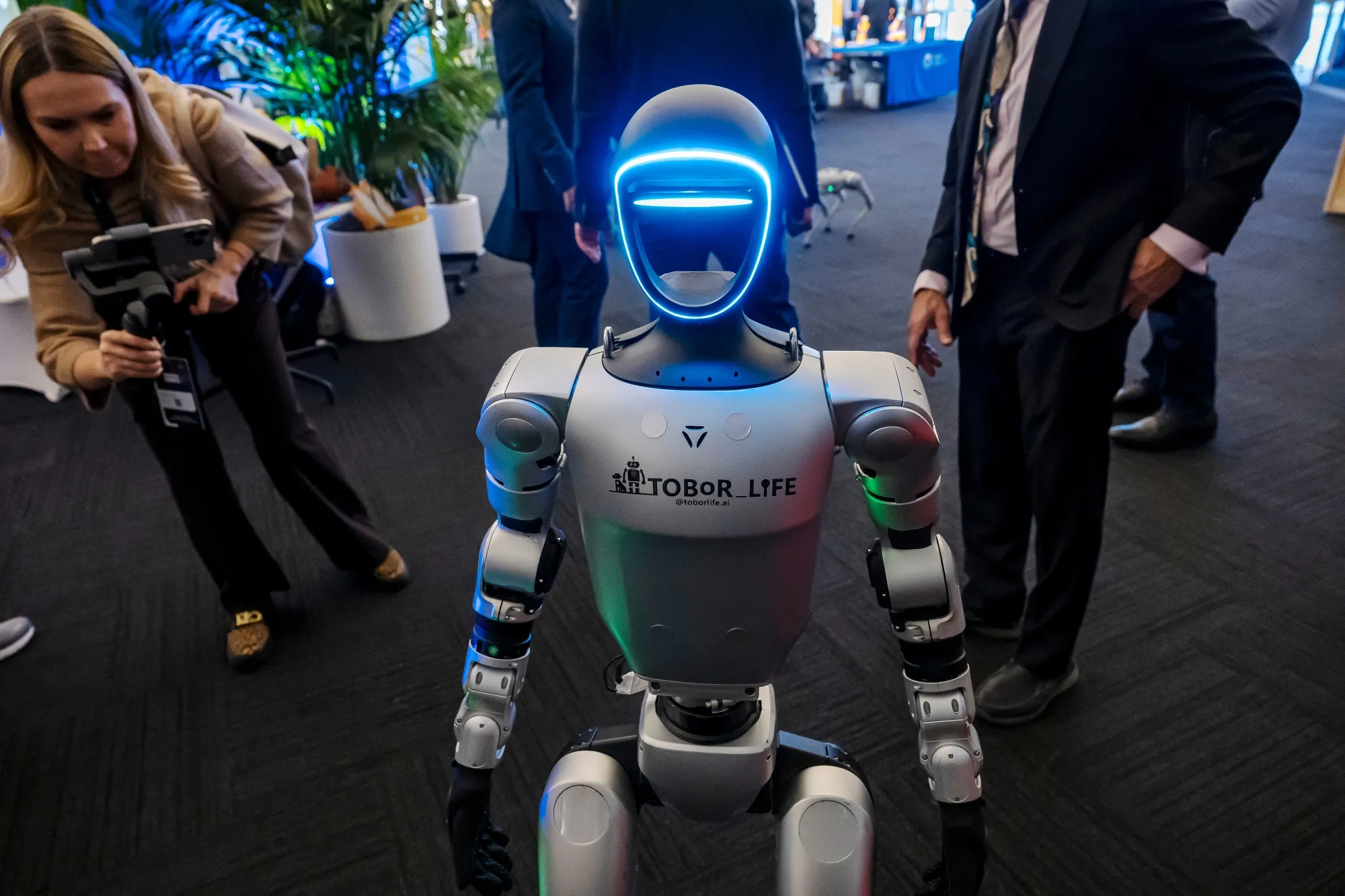
LLMs also play a crucial role in a robot’s learning capabilities. Reinforcement learning, a method of teaching robots through trial and error, can be enhanced by LLMs. The language model can help the robot interpret feedback, improve its actions, and understand consequences, leading to smarter, more adaptive behavior over time.
For instance, a humanoid robot may initially struggle with opening a door, but through repeated attempts and feedback, powered by LLM-driven learning algorithms, it can improve its technique, understand the task better, and perform it more efficiently in the future.
4. Challenges in Using LLMs for Humanoid Robots
Despite the vast potential of LLMs, their integration into humanoid robots comes with challenges. These include technical limitations, ethical concerns, and societal implications.
a. Technical Challenges
Training LLMs to process language in real-time for humanoid robots is a daunting task. LLMs require massive amounts of data and computing power, which can be a barrier to efficient deployment. Additionally, real-time language processing needs to be both fast and accurate, which presents difficulties in terms of hardware capabilities and optimization.
b. Ethical and Societal Implications
As humanoid robots become more advanced, questions arise regarding their role in society. Should robots have rights? What are the ethical considerations of creating machines with emotional intelligence? Can robots replace human jobs in sectors like caregiving or customer service? These questions must be carefully considered, especially as robots become more integrated into everyday life.
For example, in caregiving, robots powered by LLMs may become vital companions for the elderly. But if these robots can display empathy and emotional understanding, how should society address the issue of robot-human relationships?
c. Privacy Concerns
With robots interacting closely with humans, issues of privacy and data security become even more critical. LLMs process large volumes of personal data—speech, actions, preferences—and this raises concerns about how this information is stored, shared, and protected.
5. The Future of LLMs and Humanoid Robots
The integration of LLMs with humanoid robots holds tremendous potential. As LLMs continue to improve, robots will become more autonomous, empathetic, and efficient in their interactions with humans. Advances in hardware, machine learning, and sensor technology will make robots more adaptive and capable of handling complex, real-world tasks.
We may soon see humanoid robots as companions, caregivers, assistants, and even co-workers in various industries. As the technology advances, so too will the possibilities for how robots can enhance human lives and contribute to society.
6. Conclusion
Large Language Models are rapidly becoming the “brains” of humanoid robots, providing them with the cognitive capabilities to understand, communicate, and interact with humans in meaningful ways. These models enable robots to make decisions, process language, and even detect emotions, making them not just machines, but intelligent beings capable of complex interactions. However, the integration of LLMs into robots also raises important ethical, technical, and privacy challenges that must be addressed as the technology evolves.
As we move toward a future where humanoid robots become an everyday part of our lives, the role of LLMs in shaping these machines will be crucial. Whether as helpers, companions, or collaborators, humanoid robots powered by LLMs hold the potential to transform the way we live, work, and interact with the world.