









Introduction: The Logistics Revolution
Over the past two decades, the global logistics industry has undergone an unprecedented transformation. The rise of e-commerce, accelerated by mobile technology and global digital platforms, has dramatically increased the speed and complexity of modern supply chains.
Consumers today expect something that would have seemed impossible only a generation ago: products delivered within hours or days of ordering.
Behind this convenience lies a vast infrastructure of warehouses, distribution centers, fulfillment hubs, and delivery networks. These facilities operate around the clock to receive, store, sort, pack, and ship millions of products every day.
Yet despite the scale of automation in modern logistics centers, a surprising amount of work still relies on human labor.
Workers walk miles across warehouses each shift, lifting boxes, sorting items, loading trucks, and managing inventory. These tasks are physically demanding, repetitive, and often difficult to automate with traditional machines.
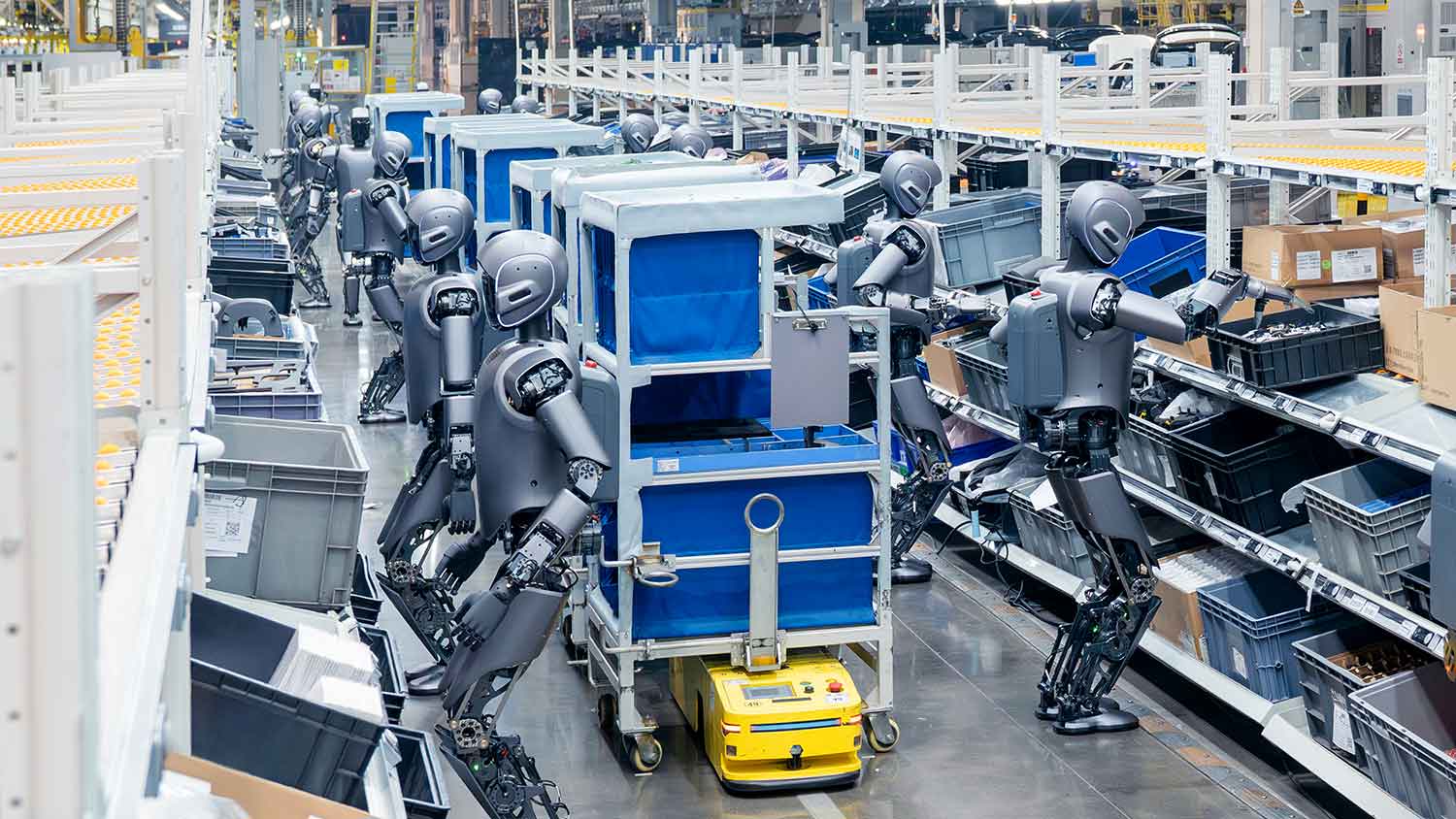
Now a new technology is emerging that could transform this environment: humanoid robots.
Companies such as Agility Robotics, Figure AI, and Tesla are developing robots designed to operate in human environments—robots that can walk, carry objects, and interact with the same tools and infrastructure used by human workers.
For the logistics industry, humanoid robots may represent the next major leap in automation.
Why Warehouses Need a New Kind of Robot
Automation has already reshaped logistics over the past decade. Conveyor belts, automated storage systems, and mobile robots have significantly improved warehouse efficiency.
Companies like Amazon have deployed thousands of mobile robots in fulfillment centers to move shelves of products to human workers.
However, many tasks remain difficult to automate.
The Challenge of Unstructured Environments
Warehouses are complex and constantly changing environments.
Boxes come in different shapes and sizes. Items must be picked from shelves, placed into containers, stacked onto pallets, and loaded into trucks. Workers frequently change tasks depending on demand.
Traditional industrial robots struggle with this variability.
They are typically designed to perform highly repetitive tasks in controlled environments. When objects differ in size, weight, or orientation, automation becomes far more difficult.
Humanoid robots offer a different approach.
Instead of designing warehouses around machines, engineers are designing robots that can operate in spaces built for humans.
Built for Human Infrastructure
Most warehouses are designed around the capabilities of human workers.
Shelves are placed at human height. Doorways and corridors accommodate human movement. Equipment such as ladders, carts, and tools are built for human hands.
A humanoid robot with two arms, two legs, and dexterous hands can potentially interact with this infrastructure without major changes.
This compatibility makes humanoid robots particularly attractive for logistics environments where retrofitting existing warehouses would be expensive and disruptive.
Key Applications in Logistics
Humanoid robots could perform a wide range of tasks across the logistics workflow.
Package Handling
One of the most common tasks in warehouses is handling packages.
Workers repeatedly lift boxes from conveyor belts, sort them, and place them into containers or onto pallets.
Humanoid robots equipped with advanced vision systems could:
- pick up packages
- sort items by destination
- stack boxes for shipping
These robots can also operate continuously without fatigue, potentially increasing throughput.
Order Picking
Order picking is one of the most labor-intensive parts of fulfillment operations.
Workers must locate items in storage racks, retrieve them, and place them into order bins.
Humanoid robots could assist with this process by navigating warehouse aisles and retrieving products from shelves.
Unlike fixed robotic arms, humanoid robots can move between locations, allowing them to perform multiple tasks across the facility.
Truck Loading and Unloading
Another physically demanding job is loading and unloading delivery trucks.
Workers often spend hours lifting heavy boxes and arranging them within tight spaces.
Humanoid robots capable of balancing and lifting could take on these tasks, reducing physical strain on human workers.
The Economics of Warehouse Automation
For logistics companies, the adoption of humanoid robots will ultimately depend on economics.
Automation investments must reduce costs or improve efficiency enough to justify their implementation.
Rising Labor Costs
In many countries, warehouse labor costs are increasing.
At the same time, e-commerce growth has created an enormous demand for fulfillment workers.
Companies often struggle to hire enough employees, especially during peak seasons such as holidays.
Humanoid robots could help fill this gap by performing repetitive tasks while human workers focus on coordination and management.
Operational Efficiency
Robots can operate continuously without breaks or fatigue.
This capability allows warehouses to maintain high productivity levels even during overnight shifts or periods of high demand.
Over time, improvements in robot performance and reductions in manufacturing costs could make humanoid robots economically viable for large logistics operations.
Real-World Experiments
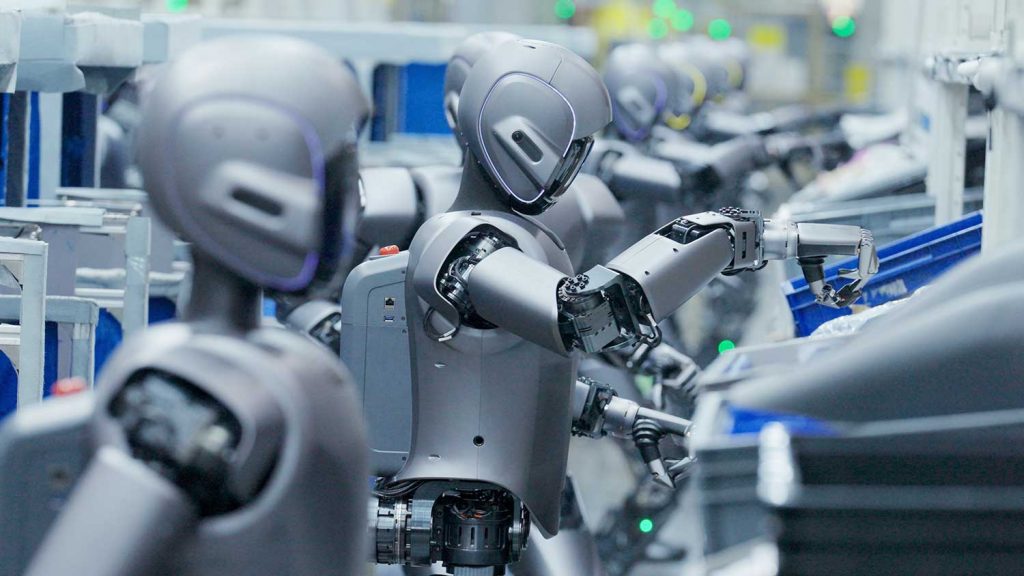
Several robotics companies have already begun testing humanoid robots in logistics environments.
Agility Robotics and Digit
Agility Robotics developed a humanoid robot called Digit that is designed for warehouse operations.
Digit can walk through facilities, pick up packages, and place them on conveyor belts.
Unlike traditional warehouse robots that rely on wheels, Digit uses legs to navigate spaces designed for people.
Figure AI’s Warehouse Vision
Another startup, Figure AI, is building humanoid robots intended for industrial and logistics environments.
The company believes robots will eventually become common workers in warehouses and manufacturing facilities.
Its robots aim to perform tasks such as picking, packing, and material transport.
Artificial Intelligence and Perception
Humanoid robots depend heavily on artificial intelligence systems that allow them to understand their surroundings.
These systems include:
- computer vision for object recognition
- machine learning for task planning
- motion control algorithms for stable movement
Together, these technologies enable robots to manipulate objects in complex environments.
For example, a robot must determine:
- where an object is located
- how to grasp it
- how to move it safely
These decisions must occur in real time.
Advances in AI, particularly deep learning, have dramatically improved the ability of robots to perform these tasks.
Challenges and Limitations
Despite rapid progress, humanoid robots still face several major challenges.
Dexterity
Human hands are incredibly versatile.
Replicating this dexterity in robotic systems remains difficult and expensive.
Battery Life
Most humanoid robots rely on batteries for power.
Operating for long periods in industrial environments requires efficient energy systems.
Integration with Existing Systems
Warehouses already use a variety of automation technologies.
Integrating humanoid robots into these systems will require new software platforms and operational workflows.
The Future of Logistics Work
As humanoid robots enter warehouses, the nature of logistics work may evolve.
Instead of performing repetitive manual labor, workers may shift toward roles involving:
- robot supervision
- system management
- maintenance and troubleshooting
This transition could create new types of jobs within the logistics sector.
At the same time, companies will need to address concerns about workforce displacement and ensure that workers have opportunities to develop new skills.
Conclusion
The logistics industry is one of the most dynamic and rapidly evolving sectors of the global economy.
As e-commerce continues to expand, warehouses must become faster, more flexible, and more efficient.
Humanoid robots may provide the next major step in this evolution.
By combining mobility, perception, and dexterity, these machines have the potential to work alongside humans in environments designed for people.
Although widespread adoption may still be several years away, early experiments suggest that the warehouse of the future could include an entirely new type of worker: the humanoid robot.
In that future, logistics operations will no longer rely solely on human labor or traditional automation.
Instead, they may be powered by a collaborative workforce of humans and intelligent machines working together to move the world’s goods.
Discussion about this post