








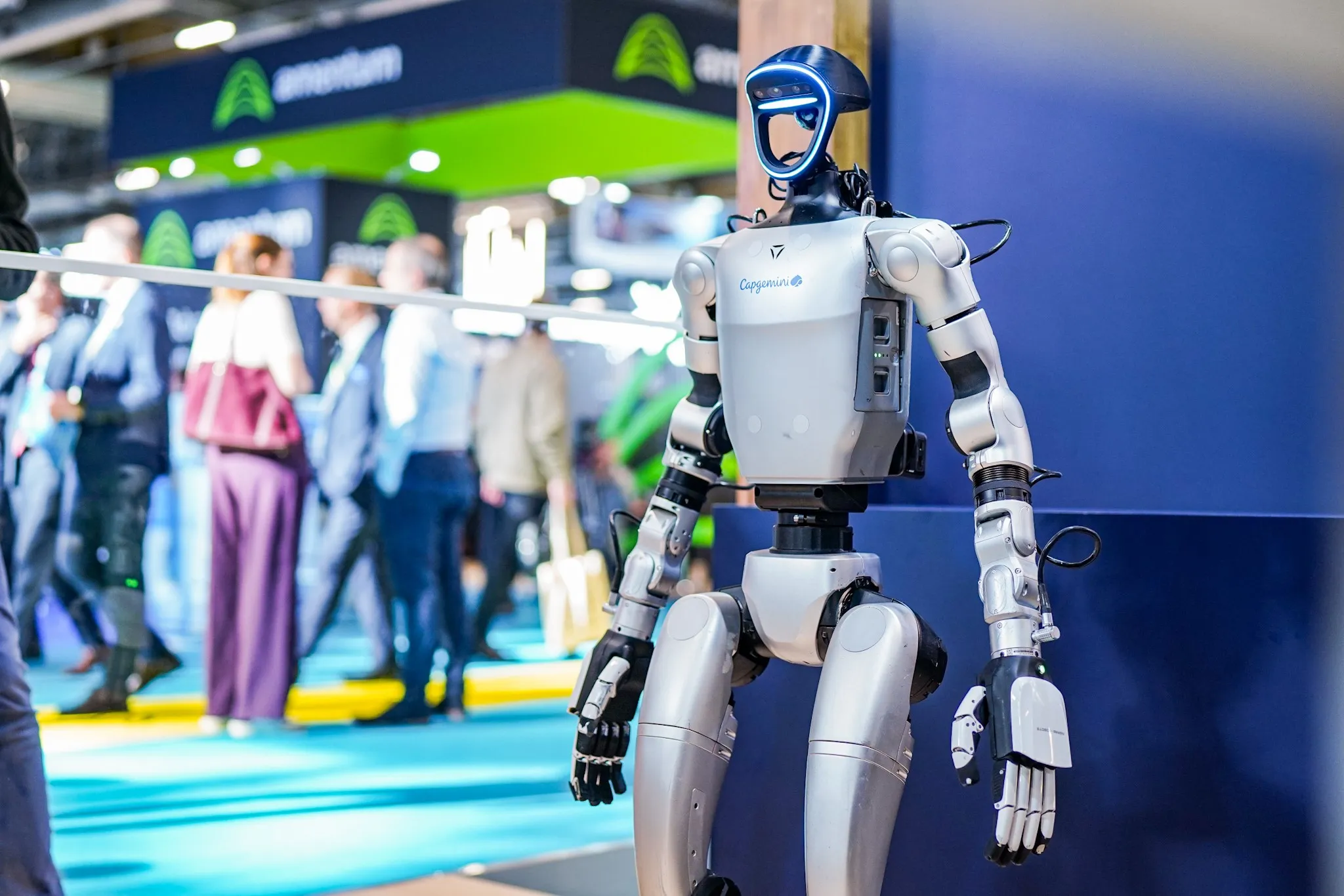

Introduction: A New Face in Customer Service
Across shopping malls, airports, hotels, and restaurants, service workers form the backbone of the modern experience economy. These employees greet customers, answer questions, provide directions, manage transactions, and ensure that services run smoothly.
In recent years, however, the service sector has been facing significant challenges. Labor shortages, rising operating costs, and growing customer expectations are pushing businesses to search for new solutions.
Automation has already transformed industries such as manufacturing and logistics, but the service sector has remained more resistant to change. Customer-facing environments require machines that can interact naturally with people, understand human behavior, and navigate complex public spaces.
Today, advances in artificial intelligence and robotics are making a new type of service automation possible: humanoid robots.
Companies such as SoftBank Robotics, Tesla, and Figure AI are exploring how robots with human-like bodies and communication abilities can assist customers and staff in public environments.
From welcoming guests in hotels to guiding travelers in airports, humanoid robots are beginning to appear in real-world service settings.
While these machines are still in the early stages of deployment, they represent a glimpse into the future of customer service.
Why the Service Industry Is Exploring Humanoid Robots
The service industry has unique characteristics that make humanoid robots particularly attractive.
Unlike industrial environments, service spaces are designed for people and depend heavily on human interaction.
Labor Shortages in Service Jobs
Many service industries struggle with high employee turnover and difficulty recruiting workers.
Jobs in hospitality, retail, and food service often involve long hours, physically demanding tasks, and relatively low wages.
Following the global disruptions of the early 2020s, many businesses reported persistent staffing shortages.
Restaurants reduced hours, hotels operated with smaller teams, and airports struggled to manage passenger flows.
Humanoid robots could help alleviate some of these pressures by performing routine tasks such as greeting customers, providing information, or assisting with navigation.
Rising Customer Expectations
Modern consumers expect fast, efficient, and personalized service.
Customers want immediate answers to questions, clear directions in unfamiliar environments, and seamless experiences when interacting with businesses.
Artificial intelligence systems integrated into humanoid robots could help meet these expectations by providing instant information and assistance.
Key Applications in Retail
Retail environments offer several potential use cases for humanoid robots.
Customer Assistance
One of the most common tasks in retail stores is helping customers find products.
Humanoid robots equipped with cameras and AI systems could identify shoppers who appear to need assistance and offer help.
For example, a robot could:
- guide customers to specific product aisles
- answer questions about store inventory
- recommend products based on preferences
Such interactions could enhance the shopping experience while freeing human staff to focus on more complex customer needs.
In-Store Navigation
Large retail environments such as department stores and shopping malls can be difficult for customers to navigate.
Humanoid robots can function as interactive guides, helping visitors locate stores, restrooms, exits, or service desks.
Because they can move through the space, these robots can physically lead customers to their destinations rather than simply pointing them in the right direction.
Promotional Engagement
Retail businesses constantly search for creative ways to attract attention and engage customers.
Humanoid robots can act as interactive promotional tools by:
- demonstrating products
- presenting promotional offers
- interacting with children and families
Their novelty alone can draw attention and encourage customer engagement.
Hospitality and Hotel Applications
The hospitality industry has also been experimenting with service robots.
Hotels operate around the clock and must manage a wide range of guest requests.
Humanoid robots could assist in several areas.
Reception and Check-In Assistance
Hotel reception desks are often busy, particularly during peak travel seasons.
Humanoid robots could assist by greeting guests, confirming reservations, and directing visitors to the appropriate service desks.
While full check-in processes may still involve human staff, robots could help reduce waiting times and improve efficiency.
Concierge Services
Concierge services involve answering guest questions about local attractions, restaurants, transportation, and events.
Humanoid robots equipped with AI knowledge systems could provide instant recommendations and directions.
For example, a robot concierge could:
- suggest nearby restaurants
- provide transportation information
- guide guests through hotel facilities
Room Service Support
Robots may also assist with delivering items to guest rooms, such as towels, toiletries, or small food orders.
Although wheeled robots are already used for this purpose in some hotels, humanoid robots could handle additional tasks requiring dexterity.
Airports and Transportation Hubs
Airports are among the most complex public environments in the world.
Millions of passengers pass through these facilities every day, often navigating unfamiliar spaces under time pressure.
Humanoid robots could provide valuable assistance in these settings.
Passenger Guidance
Travelers frequently need help locating:
- departure gates
- baggage claim areas
- security checkpoints
- airline service counters
Robots equipped with navigation systems can guide passengers through these environments efficiently.
Multilingual Communication
International airports serve travelers from around the world.
Humanoid robots powered by AI language models can communicate in multiple languages, helping travelers who may not speak the local language.
This capability could significantly improve accessibility and customer satisfaction.
Social Interaction and Human Perception
One of the reasons humanoid robots are attractive for service roles is their ability to interact with humans in familiar ways.
The Psychology of Human-Like Machines
Humans are naturally inclined to respond to faces, voices, and body language.
A robot with a human-like appearance and gestures can communicate information more intuitively than a machine with an abstract form.
For example, a humanoid robot can:
- point in a direction
- gesture while speaking
- maintain eye contact
These behaviors make interactions feel more natural.
Balancing Familiarity and Comfort
Designers must carefully balance human-like features with user comfort.
Robots that appear too human can trigger discomfort known as the “uncanny valley” effect.
Companies such as SoftBank Robotics addressed this issue by designing robots like Pepper with friendly, simplified appearances.
Artificial Intelligence Behind Service Robots
Service robots rely heavily on advanced AI technologies.
These include:
Natural Language Processing
Robots must understand spoken questions and respond appropriately.
Modern language models enable machines to process complex conversational requests.
Computer Vision
Vision systems allow robots to detect people, recognize faces, and interpret gestures.
This capability enables robots to identify when someone might need assistance.
Autonomous Navigation
Service robots must move safely through crowded environments.
Autonomous navigation systems allow them to avoid obstacles and adapt to changing surroundings.
Challenges Facing Service Robots
Despite exciting possibilities, several obstacles remain before humanoid robots become common in service industries.
Cost and Deployment
Advanced humanoid robots remain expensive.
Businesses must carefully evaluate whether the benefits justify the investment.
Maintenance and Reliability
Public-facing robots must operate reliably for long periods.
Technical failures could disrupt services and negatively affect customer perceptions.
Human Acceptance
Customer reactions to robots vary widely.
Some people find them fascinating and engaging, while others may feel uncomfortable interacting with machines.
Designing robots that provide helpful service without causing unease will be an important challenge.
The Future of Human–Robot Service Teams
Rather than replacing human workers entirely, humanoid robots are more likely to complement existing staff.
In many cases, robots may handle routine tasks while human employees focus on more complex interactions.
This collaborative approach could improve service quality while maintaining the human touch that many customers value.
For example:
- robots provide directions and basic information
- staff handle personalized service requests
- AI systems analyze customer flow and optimize operations
Together, these technologies could create a new model of customer service.
Conclusion
The service industry is built on human interaction, making it one of the most challenging sectors for automation.
Yet advances in artificial intelligence and robotics are beginning to make humanoid service robots a practical possibility.
From greeting customers in retail stores to guiding travelers through airports, these machines could transform how businesses interact with the public.
While widespread adoption may still be years away, early deployments suggest that humanoid robots could soon become familiar faces in public spaces.
In the future, the next person who greets you at a hotel or helps you find a store in a shopping mall might not be a human employee.
Instead, it might be a robot designed to deliver efficient, friendly service in the rapidly evolving experience economy.
Discussion about this post