








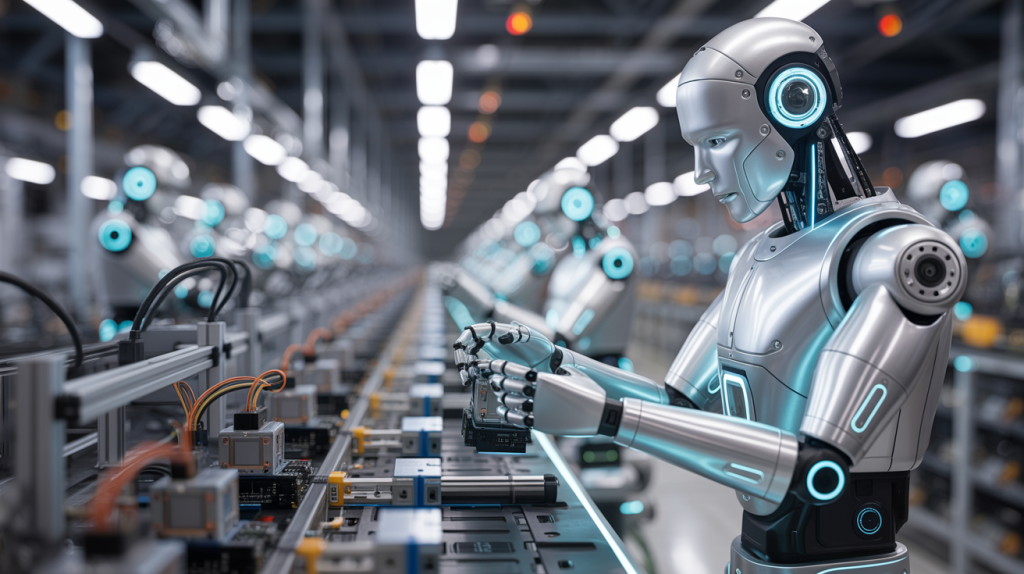

Introduction: Entering the World’s Most Dangerous Workplaces
Throughout human history, exploration and industry have pushed people into environments that are dangerous, unpredictable, and sometimes deadly. From nuclear power plants and disaster zones to deep-sea operations and space missions, many critical tasks take place in locations where human safety is constantly at risk.
Technological innovation has long attempted to reduce these risks. Protective equipment, remote-operated machines, and automated systems have helped humans perform dangerous work more safely.
Yet in many extreme environments, machines still lack the adaptability and mobility required to fully replace human workers.
Traditional robots are often designed for specific tasks in controlled environments. When confronted with complex terrain, unexpected obstacles, or changing conditions, they can struggle to perform effectively.
This is where humanoid robots may offer a new solution.
Robots designed with human-like bodies, capable of walking, climbing, manipulating tools, and navigating environments built for people, may be able to operate in places where human presence is dangerous or impossible.
In recent years, robotics companies and research institutions have increasingly focused on developing humanoid robots for hazardous environments. Organizations such as NASA, companies like Boston Dynamics, and emerging startups including Figure AI are exploring how humanoid robots could assist with disaster response, industrial inspections, and even future space exploration.
If these efforts succeed, humanoid robots may become the first responders, inspectors, and explorers of environments where humans should not go.
Why Extreme Environments Require New Types of Robots
Many dangerous environments share common characteristics that make them difficult for conventional machines.
These conditions include:
- unstable terrain
- damaged infrastructure
- confined spaces
- unpredictable obstacles
- hazardous materials
Traditional industrial robots are not designed to operate under such circumstances.
They often require stable platforms, predictable surroundings, and carefully structured workflows.
Humanoid robots, by contrast, are designed to move through spaces originally built for humans.
They can potentially:
- walk across uneven terrain
- climb stairs and ladders
- open doors and operate tools
- interact with equipment designed for human workers
This versatility makes humanoid robots particularly valuable in environments where conditions are constantly changing.
Disaster Response and Search-and-Rescue Operations
One of the most compelling applications for humanoid robots is disaster response.
Natural disasters such as earthquakes, hurricanes, and industrial accidents often create chaotic environments where buildings collapse, infrastructure fails, and hazardous conditions emerge.
Human rescue teams must navigate dangerous areas to locate survivors and assess damage.
Robots could play a critical role in these operations.
Entering Unsafe Structures
After earthquakes or explosions, buildings may become structurally unstable.
Rescue workers face significant risk when entering damaged structures.
Humanoid robots equipped with cameras and sensors could enter these environments first to:
- assess structural damage
- search for survivors
- identify hazards such as gas leaks or fires
Because they can navigate stairs, doors, and narrow corridors, humanoid robots may be able to explore buildings in ways that wheeled robots cannot.
Providing Situational Awareness
Rescue teams rely heavily on information to plan operations.
Robots equipped with environmental sensors can provide real-time data about:
- temperature
- air quality
- structural stability
- radiation levels
This information allows emergency responders to make better decisions while reducing personal risk.
The DARPA Robotics Challenge
One of the most influential efforts to develop disaster-response robots was the robotics competition organized by the Defense Advanced Research Projects Agency.
The event challenged teams to design robots capable of performing tasks required in disaster scenarios.
These tasks included:
- driving vehicles
- climbing ladders
- opening doors
- operating power tools
The competition accelerated research in humanoid robotics and demonstrated the potential for robots to assist in emergency situations.
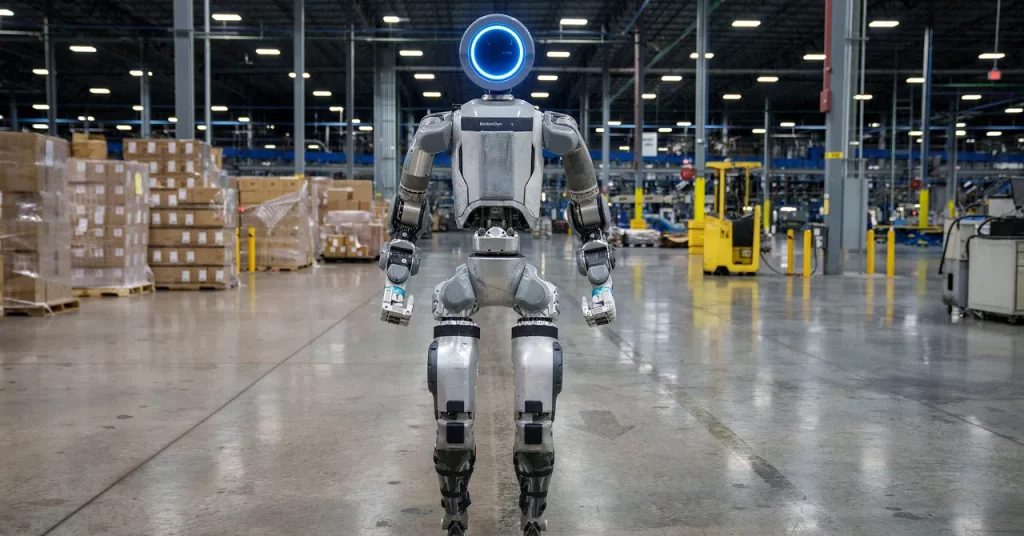
Industrial Inspection in Hazardous Facilities
Many industrial environments pose serious risks to workers.
Facilities such as oil refineries, chemical plants, and nuclear power stations require constant monitoring and maintenance.
In some cases, these environments may contain hazardous substances or dangerous conditions.
Humanoid robots could assist by performing routine inspections.
Nuclear Power Plants
Nuclear facilities require careful monitoring to detect leaks, equipment failures, or radiation hazards.
Following the nuclear disaster in Fukushima, Japan, it became clear that sending humans into highly contaminated environments could be extremely dangerous.
Robots capable of entering such areas could perform critical tasks including:
- measuring radiation levels
- inspecting equipment
- identifying structural damage
Humanoid robots may have an advantage in these environments because they can operate tools and navigate infrastructure designed for human workers.
Oil and Gas Facilities
Oil rigs and refineries contain complex machinery and pipelines that require regular inspection.
Humanoid robots could help detect problems by:
- reading instrument panels
- inspecting valves and pipes
- identifying leaks
Early detection of issues could prevent accidents and improve operational safety.
Space Exploration and Extraterrestrial Operations
Another frontier where humanoid robots may prove valuable is space exploration.
Operating in space environments presents enormous challenges for human astronauts.
Exposure to radiation, extreme temperatures, and microgravity creates serious risks.
Robots can perform many tasks in these environments without endangering human life.
Robotic Astronaut Assistants
Researchers at NASA have explored humanoid robots designed to assist astronauts.
These machines could perform maintenance tasks inside spacecraft or space stations.
Humanoid robots may also be able to operate tools and equipment already designed for astronauts.
This compatibility makes them particularly useful for supporting human crews.
Planetary Exploration
Future missions to the Moon or Mars may rely heavily on robotic systems.
Humanoid robots could help prepare infrastructure for human arrival by performing tasks such as:
- assembling equipment
- constructing habitats
- conducting geological surveys
Because these robots can manipulate tools and navigate human-oriented equipment, they could function as robotic pioneers in extraterrestrial environments.
Deep-Sea Exploration
The deep ocean remains one of the least explored regions on Earth.
Extreme pressure, darkness, and cold temperatures make deep-sea exploration difficult and dangerous.
Most current underwater robots are specialized vehicles designed for specific tasks.
Humanoid robots adapted for underwater operation could potentially interact with complex equipment in subsea environments.
For example, such robots might assist with:
- repairing underwater infrastructure
- inspecting pipelines
- maintaining scientific instruments
Although underwater humanoid robotics remains experimental, it represents an exciting area of research.
Military and Security Applications
Another area where humanoid robots may play a role is security and defense.
Military operations often require personnel to operate in dangerous environments such as conflict zones or contaminated areas.
Robots capable of performing reconnaissance or handling hazardous materials could reduce risks to human soldiers.
Potential tasks include:
- bomb disposal
- reconnaissance in hazardous areas
- handling dangerous equipment
However, the use of humanoid robots in military contexts raises significant ethical questions, particularly regarding autonomous decision-making.
Technological Challenges
Despite their potential, humanoid robots still face major technical challenges before they can operate reliably in extreme environments.
Mobility and Stability
Walking on uneven terrain is extremely difficult for robots.
Humanoid robots must maintain balance while carrying equipment and navigating obstacles.
Advances in control algorithms and mechanical design are helping improve stability.
Power and Energy
Operating in remote environments requires reliable energy sources.
Battery technology remains a limiting factor for many robots.
Future systems may require improved batteries or alternative power solutions.
Durability
Extreme environments often involve harsh conditions such as heat, dust, radiation, or pressure.
Robots must be designed to withstand these conditions without failure.
Developing durable materials and protective systems will be essential.
Ethical and Strategic Considerations
Deploying robots in dangerous environments raises several important ethical and policy questions.
Decision-Making Authority
Robots assisting in disaster response or security operations must operate under clear human supervision.
Ensuring that humans retain control over critical decisions is essential.
International Cooperation
In global emergencies such as natural disasters, robotics technology could play an important role in international rescue efforts.
Cooperation between countries may accelerate the development of life-saving technologies.
Public Perception
The idea of humanoid robots operating in dangerous environments can inspire both optimism and concern.
Transparent communication about their capabilities and limitations will help build public trust.
The Future of Robotic Exploration
As robotics technology continues to advance, humanoid machines may become increasingly capable of operating in environments where human presence is risky or impossible.
Future generations of robots could combine:
- advanced mobility
- powerful AI systems
- sophisticated sensors
These capabilities may allow robots to explore disaster zones, inspect hazardous facilities, and even assist with missions beyond Earth.
In this sense, humanoid robots could become an extension of human capability—tools that allow humanity to explore, protect, and maintain environments that would otherwise remain inaccessible.
Conclusion
Throughout history, technological innovation has expanded the range of environments in which humans can operate.
From deep-sea submarines to spacecraft, machines have helped humanity reach places once considered impossible.
Humanoid robots represent the next step in this evolution.
By combining human-like mobility with advanced artificial intelligence, these machines may soon be able to perform critical tasks in the world’s most dangerous environments.
Whether searching for survivors after disasters, inspecting hazardous industrial facilities, or preparing for future space missions, humanoid robots could become indispensable partners in exploration and safety.
In the coming decades, when humanity faces challenges in places too dangerous for human presence, the first responders may not be people.
They may be robots designed to go where humans should not.
Discussion about this post