









Introduction: Meeting a Robot Coworker
It’s early morning in a logistics facility on the outskirts of a busy industrial district. Conveyor belts hum steadily as packages move through the building, forklifts glide across the warehouse floor, and workers prepare for another day of sorting, packing, and shipping thousands of orders.
But today, there is something unusual about the workforce.
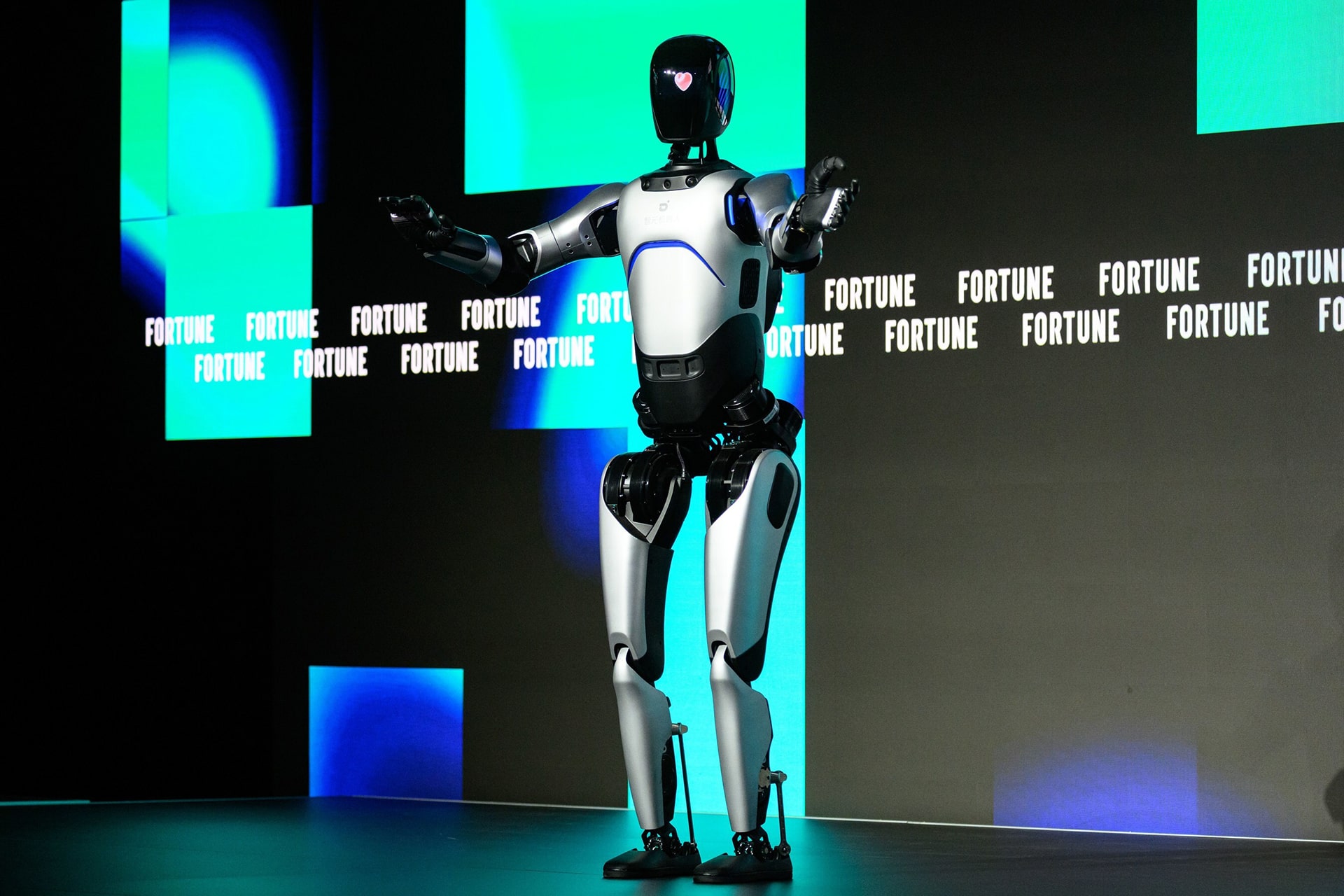
Standing near the conveyor line is a robot—tall, bipedal, and unmistakably humanoid in its movement. Instead of wheels or tracks, it walks on two legs. Instead of a mechanical claw fixed to a stationary arm, it uses articulated limbs to pick up and carry packages.
This robot is Digit, developed by Agility Robotics.
Unlike many research robots that exist primarily in laboratories, Digit has been designed specifically for logistics environments like this one.
The goal is simple but ambitious: create a robot capable of performing the repetitive physical tasks that dominate warehouse operations.
To understand how close this vision is to reality, we spent a full day observing Digit in action inside a warehouse environment.
The result offers a fascinating glimpse into what the future of human-robot collaboration might actually look like.
8:00 AM — First Impressions
When Digit powers on, the first thing you notice is its posture.
The robot stands upright, balanced on two legs, with its torso leaning slightly forward. Its arms hang naturally at its sides, ready to grasp objects. Instead of a human-like head, Digit has a sensor module that houses cameras and navigation equipment.
Digit’s appearance is clearly robotic, but its movement feels surprisingly organic.
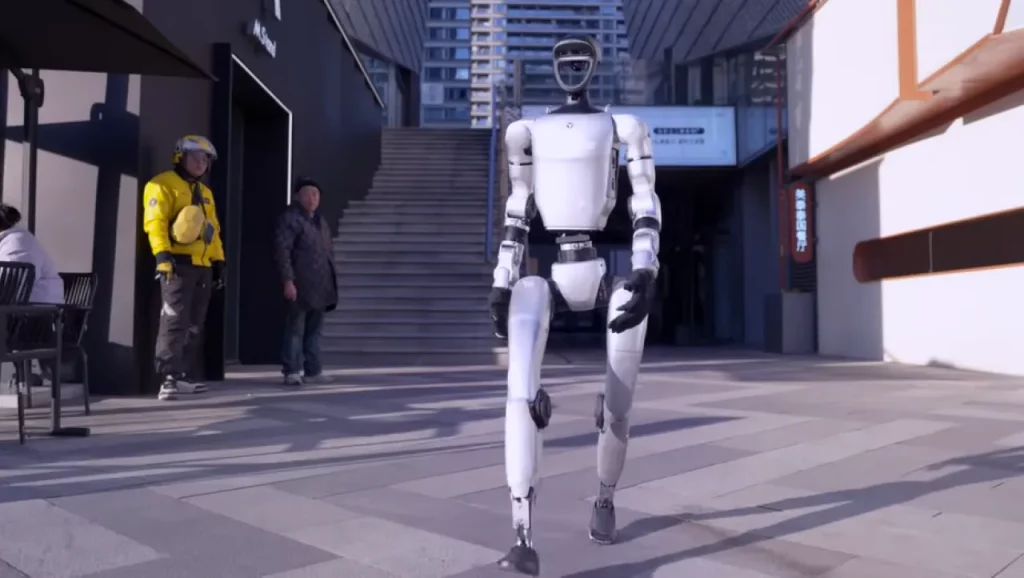
When it begins walking across the warehouse floor, the motion resembles a careful human stride—measured, balanced, and deliberate.
This design is intentional.
Most warehouse robots rely on wheels and follow predefined routes across smooth floors. But warehouses are rarely perfectly predictable environments.
Boxes fall. Obstacles appear. Workers move through aisles.
Digit’s legged mobility allows it to navigate these dynamic spaces more flexibly.
9:30 AM — Package Handling Begins
The first task of the morning is simple but physically demanding: moving packages from a conveyor line to storage carts.
This kind of repetitive lifting is common in warehouses. Human workers often perform thousands of similar motions during a single shift.
Digit approaches the conveyor belt and begins its work.
Using its vision system, the robot identifies a package arriving on the belt. It adjusts its stance slightly, reaches forward with both arms, and grasps the box.
The motion is smooth, though slightly slower than a human worker.
Once the box is secure, Digit turns, walks a few steps, and places it onto a cart.
Then it repeats the process.
Over the next hour, Digit performs this cycle dozens of times.
The process is not yet faster than a skilled human worker, but the robot operates with remarkable consistency.
It does not tire, lose focus, or vary its movements.
11:00 AM — Navigating the Warehouse
Mid-morning brings a more complex challenge.
Warehouse environments are rarely static. Workers move pallets, carts shift positions, and new obstacles appear throughout the day.
Digit must navigate through this constantly changing environment.
Its navigation system relies on cameras and sensors that continuously map the surrounding space.
As the robot walks through the warehouse, it detects obstacles and adjusts its path.
At one point, a worker pushes a cart directly across Digit’s route.
The robot pauses, recalculates its path, and walks around the obstacle.
This ability to adapt is one of the major advantages of humanoid robots compared to traditional automated systems.
Instead of relying entirely on fixed infrastructure, Digit can operate in environments designed primarily for human workers.
12:30 PM — Lunch Break… for Humans
While human workers take a lunch break, Digit continues operating.
One of the most frequently cited advantages of robotic workers is their ability to operate continuously.
Of course, robots still require power and maintenance. Digit’s battery must eventually be recharged, and technicians periodically inspect its systems.
But unlike human workers, robots do not require rest in the same way.
For industries that operate 24-hour logistics networks, this capability could significantly increase productivity.
2:00 PM — Handling Unexpected Situations
In the afternoon, a small test highlights both the promise and the limitations of current humanoid robotics.
Engineers introduce a package that differs significantly from the boxes Digit handled earlier.
The object is irregularly shaped and slightly heavier.
Digit approaches cautiously, scanning the object with its cameras.
It attempts to grasp the item, adjusts its grip, and successfully lifts it—though the process takes longer than usual.
This moment reveals an important truth about robotics today.
Robots are improving rapidly, but handling the unpredictable variety of real-world objects remains a major challenge.
Human workers excel at improvisation. Robots are still learning.
3:30 PM — Working With Humans
One of the most interesting aspects of the day is watching how human workers interact with the robot.
Initially, there is curiosity.
Some workers pause to watch Digit move through the warehouse. Others approach cautiously, observing its actions.
But as the day progresses, the robot becomes just another part of the workflow.
Workers move around it naturally, occasionally adjusting their paths as they would around any colleague.
The robot, meanwhile, continues performing its assigned tasks.
This normalization is significant.
For robots to succeed in real workplaces, they must integrate smoothly into existing human environments.
5:00 PM — End of the Shift
By the end of the day, Digit has completed hundreds of package transfers.
While it is not yet replacing human workers, it demonstrates a capability that was once considered extremely difficult: performing practical physical work in a real industrial setting.
The robot’s movements are not perfect. It works more slowly than a skilled human and occasionally pauses to process new information.
Yet the progress is undeniable.
A decade ago, humanoid robots struggled simply to walk across a room.
Today, they are beginning to perform real tasks inside real workplaces.
Technical Overview
Although our focus today has been on observing Digit in action, it is worth examining the technology that makes these capabilities possible.
Mobility System
Digit’s bipedal locomotion allows it to navigate environments designed for people.
This capability is particularly useful in warehouses that include stairs, ramps, or uneven terrain.
Perception and Vision
Digit uses a combination of cameras and AI algorithms to detect objects and understand its environment.
This system allows it to locate packages, identify obstacles, and adjust its movements accordingly.
Manipulation
The robot’s arms and grippers are designed to handle common logistics objects such as boxes and containers.
Future versions may incorporate more advanced dexterity.
Strengths
Digit demonstrates several important advantages in warehouse environments.
First, its legged mobility allows it to operate in spaces that are difficult for wheeled robots.
Second, its ability to adapt to changing environments makes it suitable for dynamic workplaces.
Third, the robot’s consistency allows it to perform repetitive tasks reliably.
Limitations
Despite its impressive capabilities, Digit also reveals the current limitations of humanoid robotics.
Handling irregular objects remains difficult.
The robot’s speed is still slower than experienced human workers.
Battery life and operational endurance also remain important considerations.
These challenges will need to be addressed before humanoid robots become widespread in logistics operations.
The Future of Warehouse Robotics
Digit represents an important step toward a new kind of automation.
Rather than replacing humans entirely, humanoid robots may work alongside them, handling repetitive physical tasks while people focus on supervision and coordination.
In this vision, the warehouse workforce of the future may include both humans and robots working together as a team.
Final Verdict
Spending a day with Digit reveals both the progress and the remaining challenges of humanoid robotics.
The robot is not yet a fully autonomous warehouse worker, but it demonstrates that the concept is no longer science fiction.
With continued advances in artificial intelligence, hardware engineering, and manufacturing, robots like Digit may soon become common sights in logistics facilities around the world.
For now, Digit represents something rare in robotics: a machine that is beginning to bridge the gap between experimental technology and practical industry use.
And if the trajectory continues, the idea of a robot coworker may soon become an ordinary part of the modern workplace.
Discussion about this post