









The Simple Idea That Turns Out to Be Incredibly Difficult
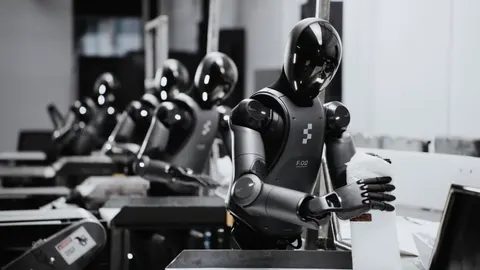
At first glance, building a humanoid robot might seem like a logical step in the evolution of robotics.
Humans already know how to build robots that weld cars, assemble electronics, and transport packages in warehouses. If robots can perform these tasks so effectively, why not simply build machines that look and move like humans?
The answer lies in the extraordinary complexity of the human body.
Humans are the result of millions of years of biological evolution. Our bodies are capable of extraordinary feats of coordination, balance, perception, and manipulation.
Replicating even a small fraction of these capabilities in a machine is one of the most difficult engineering challenges ever attempted.
This is why only a handful of companies—including Tesla, Boston Dynamics, Figure AI, and Agility Robotics—are currently able to develop advanced humanoid robots.
To understand why humanoid robots are so difficult to build, we need to examine several core challenges that engineers must overcome.
Challenge One: Walking on Two Legs
The Problem of Balance
For humans, walking is so natural that we rarely think about it. A person can walk across uneven terrain, climb stairs, and recover from slips almost instantly.
But for robots, walking is one of the hardest problems in engineering.
Most robots use wheels because wheels provide excellent stability and energy efficiency. A wheeled robot does not need to constantly balance itself.
Humanoid robots, however, must balance their entire body on two narrow contact points with the ground.
This means that the robot must constantly calculate how to maintain stability while moving.
Every step requires the robot to adjust its body position in real time.
Even small disturbances—such as a bump or uneven surface—can cause the robot to fall.
Developing control systems capable of maintaining balance under these conditions requires extremely sophisticated algorithms.
This is one reason why robots such as Atlas have attracted so much attention. Their ability to run, jump, and recover from disturbances demonstrates remarkable progress in robotic balance systems.
Challenge Two: The Human Hand
Nature’s Most Advanced Tool
Another major challenge in humanoid robotics is the human hand.
Human hands are incredibly versatile. They can perform delicate tasks such as threading a needle or typing on a keyboard, as well as powerful actions like lifting heavy objects.
This versatility comes from the hand’s complex structure.
A human hand contains:
- 27 bones
- dozens of muscles
- highly sensitive nerve endings
Together, these components allow humans to perform an enormous range of tasks.
Replicating this capability in robots is extremely difficult.
Most robotic hands rely on electric motors and mechanical joints. While these systems can mimic basic movements, they lack the sensitivity and adaptability of biological hands.
Even advanced robotic hands often struggle with simple tasks such as picking up small or irregularly shaped objects.
Developing robotic hands that approach human dexterity remains one of the most important challenges in humanoid robotics.
Challenge Three: Perception and Understanding
Teaching Robots to See
Humans rely heavily on vision to understand their environment.
We can instantly recognize objects, estimate distances, and interpret complex scenes.
For robots, this process is far more difficult.
Robots rely on sensors such as cameras and depth sensors to collect visual data. However, interpreting this data requires sophisticated artificial intelligence systems.
Recent advances in AI—driven by companies like OpenAI and Google DeepMind—have dramatically improved machine vision capabilities.
Modern AI models can recognize objects, understand scenes, and even interpret human gestures.
However, robots must combine this perception with physical actions.
A robot must not only recognize a cup on a table—it must also calculate how to grasp it without knocking it over.
This combination of perception and action is known as embodied intelligence, and it represents one of the most challenging areas of robotics research.
Challenge Four: Energy Consumption
The Battery Problem
Another major obstacle facing humanoid robots is energy.
Human bodies are remarkably energy efficient.
A person can walk for hours using relatively little energy.
Humanoid robots, however, consume large amounts of electricity when performing similar tasks.
Motors must constantly adjust to maintain balance and move joints.
This continuous activity drains batteries quickly.
As a result, many humanoid robots can operate for only a few hours before requiring recharging or battery replacement.
Improving battery technology is therefore essential for the future of humanoid robotics.
Advances in energy storage could dramatically extend robot operating times and make them more practical for real-world applications.
Challenge Five: Control Systems
Coordinating the Entire Body
Human movement involves extraordinary coordination.
When a person reaches for an object, dozens of muscles and joints move simultaneously.
The brain constantly adjusts these movements based on sensory feedback.
Robots must replicate this coordination using software.
Control systems must calculate how each joint should move in order to achieve the desired action.
These calculations must occur extremely quickly—often hundreds or thousands of times per second.
For dynamic movements such as running or jumping, the complexity increases even further.
This is why humanoid robots require powerful onboard computers capable of performing real-time calculations.
Challenge Six: Safety
Working Around Humans
Unlike industrial robots that operate in isolated environments, humanoid robots are often designed to work alongside humans.
This introduces additional safety requirements.
Robots must be able to detect human presence and respond appropriately.
They must avoid sudden or unpredictable movements that could cause injuries.
Designing robots that are both powerful and safe requires careful engineering.
Sensors, control systems, and mechanical components must all work together to ensure safe interactions.
Why Companies Still Pursue Humanoid Robots
The Potential Advantages
Given these enormous challenges, one might wonder why companies continue to invest heavily in humanoid robotics.
The answer lies in the potential advantages of the humanoid form.
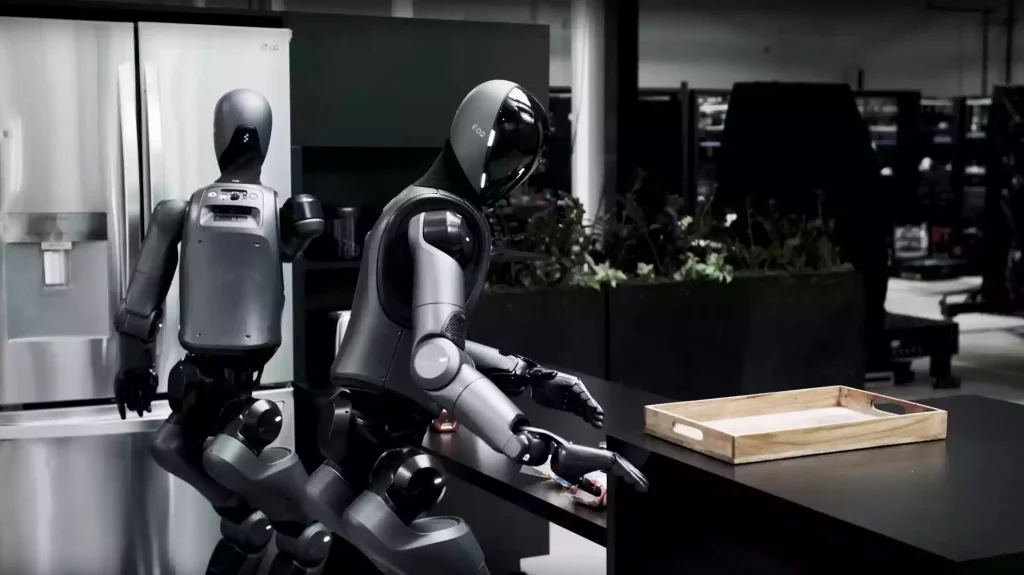
Humanoid robots are uniquely suited to environments designed for humans.
They can:
- climb stairs
- use human tools
- operate machinery built for people
- navigate complex spaces
This flexibility could allow humanoid robots to perform a wide variety of tasks without requiring major changes to existing infrastructure.
For industries facing labor shortages, this capability could be extremely valuable.
The Road Ahead
Gradual Progress
Although humanoid robots are improving rapidly, the technology is still evolving.
Many current robots are best suited for controlled environments such as warehouses or research facilities.
However, progress in several areas is accelerating development:
- artificial intelligence
- sensor technology
- electric motors
- battery systems
As these technologies continue to advance, humanoid robots will become increasingly capable.
Conclusion: The Hardest Machine Humans Have Ever Tried to Build
Building a humanoid robot requires solving some of the most difficult problems in engineering.
The machine must balance on two legs, manipulate objects with dexterity, perceive complex environments, and coordinate dozens of moving parts—all while operating safely around humans.
Each of these challenges is extraordinarily complex on its own.
Combining them into a single machine makes humanoid robotics one of the most ambitious technological endeavors in history.
Yet despite these challenges, progress continues.
Researchers and companies around the world are pushing the boundaries of what robots can do.
And while humanoid robots may not yet match human capabilities, every new breakthrough brings them one step closer to becoming a practical part of everyday life.