









Introduction: A Quiet Revolution in Machines
Robots are often associated with futuristic visions of intelligent machines walking among humans. In reality, robotics has been transforming industries for decades—often quietly and without much public attention.
Long before humanoid robots captured headlines, robotic machines were already working in factories, assembling cars, packaging consumer goods, and performing tasks too dangerous or repetitive for human workers.
Today, the robotics industry stands at the edge of a new transformation.
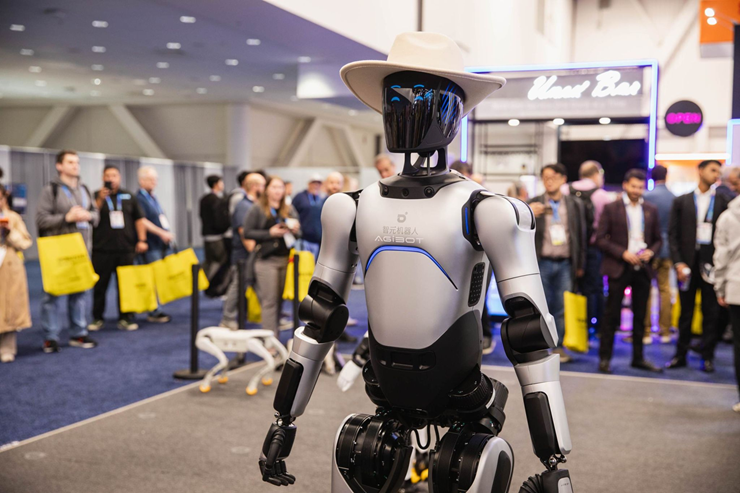
Companies such as Tesla, Figure AI, and Agility Robotics are attempting to build machines that resemble the human form and can operate in environments designed for people.
These machines—humanoid robots—represent the latest stage in a long technological evolution.
To understand why humanoid robots are emerging today, it is important to explore how robotics technology has evolved over the past seventy years.
Phase One: The Birth of Industrial Robotics (1950s–1970s)
The First Industrial Robot
The modern robotics industry began in the mid-twentieth century with the development of the first industrial robot.
One of the earliest commercially successful robotic systems was Unimate, introduced in the early 1960s. This robotic arm was designed to perform simple but repetitive tasks in manufacturing environments.
Automotive companies quickly adopted the technology.
Robotic arms could perform operations such as:
- welding
- material handling
- die casting
These tasks were dangerous and physically demanding for human workers. Robots offered a safer and more consistent alternative.
Although these early robots were primitive by modern standards, they demonstrated the potential of automation in industrial production.
Phase Two: The Expansion of Factory Automation (1980s–1990s)
Robots Become Manufacturing Tools
During the 1980s and 1990s, industrial robots became increasingly common in manufacturing facilities around the world.
Advances in computing allowed robots to perform more precise and complex movements.
Companies invested heavily in automation systems that could increase production speed and reduce labor costs.
Factories producing automobiles, electronics, and consumer goods began using robots extensively.
However, these robots had several limitations.
Most industrial robots were:
- stationary
- specialized for a single task
- confined to controlled environments
They operated inside safety cages to prevent accidents with human workers.
Despite their impressive capabilities, these machines were far from the versatile robots imagined in science fiction.
Phase Three: Mobile Robotics (2000s)
Robots Leave the Factory Floor
The next major shift in robotics occurred in the early 2000s with the development of mobile robots.
Instead of remaining fixed in place, these machines could move through their environments.
Mobile robots were used for tasks such as:
- warehouse logistics
- floor cleaning
- security patrols
One of the most successful examples of this new generation was the robotic vacuum cleaner developed by iRobot.
Meanwhile, companies such as Amazon introduced mobile robots into warehouse operations to transport shelves and inventory.
These systems dramatically increased efficiency in large logistics centers.
However, mobile robots still lacked the versatility required for many tasks.
They typically relied on wheels and required specialized infrastructure such as markers on the floor or carefully mapped environments.
Phase Four: Agile Robots (2010s)
Machines That Move Like Animals
In the 2010s, robotics research began to focus on mobility and dynamic movement.
Engineers sought to create robots capable of navigating complex environments.
One of the most influential companies during this period was Boston Dynamics.
The company developed robots capable of running, climbing, and balancing in ways that had rarely been seen before.
Machines such as the quadruped robot Spot demonstrated that robots could move through rough terrain and adapt to changing environments.
These robots used advanced control algorithms and sensors to maintain balance while moving.
Although they were not humanoid, they represented a major step toward more capable robotic systems.
Phase Five: The Emergence of Humanoid Robotics (2020s)
Robots Designed for Human Environments
In the 2020s, robotics development entered a new phase.
Instead of designing robots for specialized tasks, engineers began exploring machines capable of performing many different kinds of work.
Humanoid robots became a focus of research and investment.
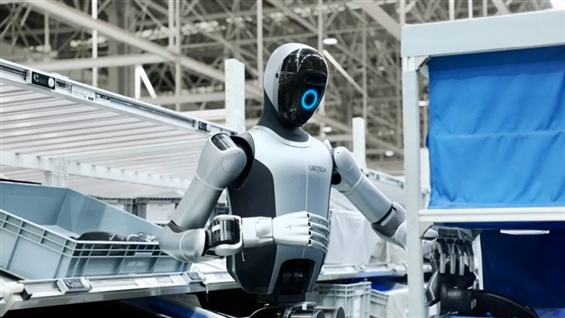
Companies such as Tesla began developing robots intended to work in factories and warehouses.
Meanwhile, startups like Figure AI and Agility Robotics introduced humanoid platforms designed to operate in industrial settings.
These robots combine several technological advances:
- artificial intelligence
- advanced sensors
- electric actuators
- improved battery systems
Together, these technologies allow robots to walk, manipulate objects, and interact with complex environments.
Why Humanoid Robots Are Appearing Now
Three Converging Forces
The rise of humanoid robotics is not the result of a single technological breakthrough.
Instead, it reflects the convergence of several important trends.
Artificial Intelligence
Modern AI systems can interpret visual data, understand language, and learn from experience.
These capabilities make robots far more adaptable than earlier generations of machines.
Hardware Improvements
Advances in motors, sensors, and materials have dramatically improved robot performance.
Machines are now lighter, stronger, and more energy efficient.
Economic Demand
Many industries face labor shortages and increasing demand for automation.
Humanoid robots could help fill these gaps by performing tasks currently done by human workers.
The Advantages of the Human Form
Why Engineers Build Humanoid Machines
Some experts question whether humanoid robots are the best design for automation.
After all, many tasks can be performed more efficiently by machines with specialized shapes.
However, the human form offers an important advantage: compatibility with existing environments.
Our world is designed for human bodies.
Buildings, tools, vehicles, and machines all assume the presence of human workers.
Humanoid robots can use these same tools and navigate the same spaces.
This compatibility may allow humanoid robots to perform tasks that would otherwise require expensive infrastructure changes.
Challenges That Remain
The Road Ahead
Despite recent progress, humanoid robotics still faces significant technical challenges.
Robots must improve in areas such as:
- dexterity
- energy efficiency
- reliability
- safety
These challenges will require continued advances in both hardware and artificial intelligence.
Developing robots capable of performing complex tasks in unpredictable environments remains an ongoing effort.
The Next Stage of Robotics
Toward General-Purpose Machines
The long-term goal of humanoid robotics is the creation of general-purpose machines.
Unlike traditional robots designed for a single task, these machines could perform many different kinds of work.
Such robots might assist in warehouses, factories, hospitals, and homes.
Achieving this goal will take years of research and development.
However, the progress made over the past decade suggests that the idea is no longer purely speculative.
Conclusion: A New Chapter in Robotics History
The evolution of robotics has followed a clear trajectory.
First came stationary industrial robots designed for repetitive tasks.
Then came mobile machines capable of navigating warehouses and buildings.
Now, the industry is exploring humanoid robots that can operate in environments designed for human workers.
Each stage of this evolution has expanded the capabilities of machines.
Humanoid robots represent the next step in this progression.
Whether they become as widespread as industrial robots remains to be seen.
But one thing is clear: robotics is entering a new chapter—one in which machines are becoming more adaptable, more intelligent, and increasingly capable of working alongside humans.
Discussion about this post