








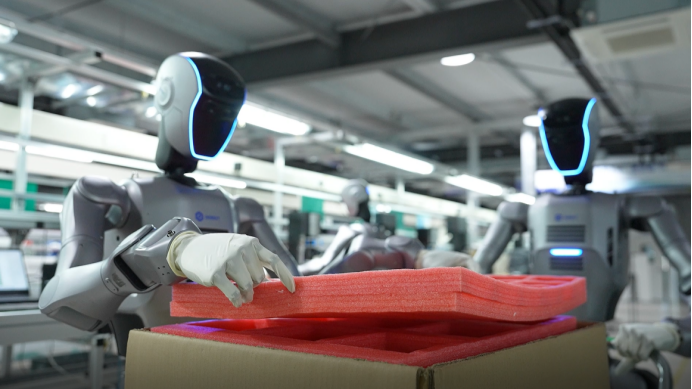

Introduction: The Next Industrial Transformation
Throughout history, technological innovation has repeatedly reshaped the structure of the global economy.
The steam engine powered the Industrial Revolution. Electricity enabled mass production. Computers created the digital economy.
Now a new technological shift may be approaching: the rise of intelligent robots capable of performing physical work.
Companies such as Tesla, Figure AI, and Agility Robotics are developing humanoid machines designed to operate in workplaces built for humans.
If these technologies succeed, they could transform industries ranging from logistics and manufacturing to healthcare and retail.
The impact may extend far beyond individual companies. Humanoid robots could alter labor markets, supply chains, and even the structure of economic growth.
Understanding these potential changes requires looking at how robots might be deployed in real-world scenarios.
Scenario One: The Robot-Powered Warehouse
Logistics Automation at Scale
One of the first industries likely to adopt humanoid robots is logistics.
Warehouses are ideal environments for robotic automation because tasks are repetitive and highly structured.
Today, companies such as Amazon already use mobile robots to transport shelves and inventory within their logistics centers.
However, many warehouse tasks still require human workers.
These include:
- picking items from shelves
- sorting packages
- loading and unloading containers
Humanoid robots could potentially perform these tasks.
Unlike specialized warehouse robots, humanoid machines can interact with equipment designed for human use, such as ladders, carts, and conveyor systems.
If humanoid robots become cost-effective, they could significantly increase the efficiency of global supply chains.
Scenario Two: Manufacturing Without Labor Shortages
Addressing Demographic Challenges
Many industrialized countries face declining birth rates and aging populations.
As a result, manufacturers in regions such as Europe, Japan, and parts of East Asia are struggling to find enough workers.
Humanoid robots could provide a solution to this challenge.
Instead of redesigning factories around specialized machines, companies could deploy robots capable of performing many of the same tasks as human workers.
These robots might handle jobs such as:
- equipment maintenance
- materials handling
- assembly line support
This flexibility could allow manufacturers to maintain production capacity even as human labor becomes scarce.
Scenario Three: Robots in Healthcare and Elder Care
Supporting Aging Societies
Healthcare systems around the world face growing pressure due to aging populations.
Hospitals and elder care facilities often struggle with staffing shortages.
Humanoid robots could assist in non-medical tasks such as:
- delivering supplies
- transporting equipment
- helping patients move safely
Although robots are unlikely to replace healthcare professionals, they could support caregivers by handling routine physical tasks.
This assistance could reduce workloads and allow medical staff to focus more on patient care.
Scenario Four: Construction and Infrastructure
Automation in Difficult Environments
Construction is one of the least automated industries in the global economy.
Many construction tasks remain labor-intensive and physically demanding.
Humanoid robots might eventually assist with activities such as:
- transporting materials
- performing repetitive assembly work
- operating tools
Because construction sites change frequently, robots must be able to navigate unpredictable environments.
Advances in AI perception systems may allow future robots to adapt to these conditions.
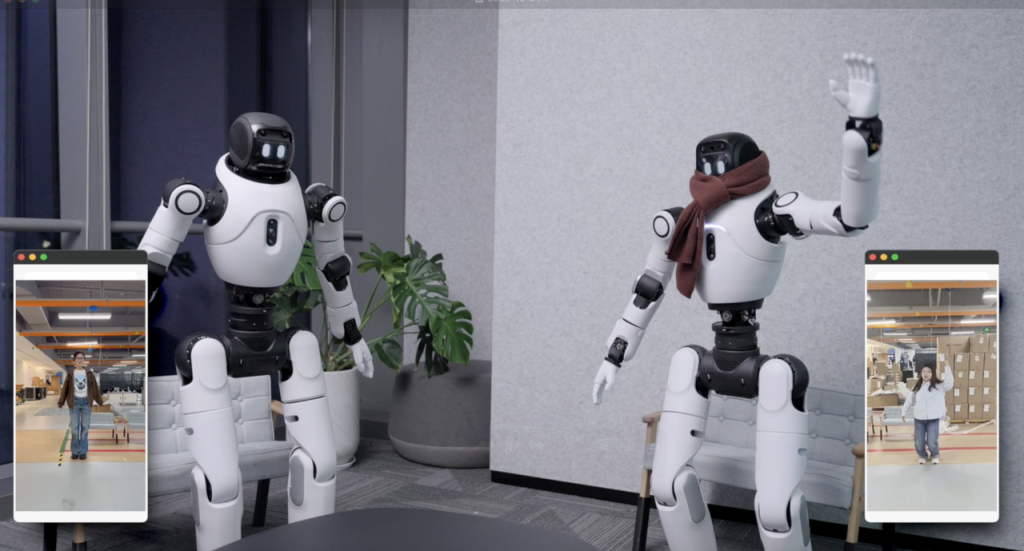
Economic Implications
Productivity and Growth
If humanoid robots become widely deployed, they could significantly increase economic productivity.
Machines capable of performing physical labor could operate continuously without fatigue.
This capability could allow companies to expand production without increasing labor costs.
Higher productivity typically leads to economic growth.
However, the transition could also create disruptions in labor markets.
The Employment Question
Will Robots Replace Human Workers?
One of the most common concerns about robotics is job displacement.
Historically, automation has eliminated some jobs while creating new ones.
For example, industrial automation reduced the need for factory workers performing repetitive tasks but increased demand for engineers, technicians, and software developers.
Humanoid robots may follow a similar pattern.
Some physically demanding jobs could become automated.
At the same time, new industries may emerge around robot development, maintenance, and management.
The overall effect on employment will likely depend on how quickly the technology is adopted.
The Cost Barrier
When Will Robots Become Affordable?
One of the biggest obstacles to widespread humanoid robot adoption is cost.
Developing advanced robots requires sophisticated hardware and complex software.
At present, humanoid robots remain expensive prototypes.
For robots to become economically viable, manufacturers must achieve large-scale production.
As with many technologies, costs are likely to decrease over time as manufacturing processes improve.
If robots eventually reach price levels comparable to industrial machinery, adoption could accelerate rapidly.
Ethical and Social Questions
Living and Working with Intelligent Machines
The widespread use of humanoid robots raises important ethical and social questions.
Societies will need to consider issues such as:
- workplace safety
- job displacement
- regulation of autonomous systems
Public acceptance will also play an important role.
People may feel more comfortable working alongside machines that resemble humans than purely mechanical systems.
However, others may view humanoid robots with skepticism or concern.
A Glimpse of the Future
The Robot Workforce
It is difficult to predict exactly how quickly humanoid robots will become common in workplaces.
Technological development rarely follows a straight path.
However, the direction of progress is becoming increasingly clear.
Robotics companies are investing heavily in machines capable of operating in human environments.
As artificial intelligence continues to improve, these robots will become more capable and more adaptable.
Conclusion: The Beginning of a Robotic Economy
Humanoid robots represent more than just a new type of machine.
They may signal the beginning of a new phase in the relationship between technology and labor.
If robots capable of performing physical work become widespread, they could reshape industries, supply chains, and labor markets around the world.
The transition will not happen overnight.
But as advances in artificial intelligence, robotics, and manufacturing converge, the idea of a robot workforce is gradually moving from science fiction toward economic reality.
The next decade may determine whether humanoid robots remain experimental prototypes—or become a defining technology of the twenty-first century.
Discussion about this post