








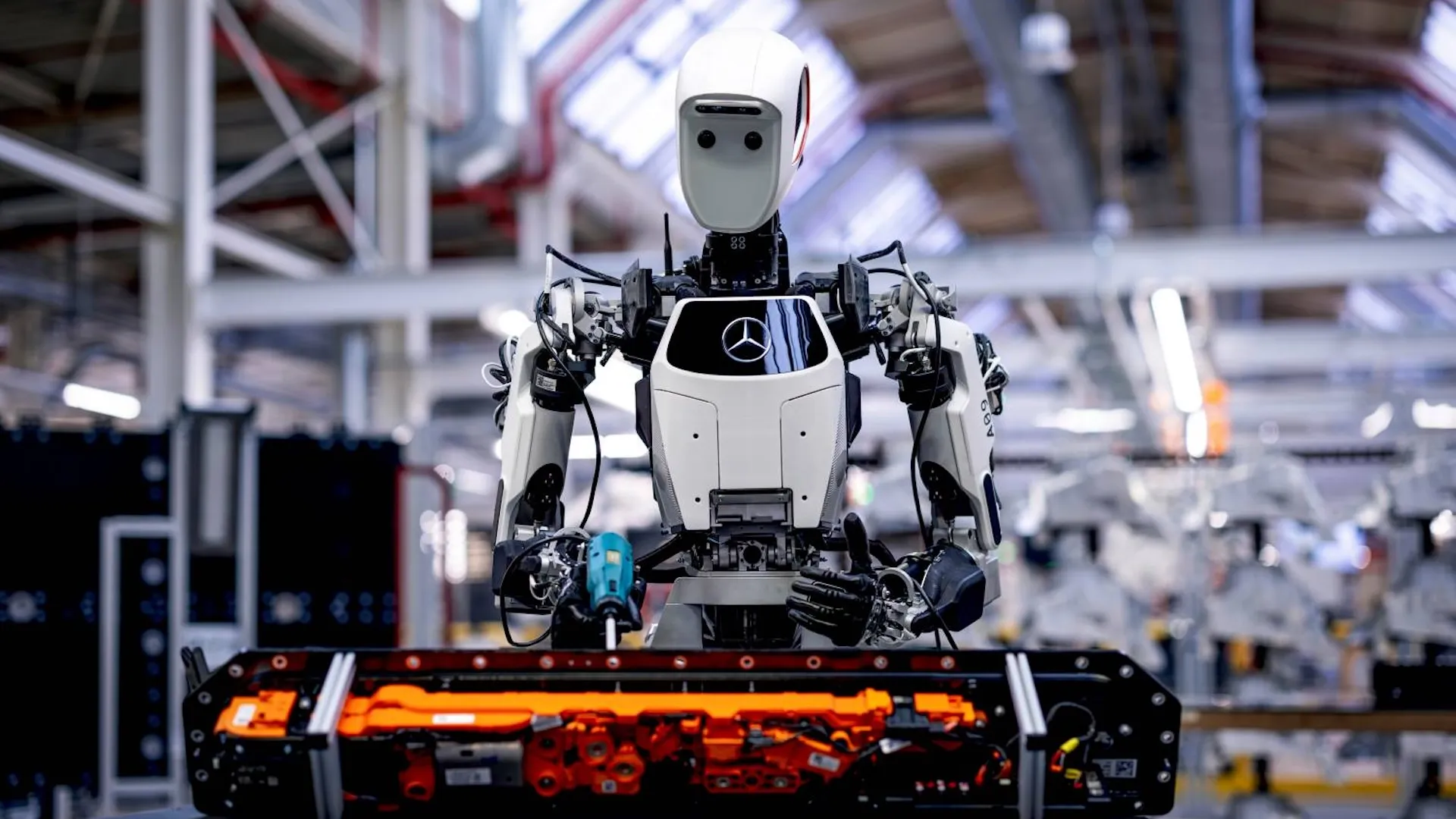

A New Phase of Robotics Has Begun
For decades, humanoid robots lived mostly in laboratories, science-fiction films, and research demonstrations. Engineers built them to showcase balance algorithms, dexterous hands, or impressive acrobatics, but rarely for practical work. Today, that reality is rapidly changing.
Across the world, technology companies are racing to build humanoid robots capable of performing real tasks in factories, warehouses, hospitals, and even homes. Major breakthroughs in artificial intelligence, sensor technology, and electric actuators are transforming humanoid robots from experimental prototypes into commercial machines.
Industry analysts now believe that humanoid robots could become one of the most important technological markets of the next decade—potentially reshaping labor markets, manufacturing systems, and the structure of daily life.
The shift from research curiosity to industrial product did not happen overnight. It is the result of several technological waves converging: advances in AI reasoning models, improvements in battery density, cheaper sensors, and new approaches to machine learning that allow robots to learn from human demonstrations.
Together, these forces are pushing robotics into a new era.
Why Humanoid Robots?
Many experts often ask a simple question: why design robots that look like humans at all?
After all, industrial robots already exist. They are powerful, precise, and widely used in manufacturing. However, most industrial robots are fixed machines designed for highly specialized tasks. They cannot easily adapt to environments designed for humans.
Humanoid robots, by contrast, are built to operate in human environments.
Factories, warehouses, offices, and homes are filled with stairs, doors, tools, shelves, and furniture designed for the human body. A robot with two legs, two arms, and dexterous hands can theoretically interact with these environments without requiring expensive redesign.
This compatibility with human infrastructure is a key reason why many robotics companies are investing heavily in humanoid platforms.
A humanoid robot can open doors, carry boxes, climb stairs, operate machinery, or pick up tools originally designed for human workers. This flexibility could allow companies to deploy a single robot platform across multiple industries.
The Companies Leading the Race
Several technology companies have emerged as major players in the humanoid robotics race.
Among the most prominent is Tesla, whose CEO Elon Musk has repeatedly claimed that humanoid robots may eventually become more significant than electric vehicles.
Tesla’s robot, known as Tesla Optimus, is designed to perform repetitive factory tasks. The company has demonstrated robots folding clothes, sorting objects, and walking autonomously through production environments.
Meanwhile, robotics company Boston Dynamics has long been famous for building agile robots capable of running, jumping, and performing backflips. Its humanoid robot Atlas has become one of the most recognizable robotics platforms in the world.
Although Atlas initially served as a research platform, recent updates suggest the company is pushing toward practical applications.
Another major competitor is Figure AI, a Silicon Valley startup focused entirely on humanoid robots. Its robot, Figure 01, has been demonstrated performing warehouse tasks and collaborating with human workers.
The company has also partnered with OpenAI to integrate advanced AI models into robotic systems, enabling natural language interaction and reasoning capabilities.
In China, companies such as UBTECH Robotics are also developing humanoid platforms for industrial and service applications.
The rapid pace of innovation suggests that the global humanoid robot race is only just beginning.
Artificial Intelligence: The Missing Piece
For many years, robotics progress was limited not by hardware but by intelligence.
Robots could move with precision, but they struggled to understand the world around them. Simple tasks like picking up an unfamiliar object or navigating a cluttered room remained extremely difficult.
Recent breakthroughs in artificial intelligence have changed that.
Large language models and multimodal AI systems can now interpret images, understand instructions, and reason about complex tasks. When integrated with robotic systems, these AI models allow robots to interpret natural language commands and plan actions accordingly.
For example, instead of programming a robot with detailed instructions, engineers can simply tell it: “Pick up the blue box and place it on the shelf.”
The robot’s AI system then analyzes the scene, identifies the correct object, plans a motion path, and executes the task.
This shift from rigid programming to adaptive intelligence is a critical milestone for robotics.
It means robots can now operate in dynamic environments that were previously impossible to automate.
Factories as the First Battlefield
Although humanoid robots attract public attention through futuristic demonstrations, their first large-scale deployment will likely occur in industrial environments.
Factories represent controlled environments where tasks are repetitive and safety risks can be carefully managed.
Several automotive manufacturers are already experimenting with humanoid robots on assembly lines.
These robots can transport parts, perform quality inspections, or handle physically demanding tasks that human workers often find exhausting.
Labor shortages are also driving this adoption.
Many manufacturing sectors across the United States, Europe, and Asia face persistent workforce shortages. Aging populations and declining interest in manual labor have created gaps that automation could potentially fill.
Humanoid robots may offer a flexible solution to this challenge.
Unlike specialized machines, a humanoid robot can be reassigned to different tasks with minimal retraining, making it attractive for dynamic manufacturing environments.
Warehouses and Logistics
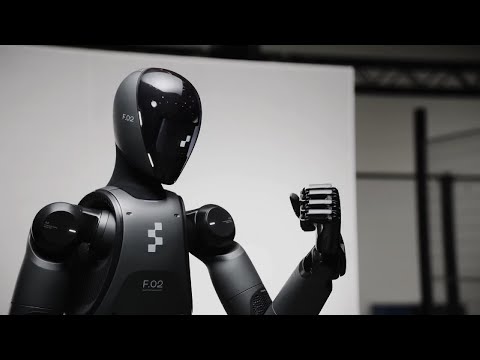
Another major opportunity for humanoid robots lies in logistics.
Modern e-commerce systems rely on massive warehouses where workers sort, move, and package millions of items every day.
Companies like Amazon already use thousands of robotic systems to move shelves and transport goods. However, many tasks still require human hands.
Humanoid robots could eventually fill this gap.
A robot capable of walking through aisles, picking products from shelves, and packing boxes could significantly reduce labor costs and increase efficiency.
Some companies are already testing this concept.
In pilot programs, humanoid robots have demonstrated the ability to move boxes, scan packages, and transport goods across warehouse floors.
While these experiments remain limited in scale, they offer a glimpse into a future where logistics operations become highly automated.
Hospitals and Healthcare
Healthcare is another industry where humanoid robots could play a significant role.
Hospitals around the world face staffing shortages, particularly among nurses and support staff. Many routine tasks—such as transporting supplies, delivering medications, or assisting patients—are time-consuming but do not require advanced medical expertise.
Humanoid robots could handle some of these duties.
For example, a hospital robot might deliver meals to patients, transport medical equipment, or guide visitors through hospital corridors.
In elderly care facilities, robots could assist with daily activities such as lifting objects, fetching items, or monitoring patient safety.
However, the healthcare sector also presents unique challenges.
Robots operating near vulnerable patients must meet extremely high safety standards, and human trust remains a significant barrier to adoption.
Nevertheless, many experts believe healthcare robotics will expand rapidly in the coming decade.
The Cost Challenge
Despite their promise, humanoid robots still face significant economic hurdles.
Building a sophisticated robot with advanced sensors, motors, and AI systems remains expensive.
Current humanoid robots can cost anywhere from tens of thousands to several hundred thousand dollars.
However, many technology leaders believe these costs will decline rapidly as production scales increase.
Elon Musk has suggested that humanoid robots could eventually cost less than a car.
If that prediction proves accurate, humanoid robots could become widely accessible tools for businesses and households.
Mass production would dramatically accelerate adoption.
Safety and Regulation
As humanoid robots move into workplaces and public spaces, safety concerns are becoming increasingly important.
A robot capable of lifting heavy objects or moving at high speeds must be carefully controlled to avoid accidents.
Governments and regulatory organizations are beginning to examine how robots should be certified and supervised.
Questions about liability, responsibility, and human oversight remain unresolved.
For example, if a robot makes a mistake that causes injury or financial loss, who is responsible—the manufacturer, the software developer, or the operator?
These issues will likely shape robotics policy for years to come.
The Social Impact
Beyond technical and economic challenges, humanoid robots raise deeper societal questions.
If robots eventually perform many forms of physical labor, what will happen to human employment?
Some economists argue that automation historically creates more jobs than it destroys by increasing productivity and generating new industries.
Others warn that rapid automation could disrupt labor markets faster than workers can adapt.
Humanoid robots may accelerate this debate.
Unlike previous automation technologies that targeted specific tasks, humanoid robots could potentially replace entire categories of physical work.
At the same time, they could also create new industries, including robot maintenance, AI training, and human-robot interaction design.
A Glimpse of the Future
Although widespread adoption of humanoid robots may still be years away, progress is accelerating.
Robots are becoming more agile, more intelligent, and more affordable.
What once seemed like science fiction is steadily approaching everyday reality.
In the coming decade, humanoid robots may become common sights in factories, warehouses, hospitals, and perhaps even homes.
Their impact could rival that of personal computers, smartphones, or the internet.
The question is no longer whether humanoid robots will transform society.
It is how quickly that transformation will occur—and how humans will adapt to living and working alongside intelligent machines.
Discussion about this post