









Watching Atlas Feels Like Watching the Future—But Not Buying It
There is something unsettling about watching Atlas move.
Not because it looks human—it doesn’t.
Not because it tries to be friendly—it doesn’t.
But because it moves with a kind of physical confidence that machines are not supposed to have.
It runs.
It jumps.
It twists mid-air and lands with precision.
It recovers from failure like a trained athlete.
And every time it does, it challenges a deeply ingrained assumption:
That robots are rigid, predictable, and fundamentally limited.
Developed by Boston Dynamics, Atlas is widely considered the most advanced humanoid robot in terms of mobility and dynamic control.
But here’s the paradox:
Despite being the most impressive robot in the world, Atlas is not a product.
It is a demonstration.
A masterpiece of engineering—without a market.
The Philosophy of Atlas: Solve the Hardest Problem First
Most robotics companies start with usefulness.
They build machines that can perform specific tasks, then gradually expand capabilities.
Boston Dynamics took the opposite approach.
With Atlas, the goal was to solve one of the hardest problems in robotics:
Dynamic movement in the real world.
That means:
- Maintaining balance under unpredictable conditions
- Recovering from slips, pushes, and impacts
- Coordinating full-body motion in real time
This is not just walking.
This is physical intelligence.
And Atlas is, arguably, the best embodiment of it.
Hardware Engineering: Built Like a Machine, Moves Like an Athlete
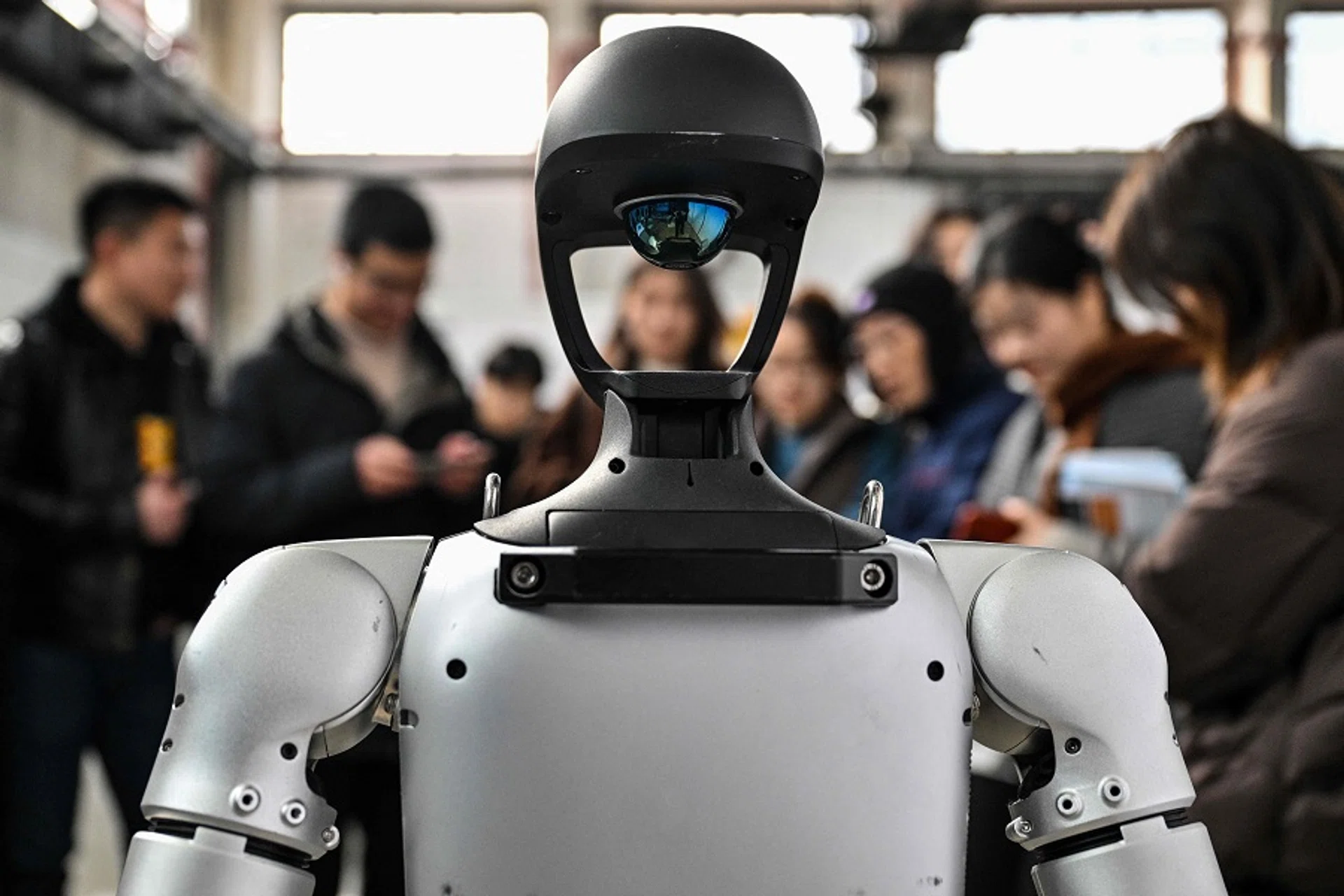
Atlas does not look like other humanoid robots.
It is visibly mechanical—exposed joints, hydraulic systems (in earlier versions), and a structure optimized for performance rather than aesthetics.
Recent electric versions have refined this design, improving efficiency and control.
Key hardware features include:
- High-torque actuators for explosive movement
- Advanced joint articulation enabling full-body coordination
- Lightweight structural components for agility
- Integrated sensors for balance and positioning
Every component is designed for one purpose:
Movement.
Not manipulation.
Not interaction.
Not cost efficiency.
Just movement.
And in that domain, Atlas is unmatched.
Motion Control: The Real Magic
What makes Atlas extraordinary is not just its hardware—it is how that hardware is controlled.
At the core of Atlas lies a sophisticated control system that combines:
- Real-time feedback loops
- Predictive modeling
- Whole-body coordination algorithms
When Atlas jumps, it is not executing a pre-recorded animation.
It is calculating:
- Force distribution
- Center of mass trajectory
- Landing stability
All in real time.
This is closer to how humans move than how machines typically operate.
And it is incredibly difficult to achieve.
The Backflip Problem: Why It Matters
One of Atlas’s most famous demonstrations is its backflip.
At first glance, it looks like a gimmick—a viral video designed to impress.
But from an engineering perspective, it represents something much deeper.
A backflip requires:
- Precise force generation
- Mid-air body control
- Accurate landing prediction
If a robot can do this, it means it has mastered:
Dynamic balance under extreme conditions.
And that capability translates to real-world resilience.
A robot that can recover from a failed jump can also recover from:
- Slipping on a wet floor
- Being bumped by a human
- Carrying uneven loads
In other words, the backflip is not the point.
The control system behind it is.
Mobility: No Competition—For Now
Compared to other humanoid robots like Tesla Optimus or Figure 01, Atlas operates on a completely different level of mobility.
It can:
- Traverse uneven terrain
- Jump between platforms
- Climb and vault obstacles
- Recover from dynamic disturbances
This makes it uniquely suited for environments that are:
- Unstructured
- Hazardous
- Unpredictable
Think disaster zones, construction sites, or search-and-rescue operations.
In these contexts, traditional robots struggle.
Atlas thrives.
But Here’s the Catch: It Can’t Really Work
For all its capabilities, Atlas has a glaring limitation:
It is not particularly useful—yet.
Its manipulation abilities are relatively basic compared to its movement.
It can:
- Pick up objects
- Move items
- Perform simple tasks
But it lacks the dexterity and precision required for:
- Assembly work
- Fine manipulation
- Complex tool use
This creates a mismatch.
Atlas can reach places other robots cannot—but it cannot do much once it gets there.
Energy Consumption: The Hidden Constraint
Dynamic movement is expensive.
Not in dollars—but in energy.
Atlas consumes significantly more power than slower, more stable robots.
This limits:
- Operating time
- Deployment scenarios
- Practical usability
In industrial settings, efficiency matters.
A robot that needs frequent recharging—or complex power systems—is harder to justify.
This is one reason why companies like Tesla prioritize efficiency over performance.
Why Atlas Isn’t a Product (Yet)
Despite years of development, Atlas has not been commercialized.
There are several reasons for this:
1. Cost
The engineering complexity makes it extremely expensive.
2. Reliability
High-performance systems are harder to maintain.
3. Use Case Fit
Few industries require this level of mobility.
4. Safety
Dynamic movement introduces risks in human environments.
Atlas is a technological achievement—but not yet a practical solution.
Atlas vs The New Generation
Comparing Atlas to newer robots reveals an interesting shift in the industry.
| Robot | Strength | Weakness |
|---|---|---|
| Atlas | Mobility | Practicality |
| Optimus | Scalability | Agility |
| Figure 01 | Intelligence | Predictability |
Atlas represents the engineering frontier.
The others represent the commercial future.
And the gap between them is where the industry is evolving.
The Strategic Role of Atlas
If Atlas is not a product, what is it?
It is a platform for innovation.
Boston Dynamics uses Atlas to:
- Develop new control algorithms
- Test advanced hardware systems
- Push the limits of robotics
These innovations can then be applied to more practical robots, such as:
- Warehouse automation systems
- Industrial robots
- Quadruped platforms
In this sense, Atlas is not wasted effort.
It is foundational research.
The Emotional Factor: Why People Care
There is another reason Atlas matters.
It captures attention.
Videos of Atlas go viral not because they are useful—but because they are impressive.
They change how people think about robots.
They make the future feel closer.
And that has value.
In technology, perception often drives investment.
And Atlas has done more than almost any other robot to shape public imagination.
What Atlas Teaches Us About the Future
Atlas reveals something important:
The hardest part of robotics is not building a machine.
It is integrating:
- Movement
- Manipulation
- Intelligence
- Efficiency
Into a single system.
Atlas has solved one of these better than anyone else.
But the others remain open challenges.
The future will belong to the robot that can combine all four.
Final Verdict
Atlas is not the robot you will buy.
It is the robot that makes all future robots possible.
It is:
- The most advanced
- The most impressive
- The least practical
And yet, one of the most important machines ever built.
Score
- Engineering Excellence: 10/10
- Mobility: 10/10
- Practical Usability: 6/10
- Energy Efficiency: 6/10
- Industry Impact: 10/10
Overall: 8.4/10
Discussion about this post