








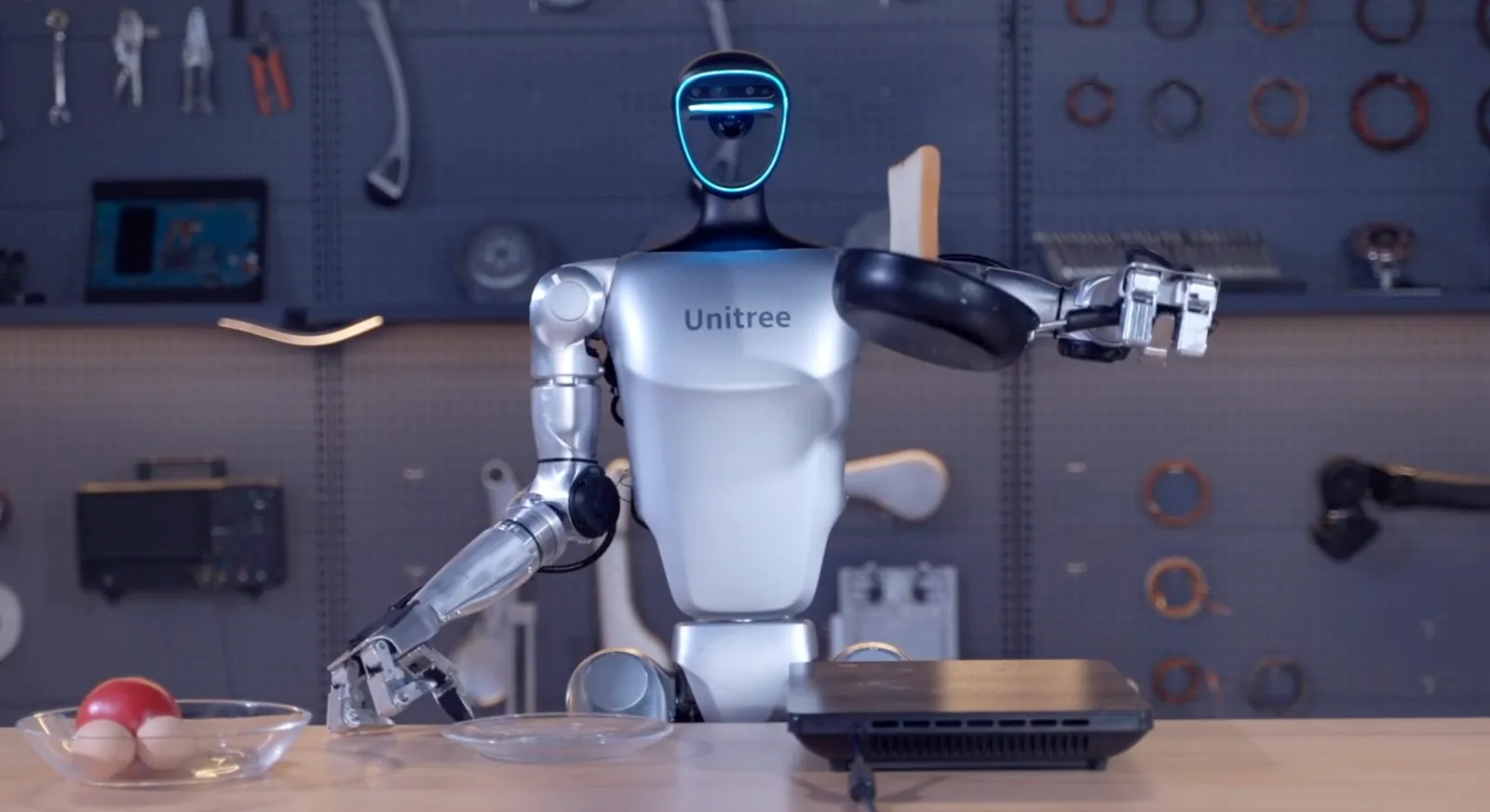

A Different Starting Point
Most humanoid robots begin with hardware.
They are engineered from the ground up as mechanical systems—joints, actuators, balance algorithms—before intelligence is layered on top. This has been the dominant paradigm for decades, shaping everything from industrial arms to advanced research robots.
But Figure AI is attempting something fundamentally different.
With Figure 01, the company is not just building a robot—it is building what might be the first truly AI-native humanoid system, where intelligence is not an add-on, but the foundation.
This distinction matters.
Because if Tesla’s Tesla Optimus represents the industrialization of robotics, Figure 01 represents its cognitive evolution.
And in the long run, intelligence—not mechanics—may define the winner.
First Impressions: Less Flash, More Focus
At first glance, Figure 01 does not try to impress.
There are no viral acrobatics, no dramatic jumps, no cinematic demonstrations. Compared to the athleticism of Atlas, its movements appear restrained, even cautious.
But this restraint is intentional.
Figure 01 is designed around task execution, not spectacle.
Its body is proportioned for efficiency:
- A stable center of gravity
- Articulated arms optimized for manipulation
- A sensor-rich head module for perception
It looks like a machine built to work—not to perform.
And that alone sets the tone for everything that follows.
The Core Idea: Intelligence First, Everything Else Second
What makes Figure 01 unique is its philosophical starting point.
Instead of asking, “How do we build a better robot body?”, Figure AI asks:
“How do we build a system that can understand and act in the real world?”
To answer this, the company has leaned heavily into AI—particularly large-scale models and multimodal learning.
Figure 01 is designed to:
- Interpret natural language instructions
- Understand visual environments
- Plan multi-step actions
- Adapt to changing conditions
This is not traditional robotics.
It is closer to building a physical version of an AI agent.
And that is where its biggest potential—and biggest risk—lies.
The OpenAI Connection: A Strategic Advantage
One of the most significant developments surrounding Figure AI is its collaboration with OpenAI.
This partnership suggests a future where humanoid robots are powered by the same class of models that drive modern AI systems.
The implications are profound.
Instead of writing task-specific code, developers could:
- Give high-level instructions
- Let the robot interpret intent
- Allow it to generate its own action sequences
For example, rather than programming a robot to “pick up object A and place it in location B,” you could say:
“Organize the table.”
And the robot would figure out what that means.
This shift—from programming to prompting—could redefine how robots are deployed.
Manipulation: Where Figure 01 Shines
If there is one area where Figure 01 stands out, it is manipulation.
While many humanoid robots struggle with fine motor control, Figure 01 demonstrates a more fluid approach to handling objects.
In demonstrations, it can:
- Pick up irregular items
- Adjust grip dynamically
- Perform sequential tasks
- Handle fragile objects with care
This is not just a hardware achievement.
It is the result of combining perception, reasoning, and control.
The robot does not simply execute predefined motions—it reacts to what it sees.
That makes it far more adaptable in real-world environments.
Learning and Adaptation: The Real Breakthrough
Traditional robots are rigid.
They are programmed for specific tasks and struggle when conditions change.
Figure 01 aims to break that limitation.
Through AI-driven learning, the robot can:
- Improve performance over time
- Generalize across tasks
- Learn from demonstrations
This is closer to how humans operate.
We do not memorize every possible action. We learn patterns and apply them in new situations.
If Figure 01 can achieve even a fraction of this capability at scale, it could outperform more rigid systems.
But this is also where uncertainty comes in.
Learning systems are harder to predict, harder to validate, and harder to control.
And in industrial environments, unpredictability can be a liability.
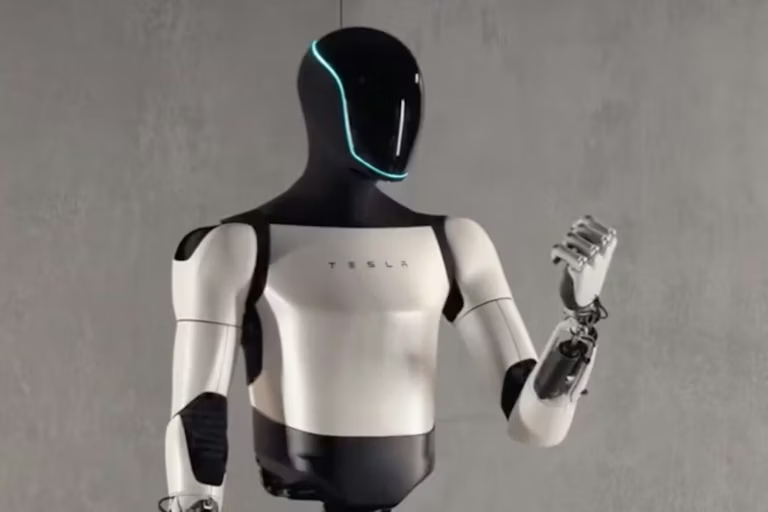
Mobility: Good Enough, Not Exceptional
Unlike Atlas, which prioritizes dynamic movement, Figure 01 takes a more conservative approach to mobility.
Its walking is:
- Stable
- Controlled
- Energy-efficient
But not particularly fast or agile.
This reflects a deliberate trade-off.
Figure AI is prioritizing interaction over locomotion.
In most real-world tasks, the ability to manipulate objects matters more than the ability to run or jump.
Still, mobility limitations could affect deployment in more complex environments.
For now, Figure 01 appears best suited for structured indoor settings.
Human-Robot Interaction: A Glimpse of the Future
Perhaps the most compelling aspect of Figure 01 is how it interacts with humans.
Unlike traditional robots, which rely on interfaces and programming, Figure 01 can engage more naturally.
This includes:
- Responding to spoken instructions
- Interpreting intent
- Providing feedback
This level of interaction is still in its early stages, but it hints at a future where robots are less like tools and more like collaborators.
The difference is subtle but important.
A tool waits for instructions.
A collaborator understands goals.
Real-World Applications: Where It Fits
Figure 01 is not trying to do everything.
Its strengths suggest specific use cases, including:
Logistics and Warehousing
Handling, sorting, and organizing items in dynamic environments.
Manufacturing Support
Assisting with tasks that require flexibility rather than precision automation.
Service Roles
Performing repetitive but variable tasks in human-centric environments.
These applications share a common theme:
They require adaptability.
And that is exactly what Figure 01 is designed to provide.
Limitations: The Challenges Ahead
Despite its promise, Figure 01 faces significant challenges.
1. Reliability
AI-driven systems can behave unpredictably, especially in edge cases.
2. Safety
Operating in human environments requires strict safety guarantees.
3. Speed
Decision-making processes can introduce latency.
4. Cost
Advanced AI and hardware integration is expensive.
5. Scalability
Training and maintaining intelligent systems at scale is complex.
These are not trivial issues.
They will determine whether Figure 01 remains a prototype—or becomes a product.
Figure 01 vs Tesla Optimus: A Philosophical Divide
Comparing Figure 01 to Tesla Optimus reveals a deeper contrast.
| Aspect | Figure 01 | Tesla Optimus |
|---|---|---|
| Core Focus | Intelligence | Scalability |
| Strength | Adaptability | Manufacturing |
| Weakness | Predictability | Flexibility |
| Strategy | AI-first | Hardware-first |
This is not just competition.
It is two different visions of the future.
One prioritizes learning.
The other prioritizes production.
The eventual winner may combine both.
The Industry Context: A Turning Point
Humanoid robotics is entering a new phase.
For years, progress was measured in demonstrations.
Now, it is being measured in deployment.
Figure 01 represents a shift toward cognitive robotics—systems that can think, learn, and adapt.
This aligns with broader trends in AI, where models are becoming more general, more capable, and more integrated into real-world systems.
The convergence of AI and robotics is no longer theoretical.
It is happening now.
Final Verdict
Figure 01 is not the most powerful humanoid robot.
It is not the most agile.
It is not the most polished.
But it may be the most forward-looking.
Because it treats intelligence as the core problem—and the core solution.
If it succeeds, it could redefine what robots are.
Not machines that follow instructions.
But systems that understand them.
Score
- Design: 8/10
- Hardware: 7.5/10
- AI Capability: 9/10
- Real-world readiness: 7/10
- Future potential: 9.5/10
Overall: 8.4/10
Discussion about this post