









The Moment Robotics Became Real
For years, humanoid robots have existed in a strange space between imagination and engineering reality. They have dazzled audiences in carefully edited videos, performed acrobatic feats in research labs, and promised a future that always seemed just out of reach.
That perception began to shift when Tesla introduced its humanoid robot project.
At first, the announcement was met with skepticism. Critics questioned whether the company—best known for electric vehicles—had the expertise to compete in robotics. Early demonstrations of Tesla Optimus were limited, sometimes awkward, and far from the fluid performances seen in research robots like Atlas.
But dismissing Optimus as a publicity stunt has become increasingly difficult.
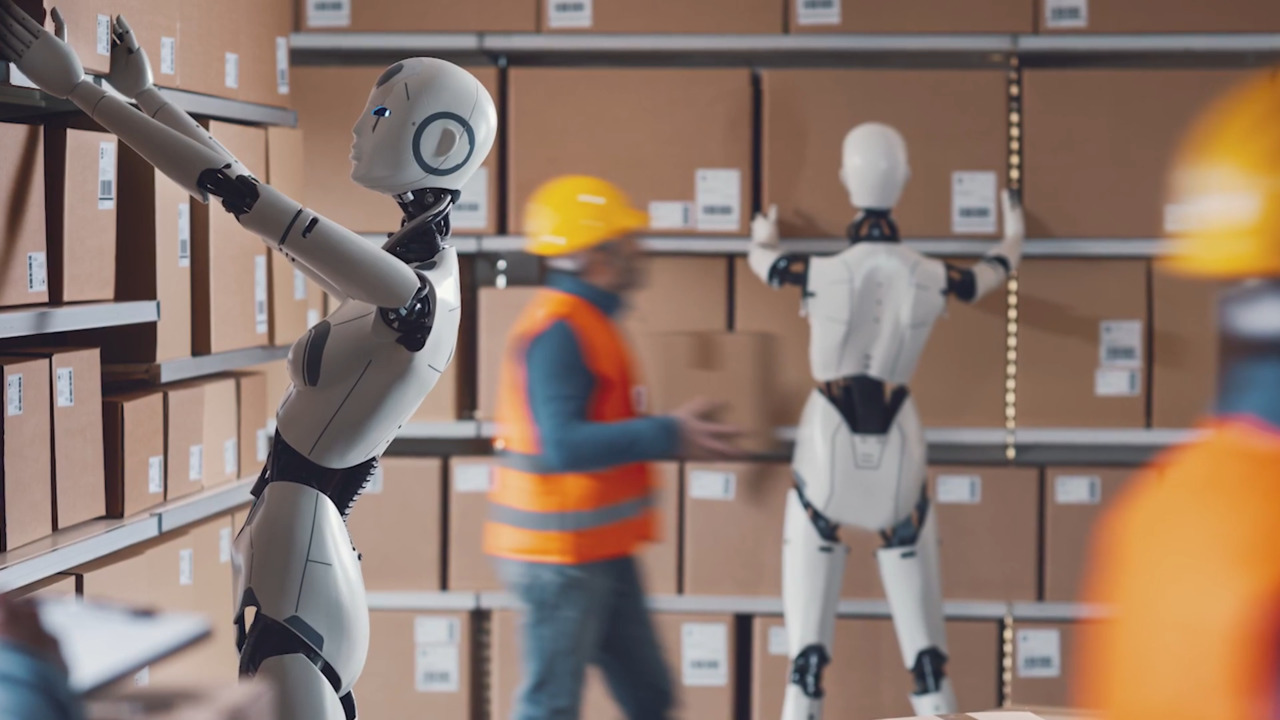
Over time, Tesla has transformed its humanoid robot from a concept into a functioning machine capable of performing real tasks. The demonstrations are no longer just about walking or waving—they show robots sorting objects, handling materials, and interacting with physical environments in ways that begin to resemble useful work.
The shift is subtle, but significant.
Optimus may not yet be a finished product. But it represents something the robotics industry has long struggled to achieve: a credible attempt at turning humanoid robots into scalable tools.
The question is no longer whether Tesla can build a humanoid robot.
It is whether it can build one that actually matters.
Design Philosophy: Built for Work, Not for Show
The first thing that stands out about Optimus is what it does not try to be.
It is not designed to look human in a realistic sense. There are no artificial facial expressions, no attempt at mimicking skin, and no emphasis on emotional interaction. Instead, Optimus adopts a stripped-down, utilitarian aesthetic.
Its structure is clearly mechanical. The head functions more like a sensor module than a face. The limbs are engineered for movement and strength rather than visual appeal.
This design choice is not accidental.
Tesla is approaching humanoid robotics as an industrial problem, not a social one. The goal is not to create a companion or a lifelike android, but a machine that can operate efficiently in environments designed for humans.
From a product standpoint, this is a pragmatic decision.
Human-like appearance adds complexity without necessarily improving functionality. By focusing on mechanical efficiency, Tesla avoids unnecessary cost and engineering overhead.
The result is a robot that feels less like a science-fiction character and more like a piece of equipment.
And that may be exactly what gives it an edge.
Hardware Architecture: Borrowing from the EV Playbook
One of Tesla’s most significant advantages lies in its ability to leverage existing technologies from its electric vehicle ecosystem.
Optimus is, in many ways, an extension of Tesla’s broader engineering platform.
The robot incorporates:
- Battery systems derived from Tesla vehicles
- Electric actuators similar to those used in automotive components
- Custom AI chips designed for real-time processing
- Power management systems optimized for efficiency
This integration is critical.
Many robotics startups struggle with hardware fragmentation—sourcing components from different suppliers and integrating them into a cohesive system. Tesla, by contrast, controls much of its supply chain.
This allows for tighter optimization and potentially lower costs at scale.
However, the hardware is not without limitations.
Compared to research-focused robots like Atlas, Optimus sacrifices agility for stability. Its movements are slower and more deliberate. It does not perform dynamic jumps or acrobatic maneuvers.
This is a trade-off.
Tesla is not trying to build the most impressive robot.
It is trying to build the most deployable one.
Locomotion and Balance: Stability Over Spectacle
Walking may seem like a basic function, but for humanoid robots, it remains one of the most complex engineering challenges.
Optimus approaches locomotion conservatively.
Its gait is steady and controlled, prioritizing balance over speed. The robot uses sensor feedback and real-time adjustments to maintain stability, particularly when carrying objects or navigating uneven surfaces.
This approach has clear advantages in industrial settings.
A robot that moves predictably is easier to integrate into workflows. It reduces the risk of accidents and simplifies coordination with human workers.
However, it also highlights the gap between research robots and commercial systems.
Atlas can leap across platforms and recover from slips in dramatic fashion. Optimus cannot.
But that may not matter.
In a factory or warehouse, reliability often matters more than agility.
Manipulation: The Real Test of Usefulness
If walking is difficult, manipulation is even harder.
Human hands are extraordinarily complex, capable of performing delicate tasks with precision and adaptability. Replicating this capability in a robot is one of the greatest challenges in robotics.
Optimus demonstrates promising, but still limited, manipulation skills.
In demonstrations, it can:
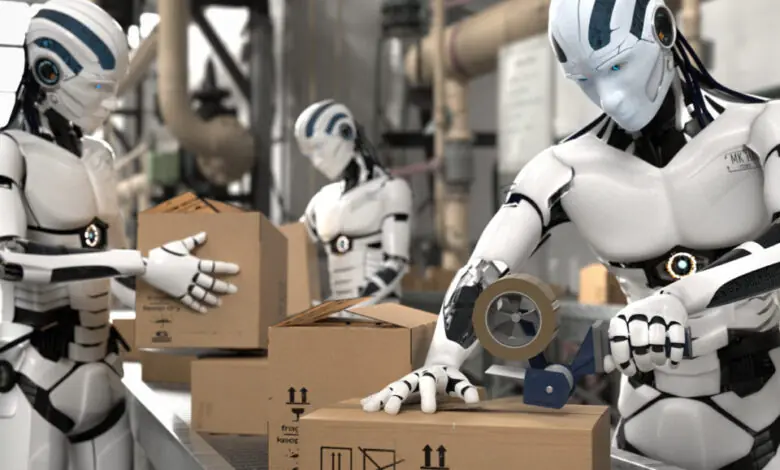
- Pick up objects
- Sort items
- Fold simple materials
- Transport components
These tasks may seem basic, but they represent significant progress.
The real challenge lies in variability.
Objects in the real world differ in shape, weight, texture, and orientation. Humans handle this effortlessly. Robots must interpret these differences through sensors and algorithms.
Optimus is improving, but it is not yet at human-level dexterity.
This remains one of the key barriers to widespread adoption.
Artificial Intelligence: The Core Advantage
If there is one area where Tesla may have a long-term advantage, it is artificial intelligence.
Optimus leverages Tesla’s experience in autonomous driving, particularly in:
- Computer vision
- Neural network training
- Real-time decision-making
The robot uses cameras and AI models to interpret its surroundings, identify objects, and plan actions.
This is a major shift from traditional robotics.
Instead of relying solely on pre-programmed instructions, Optimus can adapt to changing environments.
For example, rather than being told exactly how to pick up an object, the robot can analyze the situation and determine the best approach.
This capability is still developing, but it is essential for real-world deployment.
The future of robotics will likely depend less on hardware and more on intelligence.
In that sense, Optimus is as much an AI product as it is a mechanical one.
Real-World Performance: Closing the Gap
The most important question for any robot is simple:
Can it actually work?
In controlled environments, Optimus performs well.
It can complete repetitive tasks with consistency, particularly in structured settings such as factory floors.
However, performance becomes less reliable in complex environments.
Challenges include:
- Unpredictable object placement
- Cluttered spaces
- Ambiguous instructions
These are not minor issues.
They represent the fundamental difficulty of bringing robots into the real world.
That said, progress is clearly visible.
Each iteration of Optimus shows improvements in speed, accuracy, and autonomy.
The gap between demonstration and deployment is shrinking.
Cost and Scalability: Tesla’s Biggest Bet
Ultimately, the success of Optimus will depend on cost.
Even the most advanced robot is useless if it cannot be deployed economically.
Tesla’s strategy is clear:
Use mass production to drive down cost.
Elon Musk has suggested that humanoid robots could eventually cost less than a car.
If that happens, the implications are enormous.
Companies could deploy robots at scale, transforming industries such as manufacturing, logistics, and services.
However, achieving this goal is far from guaranteed.
Scaling production of humanoid robots is significantly more complex than building cars.
It requires advances in:
- Manufacturing processes
- Supply chains
- Component standardization
Tesla’s experience gives it an advantage, but the challenge remains substantial.
Competitive Landscape
Optimus does not exist in isolation.
It competes with other humanoid robots, including:
- Figure 01 from Figure AI
- Atlas from Boston Dynamics
Each competitor emphasizes different strengths:
- Figure focuses on AI and adaptability
- Boston Dynamics focuses on mobility and engineering
- Tesla focuses on scalability and integration
The winner may not be the most advanced robot.
It may be the one that can be produced, deployed, and maintained at scale.
The Bigger Picture: Why Optimus Matters
Optimus is not just a product.
It is a signal.
For decades, robotics has struggled to transition from research to industry. Many impressive machines never left the lab.
Optimus represents a different approach—one that prioritizes deployment over demonstration.
If successful, it could mark the beginning of a new phase in robotics:
From experimental systems to everyday tools.
Final Verdict
Tesla Optimus is not yet a finished product.
It is not the most agile robot.
It is not the most intelligent robot.
But it may be the most important one.
Because it is designed not just to exist—but to scale.
Score
- Design: 8.5/10
- Hardware: 8/10
- AI: 8/10
- Real-world readiness: 7/10
- Scalability potential: 10/10
Overall: 8.3/10
Discussion about this post