









1. The Night Shift That Never Ends
At 2:17 AM, the warehouse is fully operational.
Not in the chaotic way people imagine—with forklifts beeping and workers shouting across aisles—but in something quieter, more precise.
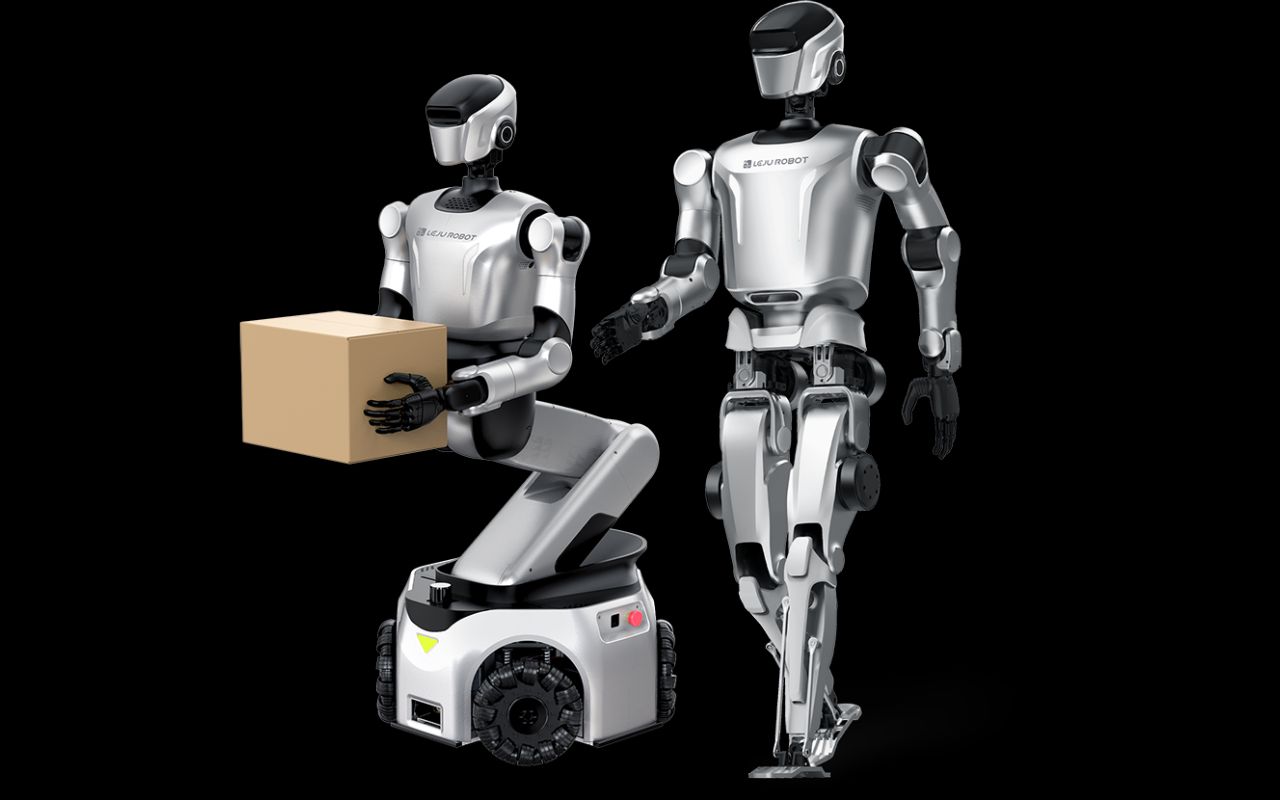
A humanoid robot lifts a plastic tote from a conveyor.
Another walks past, scanning barcodes.
A third stacks items onto a pallet with consistent, almost mechanical grace.
There are no breaks.
No fatigue.
No variation.
Machines like Digit and Figure 01 are no longer experimental curiosities. They are entering one of the most demanding environments in modern industry:
Logistics.
2. Why Warehouses Are the Perfect Starting Point
If humanoid robots were to quietly take over any sector, logistics would be the obvious place to start.
Not because it is simple.
But because it is:
- Repetitive
- Physically demanding
- Labor-intensive
- Difficult to staff consistently
Companies like Amazon have spent years optimizing warehouses for efficiency.
Yet even with advanced automation:
- Picking remains labor-heavy
- Sorting requires flexibility
- Last-meter handling is complex
This is where humanoid robots become valuable.
Unlike traditional robotic arms, they can:
- Navigate human-designed spaces
- Use tools built for humans
- Adapt to variable tasks
They don’t just automate tasks.
They integrate into existing systems.
3. From Robotic Arms to Robotic Workers
Traditional warehouse automation relies on:
- Conveyor belts
- Fixed robotic arms
- Automated storage systems
These systems are efficient—but rigid.
They require:
- Structured layouts
- Predictable workflows
Humanoid robots change that equation.
They bring:
- Mobility
- Flexibility
- General-purpose capability
A robot like Digit can walk, carry, place, and adjust in real time.
That means warehouses no longer need to be redesigned around machines.
Machines adapt to the warehouse.
4. The Economics of 24/7 Labor
The business case is straightforward.
Human workers:
- Require shifts
- Experience fatigue
- Need training
- Turn over frequently
Humanoid robots:
- Operate continuously
- Maintain consistent performance
- Scale with demand
- Reduce long-term labor costs
This doesn’t mean robots are cheaper—yet.
But over time, the economics are shifting.
For large-scale operations, even small efficiency gains translate into massive savings.
5. The Hybrid Workforce Model
Despite headlines about “fully automated warehouses,” reality is more nuanced.
Most deployments today follow a hybrid model:
- Humans handle complex decisions
- Robots handle repetitive physical tasks
This creates a new kind of workplace dynamic.
Humans become:
- Supervisors
- Exception handlers
- System managers
Robots become:
- Executors
- Carriers
- Process stabilizers
The relationship is less about replacement—and more about restructuring roles.
6. Safety: Promise and Paradox
Warehouses are physically demanding and sometimes dangerous environments.
Humanoid robots can reduce risks by:
- Handling heavy loads
- Operating in hazardous zones
- Performing repetitive strain tasks
But they also introduce new challenges:
- Human-robot interaction safety
- System failures
- Unexpected behavior in dynamic environments
Designing safe coexistence is one of the biggest technical and regulatory hurdles.
7. The Data Layer
What makes humanoid robots powerful is not just their physical capability.
It is the data they generate.
Every movement can be:
- Recorded
- Analyzed
- Optimized
This creates a feedback loop:
- Robots perform tasks
- Data is collected
- Systems improve
- Performance increases
Over time, this leads to:
- Smarter workflows
- Predictive logistics
- Fully integrated supply chains
The warehouse becomes not just automated—but intelligent.
8. What Happens to Workers?
The most pressing question is also the most complex.
What happens to human workers?
The answer depends on:
- Scale of adoption
- Speed of deployment
- Policy responses
Short term:
- Labor shortages may absorb displacement
- New roles may emerge
Long term:
- Some jobs will disappear
- Others will transform
The risk is not just job loss.
It is job polarization:
- High-skill roles grow
- Low-skill roles shrink
9. The Competitive Race
Logistics is a highly competitive industry.
Companies that adopt humanoid robots early may gain:
- Cost advantages
- Speed advantages
- Scalability advantages
This creates pressure for others to follow.
Adoption becomes less of a choice—and more of a necessity.
10. The Invisible Transformation
Unlike consumer technologies, warehouse automation is largely invisible to the public.
There is no viral moment.
No dramatic reveal.
Just gradual change.
Packages arrive faster.
Costs decrease.
Systems become more efficient.
And behind the scenes, human labor quietly recedes.
Conclusion: The First Domino
The transformation of logistics is not the end goal.
It is the beginning.
Warehouses are controlled environments.
If humanoid robots can succeed here, they can expand into:
- Retail
- Healthcare
- Hospitality
- Construction
Logistics is the first domino.
And it is already starting to fall.
Discussion about this post