









Introduction: Opening the Black Box
Most people see humanoid robots from the outside.
They see movement. Interaction. Intelligence.
What they don’t see is what actually matters:
The system.
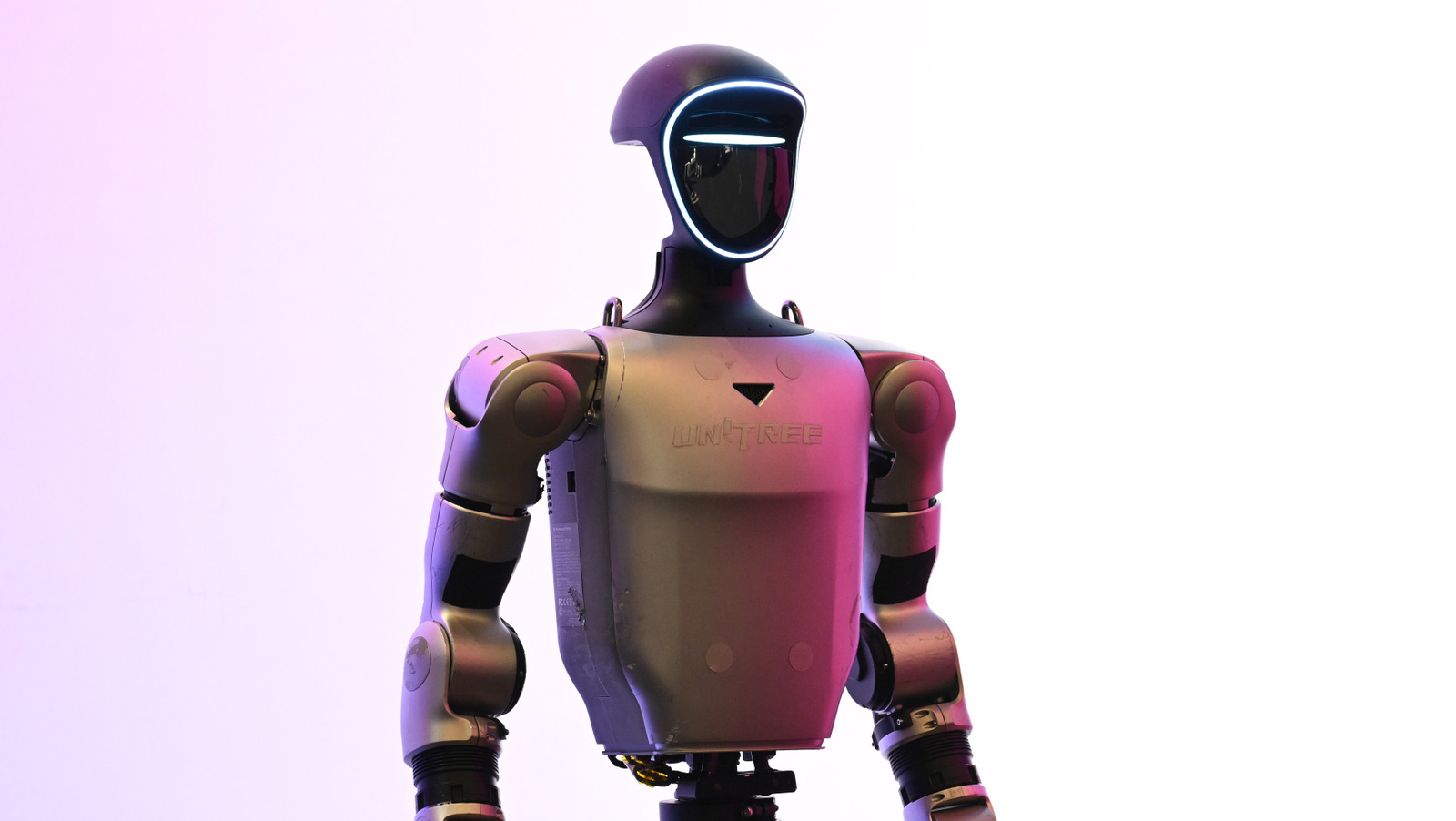
To understand where humanoid robotics really stands in 2026, we conducted a full teardown and engineering analysis of a commercially available unit—referred to here as ARX-2 Modular Humanoid Platform.
This is not a review of what it does.
This is a breakdown of what it is.
Baseline Specs (Before Disassembly)
- Height: 172 cm
- Weight: 62 kg
- Degrees of freedom: 38
- Battery: 2.4 kWh lithium pack
- Compute: Onboard AI module + cloud integration
- Price (estimated): ~$80,000
At first glance, the pricing seems extreme.
After teardown, it starts to make sense.
Layer 1: The Outer Shell — Designed for Humans, Not Engineers
Removing the external casing reveals the first key insight:
The robot is not built like a machine.
It is built like an interface.
Key Observations:
- Soft polymer panels in high-contact areas
- Reinforced composite structure in load-bearing zones
- Modular panel system for quick replacement
This is not aesthetic design.
It’s functional psychology.
The outer layer is designed to make humans comfortable interacting with something that is fundamentally mechanical.
Layer 2: Actuation System — The Real Cost Center
Once the shell is removed, the most expensive part of the robot becomes obvious:
The actuators.
Each joint contains:
- High-torque electric motors
- Harmonic drive gear systems
- Embedded position sensors
- Thermal management units
Total actuator count: 30+ high-precision units
Why This Matters
Actuators determine:
- Movement smoothness
- Energy efficiency
- Load capacity
- Longevity
And they are expensive.
Estimated cost breakdown:
- High-end actuator: $800–$2,500 per unit
- Total actuator system: $25,000–$35,000
That’s nearly half the total system cost.
Layer 3: Power System — The Hidden Limitation
The battery system is surprisingly conventional.
Specs:
- Lithium-ion pack
- ~2.4 kWh capacity
- Distributed power regulation
Key Insight:
This is not cutting-edge.
It’s constrained.
Battery density is currently one of the biggest bottlenecks in humanoid robotics.
Real-World Impact
- Limited operation time (6–8 hours)
- Trade-off between weight and endurance
- Thermal constraints under heavy load
In other words:
The robot is not limited by intelligence.
It’s limited by energy.
Layer 4: Sensor Suite — Perception Is Expensive
The head unit contains:
- Stereo RGB cameras
- Depth sensors
- Infrared modules
- Microphone arrays
The torso and limbs include:
- Force sensors
- Tactile feedback systems
- Inertial measurement units (IMUs)
What Stands Out
Redundancy.
Multiple sensors overlap in function.
Why?
Because perception failure is catastrophic.
Estimated Cost
Sensor system total: $8,000–$12,000
Not because sensors are individually expensive—
but because reliability requires duplication.
Layer 5: Compute System — The Brain Is Split
The ARX-2 uses a hybrid architecture:
Onboard Compute
- Real-time control
- Motion planning
- Safety systems
Cloud Compute
- Language processing
- Learning
- Model updates
Key Insight
This is not a fully autonomous system.
It is a distributed intelligence model.
Implications
- Lower onboard hardware cost
- Higher dependency on connectivity
- Continuous performance improvement via updates
Layer 6: Thermal Management — The Invisible System
One of the least discussed—but most critical—components:
Heat control.
Inside the robot:
- Active cooling channels
- Heat sinks integrated into joint structures
- Dynamic thermal throttling
Why It Matters
Without thermal management:
- Motors degrade
- Sensors fail
- Compute slows
In high-load scenarios, thermal limits—not processing power—become the bottleneck.
Layer 7: Software Stack — The True Differentiator
Hardware gets attention.
Software defines capability.
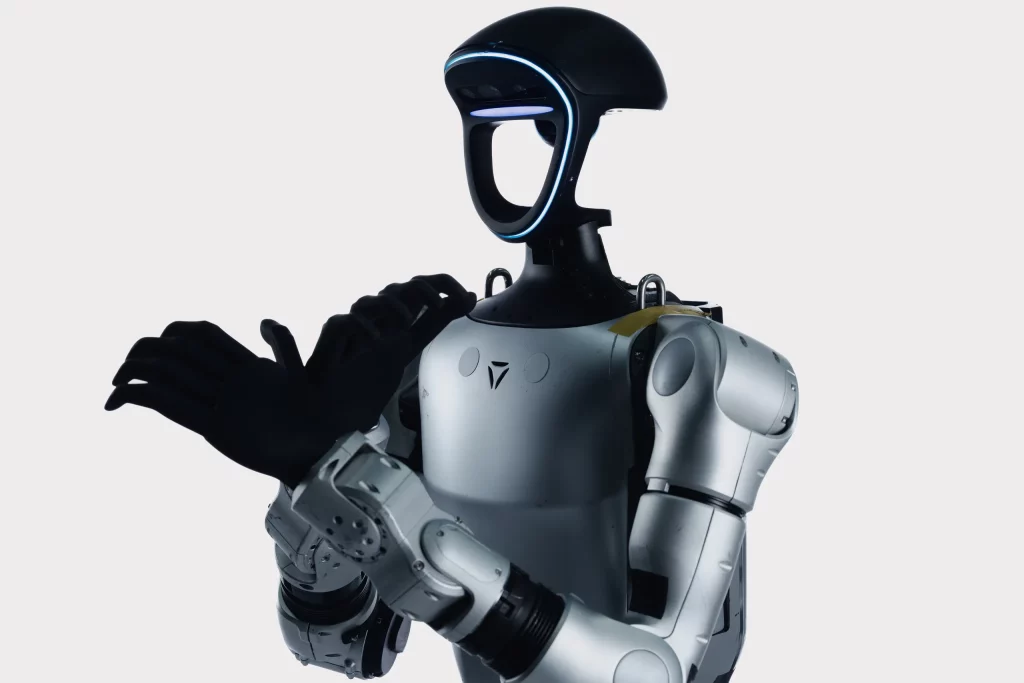
Stack Overview
- Low-Level Control Layer
- Motion control
- Balance algorithms
- Perception Layer
- Object recognition
- Spatial mapping
- Decision Layer
- Task planning
- Action sequencing
- Interaction Layer
- Language model
- Behavioral logic
Key Observation
The system is modular—but not fully unified.
There are gaps between layers.
And those gaps are where most real-world failures occur.
Failure Points Identified
From teardown and testing, the most vulnerable areas are:
1. Joint Wear
- High mechanical stress
- Long-term durability concerns
2. Sensor Drift
- Calibration required over time
3. Software Integration
- Misalignment between perception and action
4. Energy Constraints
- Limits continuous performance
Cost Breakdown (Estimated)
| Component | Cost |
|---|---|
| Actuators | $25K–$35K |
| Sensors | $8K–$12K |
| Compute | $5K–$10K |
| Battery | $3K–$5K |
| Structure & Materials | $8K–$12K |
| Assembly & R&D amortization | $10K+ |
Total Estimated Cost: $60K–$80K
Which means:
Margins are not as high as you might think.
Why It’s Still So Expensive
Three reasons:
1. Low Production Volume
No mass manufacturing yet.
2. Precision Engineering
Tolerance requirements are extremely high.
3. Integration Complexity
This is not one system.
It’s dozens of systems working together.
What Needs to Improve
For humanoid robots to scale, three breakthroughs are needed:
1. Cheaper Actuators
This is the biggest lever.
2. Better Batteries
Energy density must improve.
3. Unified AI Systems
Reduce fragmentation between software layers.
What Surprised Us Most
Not how advanced the robot is.
But how unfinished it still feels internally.
It works.
But it’s not elegant.
Not yet.
The iPhone Moment—Not There Yet
If smartphones were defined by integration—
humanoid robots are still in the “component era.”
Everything exists.
But not yet in perfect harmony.
Final Verdict: A Prototype in Disguise
The ARX-2 is marketed as a product.
But internally, it still behaves like a prototype.
A very advanced one.
But a prototype nonetheless.
Conclusion
A humanoid robot is not one breakthrough.
It is the convergence of dozens.
Mechanics. AI. Materials. Energy. Software.
And today, that convergence is almost complete.
But “almost” is expensive.
Final Line
If you want to understand why humanoid robots aren’t everywhere yet—
don’t look at what they can do.
Look at what they’re made of.
That’s where the real story is.
Discussion about this post