








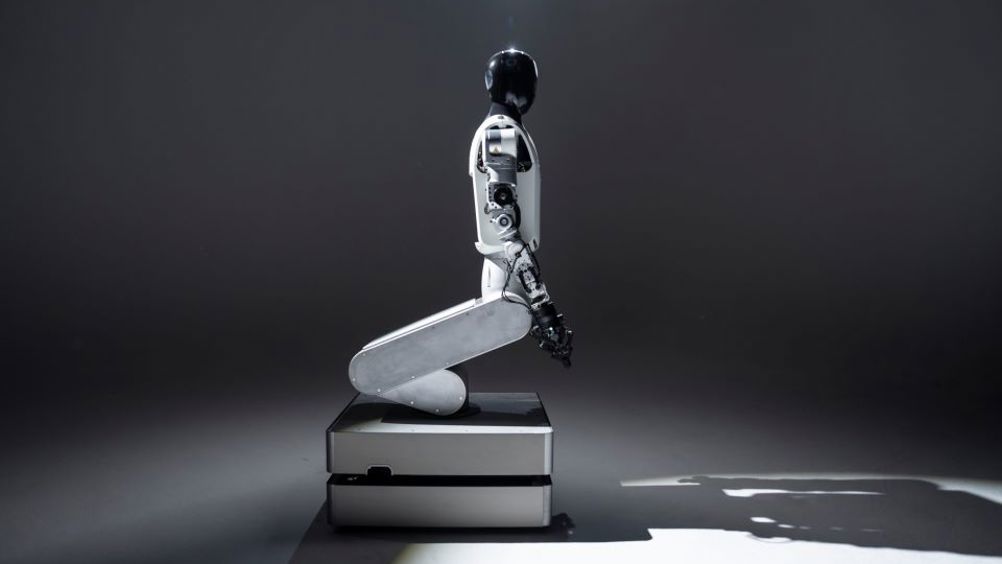

Over the past three months, the Boston Dynamics Atlas humanoid robot has shifted decisively from a laboratory spectacle to a production-ready machine that’s increasingly ready to tackle real-world tasks. This progress report explores Atlas’ technical evolution, emerging capabilities, industrial readiness, and what it all means for the future of robotics, automation, and society at large. Drawing on recent announcements, demonstrations, and product developments, we’ll assess just how fast Atlas is improving — and what’s still on the horizon.
Introduction: From Research Marvel to Industrial Reality
For years, Atlas has been celebrated as one of the most agile humanoid robots ever built — capable of running, jumping, and performing complex motion sequences that few other machines could match. But until recently, those feats were primarily demonstrations designed to push the limits of robot dynamics rather than delivering practical value in industrial settings.
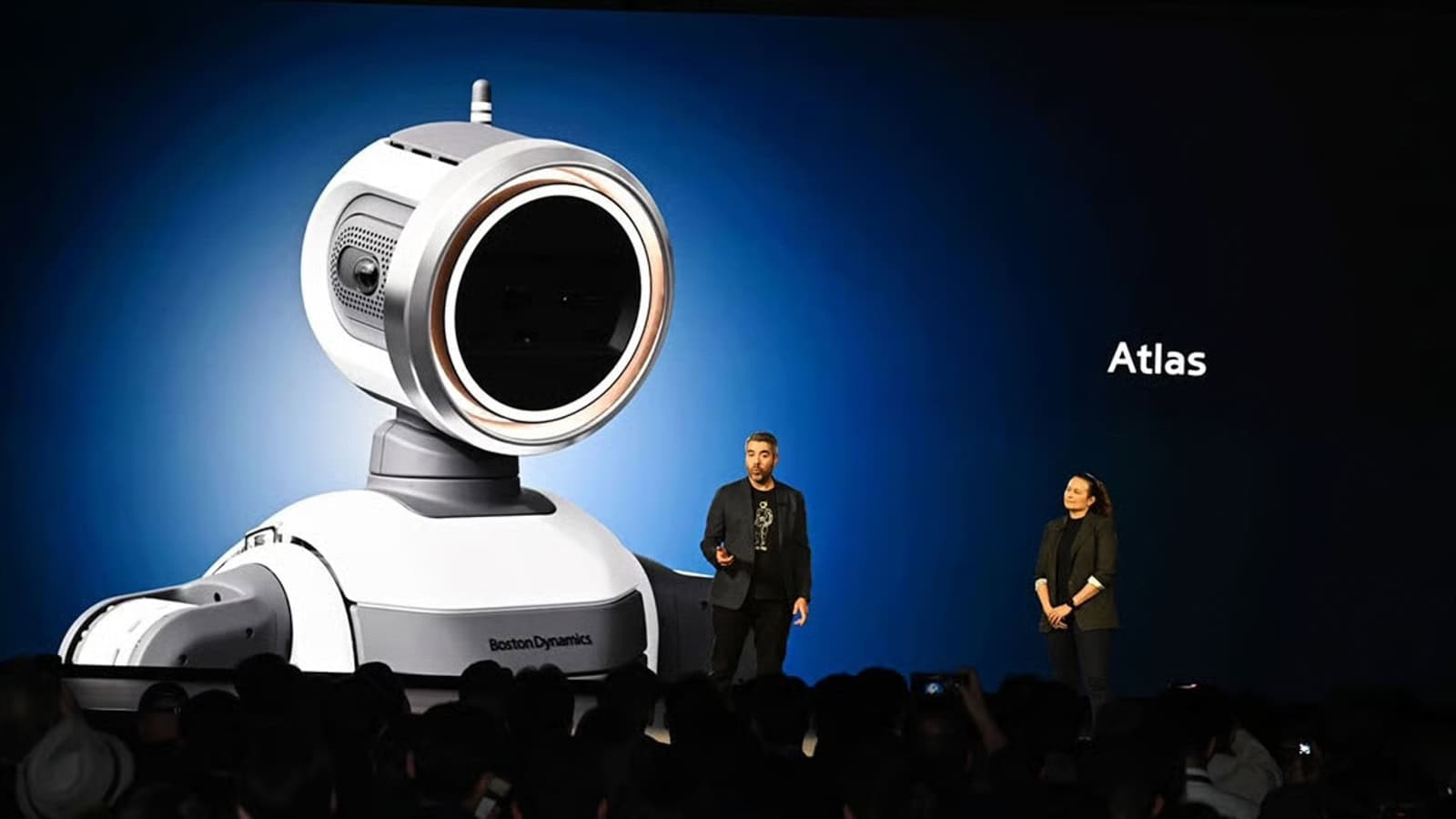
That dynamic is now changing. At CES 2026 in Las Vegas, Boston Dynamics unveiled the product version of Atlas — an all-electric humanoid built from the ground up for industrial applications, not just media attention.
From improved autonomy and advanced artificial intelligence to strengthened physical resilience and real deployment plans with manufacturing giants, Atlas’ latest developments make this a pivotal moment in humanoid robotics.
1. Anatomy of the Latest Atlas
The 2026 generation of Atlas represents a departure from past prototypes in shape, function, and purpose:
- All-Electric Actuation: Traditional hydraulics have been replaced entirely with electric actuators. The result? A lighter, more efficient robot with finer movement control and easier maintenance.
- Human-Scale Form Factor: Atlas stands around 1.9 meters tall and weighs approximately 90 kg — human-comparable proportions that let it work in environments originally built for people.
- High Degrees of Freedom: With up to 56 active degrees of freedom and fully rotational joints, Atlas can move more naturally and with greater dexterity than earlier models.
- Sensing and Perception: A suite of tactile and visual sensors, combined with advanced perception systems, enables Atlas to detect obstacles, grasp items precisely, and navigate complex spaces without constant human input.
- Autonomous Operation: Atlas can autonomously navigate to charging stations, replace its own battery, and resume work — a major leap toward uninterrupted productivity.
Together, these features signal a dramatic shift: Atlas is no longer just a research robot that can walk and jump. It’s evolving into a machine that can work reliably in real settings with minimal human oversight.
2. Technical Progress: What’s Been Improved?
Mobility and Stability
Atlas has continued to refine its mobility systems. Its balance control, gait generation, and response to environmental variation have all improved through enhanced control algorithms and motion planning — allowing it to perform tasks that approach human-like movement dynamics.
These mobility gains are not just for show — they matter for real tasks such as moving between workstations, avoiding dynamic obstacles, and maintaining balance during handling operations.
Dexterity and Manipulation
In previous research and field iterations, Atlas showcased basic object manipulation. The advanced 2026 product boosts dexterity substantially with tactile sensing, enabling fine motor control for things like part handling, tool manipulation, and precision assembly tasks.
This is crucial for industrial adoption. A robot that can only walk is interesting; a robot that can pick, place, grip, and organize — even in unstructured settings — begins to earn its keep.
Perception and AI Integration
Perhaps the most impressive advances are in Atlas’ ability to understand its environment. Thanks to partnerships with leading AI organizations like Google DeepMind, Atlas now incorporates advanced vision systems, omnidirectional observation, and real-time decision-making.
360-degree sensory awareness and sophisticated environmental scanning allow Atlas to identify objects from any angle, adapt to changes quickly, and collaborate with humans and machines in shared spaces.
This level of perception — paired with AI that can interpret complex scenarios — is what truly differentiates modern industrial robots from early automation systems.
3. Deployment and Real-World Testing
Industrial Pilots
Boston Dynamics and its majority owner, Hyundai Motor Group, have already committed Atlas fleets for deployment to Hyundai’s Robotics Metaplant Application Center and Google DeepMind for AI training — even before full production begins.
These early commitments indicate strong industry confidence in Atlas’ potential. Instead of waiting until perfect, enterprises are choosing early collaboration to shape and train these systems in real operational conditions.
Factory Integration Plans
The most notable real-world plan is to deploy Atlas at Hyundai manufacturing plants in the U.S. starting in 2028. The initial focus will be on logistics-oriented work such as parts sequencing and movement — tasks that are often repetitive and physically demanding for human workers.
By 2030, Atlas is expected to advance toward more complex tasks like component assembly — a major step toward genuinely collaborative human-robot workplaces.
In production planning, Hyundai aims to build a manufacturing facility capable of producing 30,000 humanoid robots annually by 2028, a remarkable scaling target for the robotics industry.
4. AI Learning and Adaptation
Faster Skill Acquisition
A key benchmark of Atlas’ improvement is its ability to learn new tasks quickly — a necessity for dynamic industrial environments. Boston Dynamics CEO Robert Playter highlighted the company’s goal for Atlas to learn new tasks in one to two days, rather than requiring months of custom programming.
This rapid learning capability — enabled by advanced AI models — positions Atlas closer to the ideal of agile robotic workers rather than static automation.
Unified Behavior Models

Earlier robotics systems often used separate subsystems for motion, perception, and manipulation. Recent efforts toward Large Behavior Models (LBMs) — integrating multiple inputs into a single learning architecture — demonstrate more cohesive behavior and generalization across tasks.
This evolutionary step matters: robots that can generalize skills across contexts are far more valuable than those requiring bespoke programming for every new scenario.
5. Measuring Three-Month Progress
Performance Benchmarks
In just three months, Atlas has moved from controlled demonstrations to commercially oriented capability showcases, securing industry partnerships and validating essential technologies in real work settings.
Key accomplishments include:
- Public unveiling of a commercially viable model at CES 2026.
- Demonstrated AI-driven perception and task adaptability.
- Commitment from major industrial partners for pilot deployment.
- Projected factory integration with real deployment timelines.
These developments place Atlas on a trajectory that just three months ago would have seemed speculative.
6. Challenges and Future Outlook
Despite impressive gains, Atlas still faces hurdles on the path to widespread adoption:
Reliability and Safety
Industrial environments demand near-perfect reliability and stringent safety protocols. While Atlas has advanced safety features, sustained uptime, and predictable operation remain ongoing research and engineering priorities.
Task Complexity
Heavy manipulation and fine assembly tasks still pose challenges. While Atlas’ sensors and actuators are strong, perfecting skills at industrial precision scales is an ongoing developmental frontier.
Economic and Ethical Considerations
As Atlas and similar robots enter work environments, discussions around workforce displacement, job transformation, and ethical responsibility will intensify. Robots that work alongside humans can enhance productivity, but ensuring equitable transitions in industries remains a societal priority.
Conclusion: Rapid, Strategic Evolution
In the span of three months, Atlas has transitioned from impressive prototype to credible industrial contender. With advances in perception, mobility, autonomy, and AI learning, the robot’s evolution is not merely incremental — it reflects a broader shift in how humanoid robots are designed, trained, and deployed for work that matters.
Atlas still has significant paths to traverse, but its accelerating pace of improvement suggests that the next few years will be pivotal not only for Boston Dynamics but for robotics, automation, and human-machine collaboration as a whole.