









In the world of cutting‑edge automation, few ideas capture both imagination and investor capital like the general‑purpose humanoid robot. These machines promise to go beyond task‑specific automation — the kind used in factories today — and instead operate in human environments, take on human jobs, and adapt to novel physical challenges in a way that feels like science fiction writ large.
But in 2026, amid macroeconomic headwinds, technological hurdles, and competing approaches to automation, the central question remains: Are investors still betting on general‑purpose humanoids? The answer is undeniably nuanced. Yes — capital continues to flow, but not uniformly, and not without skepticism.
To understand why, it helps to unpack the complexities of the technology, the recent investment trends, the industry’s current state, and what risks and opportunities lie ahead for investors, developers, and society at large.
The Vision: What Are General‑Purpose Humanoids?
A “general‑purpose humanoid” is more than a robot with two legs and two arms. Unlike specialized robots that perform singular tasks (e.g., pick‑and‑place arms in warehouses, autonomous vacuum cleaners), a humanoid machine is:
- Bipedal — able to navigate environments built for humans
- Versatile — capable of performing a multitude of tasks
- Adaptable — able to generalize learned behaviors
- A physical machine with embodied intelligence
The long‑term vision is compelling: robots that can assist in homes, workplaces, hospitals, warehouses, or even unpredictable outdoor environments. It’s not hard to conjure images of humanoids capable of caregiving, logistics, construction work, agricultural tasks, or even disaster response.
But the reality so far has been considerably more challenging.
The Investment Landscape: Where Capital Is Flowing
Big Name Players Still in the Game
Despite some hype cycles cooling, investment in humanoid robotics has not disappeared. Major technology and automotive players continue to commit resources and market narratives around humanoid robotics.
Tesla, for instance, has reaffirmed its ambition to commercialize its Optimus humanoid robots by 2027, with initial units expected to start rolling out in limited volumes. CEO Elon Musk’s announcements have materially affected Tesla’s stock and contributed to investor speculation around humanoid robotics as part of Tesla’s future growth story.
Similarly, Mobileye — the autonomous driving arm of Intel — recently agreed to acquire humanoid robotics startup Mentee Robotics for roughly $900 million, signaling a strategic pivot toward embodied autonomous systems.
Chinese robotics firms also remain well‑funded. The company UBTech secured a deal with Airbus to expand the application of its humanoid robots in manufacturing, while domestic valuations and funding rounds — including a $300 million financing for a large humanoid robotics player — underscore sustained investor interest in Asia.
These deals indicate one key reality: investor capital has not vanished — it’s evolving and diversifying.
Specialist Investors and Public Capital
Funding isn’t just coming from strategic tech players. Venture capital firms and institutional investors remain active in this space, albeit with selective focus. Startups like Figure AI, a specialist humanoid robotics company backed by big‑name investors in AI and robotics, have raised significant rounds and are being closely watched in the private markets.
Aggregators of investment like Humanoid Global Holdings — which operates as an investment issuer focused on humanoid robotics — have even reported progress metrics for portfolio companies such as Agility Robotics. These include measurable real‑world deployments, which help shift investor perception from abstract promise toward practical traction.
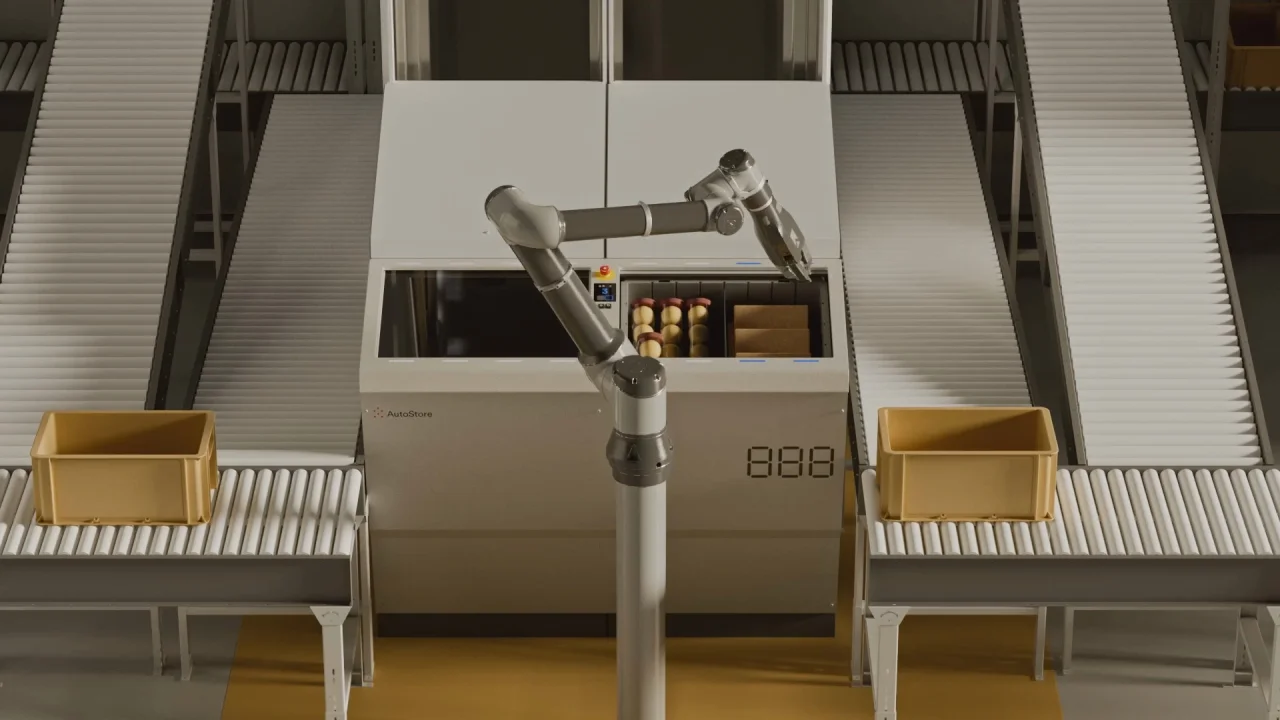
At the same time, broader robotics indices and funding trends show that many investors are allocating more capital to task‑driven robots — machines designed for specific operational domains — over visually dazzling but less immediately profitable humanoids. Analytics from PitchBook and industry reporting suggest that over 70 % of robotics funding in early 2025 favored specialized systems.
This bifurcation — general purpose vs. task‑specific — will be central to understanding where capital flows in the years ahead.
Technical Challenges: Where the Hype Meets Hard Reality
For all the investor interest, building a reliable, adaptable humanoid robot is a colossal technical challenge:
Physical Balance and Mobility
Humanoid robots must navigate complex environments — steps, uneven surfaces, crowds — without falling. Solutions require advanced perception, control algorithms, and hardware stability that still lag behind human capabilities.
Even today’s top prototypes can stumble, struggle with simple locomotion challenges, or require controlled settings to function reliably. These constraints reduce real‑world deployability and dampen near‑term business cases.
AI Integration and Perception
A humanoid robot isn’t just hardware; it must perceive and interpret the world. The integration of large models, sensor fusion, real‑time decision making, and embodied intelligence remains an evolving frontier. Researchers argue that robotics must not only sense but understand environments, objects, human intent, and social cues.
AI researchers have shown that language models and learning frameworks can enhance robotic planning and interaction — but fully operational systems are not yet widespread outside labs or controlled demonstrations.
Cost and Scalability
Production costs for a humanoid platform — including motors, sensors, power systems, and compute — are extremely high. Without massive production scale, price points will remain out of reach for most commercial buyers. This strategic challenge remains a key factor that savvy investors watch closely.
Investor Sentiment: Optimism and Skepticism Side by Side
On the optimistic side, investors see several macro tailwinds:
Labor Shortages and Demographics
Aging populations and labor market tightness in advanced economies create structural demand for automation beyond factories. Robots that can perform caregiving, service, or basic manual tasks could address labor shortages and rising costs in sectors like healthcare and logistics.
AI Advancements
The exponential progress in AI — particularly in perception and decision making — has raised confidence that software will soon catch up to physical robotics. As AI becomes more capable, it could unlock capabilities that integrate seamlessly with robotic bodies.
Strategic Industry Competition
As countries and large corporations compete for technological leadership, humanoid robotics is increasingly viewed as a national and industrial priority. Governments and corporate strategists alike recognize robotics as a future defining technology — comparable to computers or the internet decades earlier.
Yet, there is a dose of real‑world skepticism:
Skeptical Voices
Some influential investors — such as Mark Cuban — have publicly questioned the long‑term economic case for humanoids, suggesting that functionality matters more than human likeness. Real robots that solve specific problems may be more investable than ones that look human but struggle to execute reliably.
Market Discipline
Many venture capitalists are prone to invest where valuations match tangible metrics: revenue, clarity of use cases, cost reductions, and measurable customer adoption. Early humanoids often lack these defensible metrics, which makes some VCs wary of late‑stage bets hinging on futuristic promise alone.
Strategic Investment Themes Within the Humanoid Trend
For investors eyeing this space today, there are several distinct pockets of opportunity:
1. Core Robotics Platforms
Investing in companies building the foundational hardware and software — from actuation systems to AI control stacks — that enable humanoid and other robots.
2. Components and Supply Chain Technologies
Downstream opportunities include sensors, power systems, joint systems, and materials science that support the broader ecosystem.
3. Hybrid Approaches
Robots that combine task autonomy with human‑like flexibility could serve as stepping stones between specialized automation and full humanoid generality.
4. Commercial and Industrial Partners
Partnerships between robotics firms and established industrial players (like Airbus or logistics giants) help create clear paths to revenue.
5. Regulatory and Safety Infrastructure
Investments in compliance, safety frameworks, and integration technologies can yield returns as governments create standards for robot deployment.
Each theme reflects a pragmatic shift: investors are hedging not just on the humanoid dream, but on the ecosystem required to make it real.
What Venture Capital Is Looking For
Venture capitalists today are tuned into several key signals:
- Traction with real customers — not just demos
- Scalable tech platforms rather than bespoke robots
- Clear unit economics that suggest path to profitability
- Regulatory clarity and safety compliance
- Global market potential with defensible positioning
Humanoid robotics has some compelling narratives — but risky execution. As such, VCs are applying more selective criteria, often focusing on:
- Companies with strong AI‑robotics integration
- Proven physical autonomy (not just remote‑controlled demos)
- Diversified product lineups (inclusive of non‑humanoid products)
This investment discipline reflects a broader technological maturity: the space has separated the fantastic from the plausible.
Risks and Challenges Ahead
Investments in humanoid robotics are not without risk:
Technical Risk
There is still a long journey between basic prototypes and robust, general‑purpose machines that can safely operate in public, dynamic environments.
Market Risk
Too much hype can create valuation bubbles that deflate when commercial realities become clear. Some early humanoid deployments have already shown market resistance or performance gaps.
Regulatory and Safety Risk
Legislation will inevitably shape how robots can operate around humans — especially in sensitive sectors like healthcare or home care.
Adoption Risk
Even if the technology works, humans may resist adopting robots for certain tasks — either due to cultural factors or trust and safety concerns.
The Future: A Hybrid Outlook
Investors in 2026 are placing measured bets — not abandoning humanoids, but treating them as long‑term strategic plays that must justify incremental commercial returns.
Rather than seeing a single “robot revolution,” the smarter narrative is a progressive spectrum of automation:
- Today: Specialized robots dominate
- Near term: Semi‑autonomous robots in controlled environments
- Long term: True general‑purpose humanoids with safe autonomy and meaningful economic use cases
This narrative resonates with both venture capital and corporate investment strategies. Capital is flowing — but with strict expectations for performance and realistic timelines.
Will the Bet Pay Off?
So, are investors still betting on general‑purpose humanoids?
Yes — but the bet is evolving.
Some capital goes into futuristic, general‑purpose projects, while much of it goes into adjacent technologies that enable general‑purpose robots — from perception stacks to industrial collaborations. The risk‑reward calculus has changed: investors now seek clear paths to revenue or platform dominance rather than speculative grand visions.
If humanoid robotics truly matures into a scalable industry, we will look back on this period as a formative era where foundational technologies, partnerships, and investment themes were solidified.